Anthropic Engineers Stop Prompting Claude, AI Pricing Gap Becomes the Story of 2026, and the Hidden Semiconductor Monopolies Behind Every AI Chip
The head of Claude Code reveals he no longer prompts Claude directly, instead writing loops that orchestrate AI autonomously. Meanwhile, Chamath Palihapitiya breaks down the massive and growing pricing gap between frontier and open-weight models, and the semiconductor supply chain shows its fragile chokepoints.
Daily Wrap-Up
Something shifted this week in how developers talk about AI, and it crystallized in a single quote from Boris Cherny, head of Claude Code at Anthropic. He doesn't prompt Claude anymore. He writes loops that prompt Claude. That distinction, managing the orchestration layer rather than crafting individual prompts, captures where the industry is heading faster than most people realize. The posts circulating today paint a picture of AI development moving from a conversational paradigm to a systems engineering one, where the real skill is designing durable workflows, not crafting the perfect prompt.
The economics story is equally striking. Chamath Palihapitiya laid out the numbers: GPT-5.5 Pro costs roughly $105,000 per month for a billion tokens in each direction, while DeepSeek V4 Pro handles the same workload for $5,220. The capability gap between these models has narrowed dramatically, but the pricing gap remains enormous. That mismatch is going to reshape enterprise AI spending in the second half of 2026. Add in MiniMax's claim that their M3 model catches the same 13 out of 17 bugs as Claude Opus 4.8 for $0.07 instead of $3.39, and you can see why Notion had to reroute away from Anthropic's degraded Opus models this morning. When your expensive model goes down and a cheaper one performs comparably, the switching costs start to look very different. The most practical takeaway for developers: audit your AI spend today. If you're defaulting to the most expensive frontier model for every task, you're almost certainly burning budget. Set up a tiered routing strategy where cheap open-weight models handle high-volume inference and reserve premium models for the workflows where their incremental quality demonstrably justifies the cost.
Quick Hits
- NVIDIA's SkillSpector tackles a growing but underappreciated problem: AI agents run code from external repositories, creating real attack surfaces that most teams haven't considered yet. @dani_avila7 walks through how to integrate it into your pull requests.
- Peter Steinberger amplified Vincent Koc's warning about the accelerating pace of AI-driven change in software engineering, arguing that "tokenmaxxing" isn't gloating but a genuine wake-up call about how fast the field is moving. @steipete
- Harness-1, a 20B parameter search agent trained with a state-externalizing harness, was announced this week. The approach focuses on frontier-level long-horizon search with a smaller, more efficient model. @andersonbcdefg
The Shift from Prompting to Loop Writing
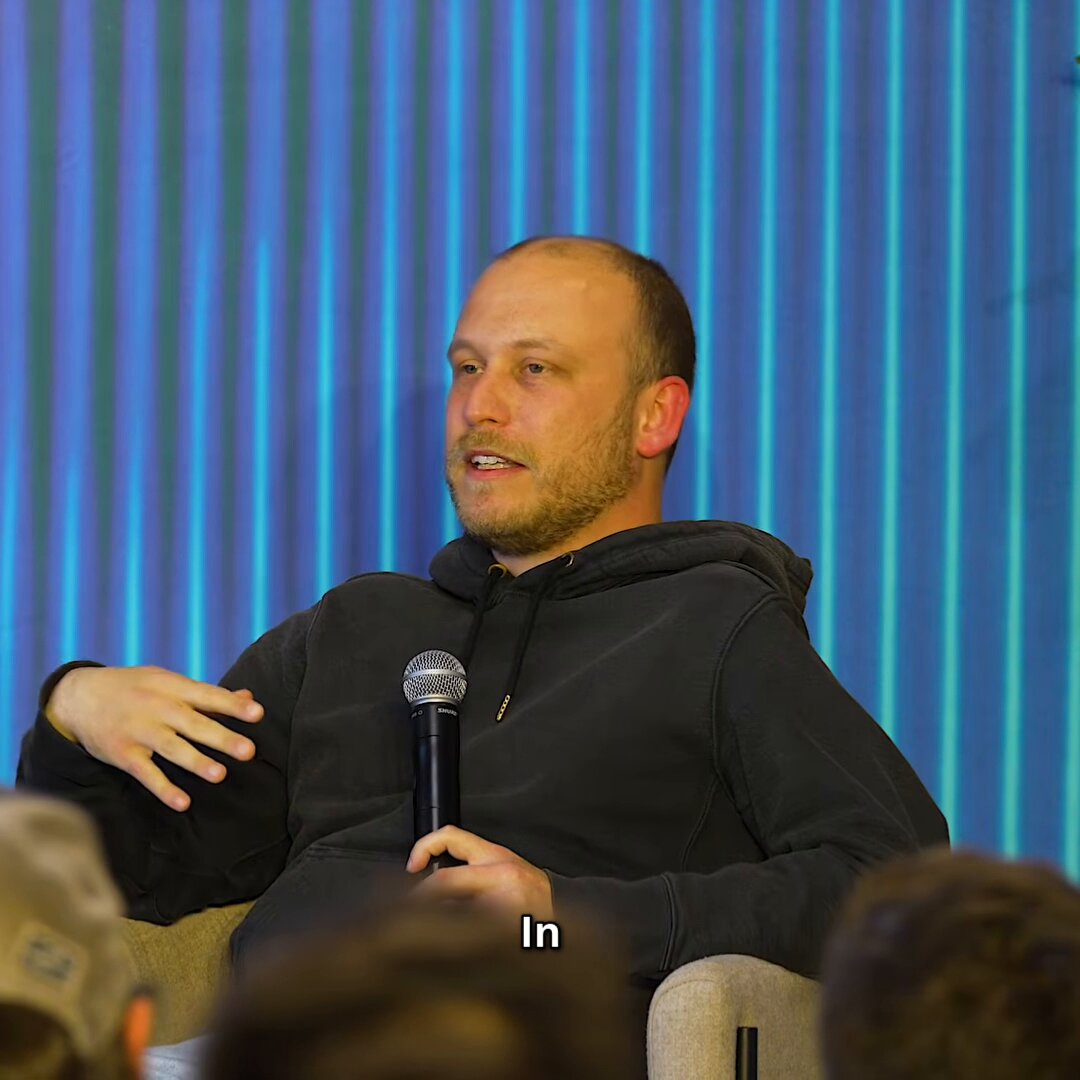
The most revealing quote of the day came from inside Anthropic itself. Boris Cherny, who leads Claude Code, described his workflow bluntly: he doesn't interact with Claude through prompts anymore. Instead, he writes programmatic loops that orchestrate Claude's behavior automatically. His prediction that this transition, from manual prompting to automated loop-driven workflows, will define the rest of the year carries weight precisely because of where he sits.
This isn't an isolated sentiment. @kieranklaassen echoed the same direction from a different angle, arguing that "cloud agents are the future for long running overnight" tasks. The post quoted @vinvan's detailed reflections on cloud agent adoption, which included a striking observation: a cloud agent spinning up other cloud agents, what he calls the "middle manager pattern," is where the real power lies. Vinvan described going for a run, talking for twenty minutes, and returning to find parallel agents completing work independently. Only Devin currently supports this pattern well, but the concept is clearly spreading.
Meanwhile, @alexhillman responded to the question "What have you actually built with your AI subscription?" with an impressive list: internal business intelligence tools, smart climate control systems, contract management workflows, a chat-style notes app, and a multi-business life assistant. The common thread across all of these posts is that the conversation has moved beyond "what can AI do?" to "what systems can I build that leverage AI as a component?" The developers winning right now aren't the best prompters. They're the best system designers.
The AI Pricing War Heats Up
Chamath Palihapitiya dropped the most detailed pricing breakdown the AI industry has seen this quarter, and the numbers are eye-opening. For a company processing a billion input tokens and a billion output tokens monthly, GPT-5.5 Pro runs roughly $105,000. Claude Opus 4.8 comes in at $30,000. DeepSeek V4 Pro? Just $5,220. DeepSeek R1 drops to $2,740. The capability gap between these models has narrowed far faster than the pricing gap, which Palihapitiya calls "the biggest surprise of 2026." He frames it simply: "Your margin is my opportunity."
The benchmark data from @kilocode, amplified by @MiniMax_AI, reinforces this dramatically. In a controlled code audit test with 17 planted bugs, MiniMax M3 caught 13 for $0.07. Claude Opus 4.8 caught the same 13 for $1.30 at its cheapest configuration, and $3.39 at standard pricing. Same result, 48x the cost. Palihapitiya's diagnosis is blunt: most CEOs have no idea their teams are burning through budgets by defaulting to the most expensive models with zero governance. He believes control planes that route tasks to the appropriate model, agnostic to provider, will become standard infrastructure, compressing frontier lab revenues while open model revenues skyrocket.
There's a subplot here worth watching. @elliotarledge noted growing bullishness on Anthropic as @itsclivetime, a key OpenAI custom chip engineer, announced his departure to join Anthropic this week. The talent war continues even as the pricing war intensifies. And the timing of Notion's status update, announcing that Anthropic's Opus 4.7 and 4.8 models experienced degraded performance requiring a full reroute to alternative providers, underscores the fragility of depending on any single model provider. The era of model loyalty is ending. The era of model routing has begun.
The Hidden Chokepoints in AI Chip Supply
While most AI discourse focuses on software, two posts today reminded us that the physical supply chain has its own drama. @InTheAssembly highlighted an $800M Japanese company that holds patents every leading-edge AI chip on Earth depends on. Samsung tried to bypass them and lost in court. That kind of leverage over the entire industry is remarkable for a company most people have never heard of.
Even more detailed was @Frenchie_ recommending @BourseAsieFR's analysis of LPKF Laser & Electronics, a German firm whose LIDE (Laser Induced Deep Etching) process is the only reliable method for creating through-glass vias at production scale. As the industry shifts from organic substrates to glass substrates for advanced packaging, LPKF's 300 patents around this process give them an estimated 80% market share in Korean glass substrate manufacturing. Intel, Samsung, and Corning already use their equipment. TSMC is evaluating glass substrates for next-generation CoWoS packages. If glass enters mass production by 2028 as expected, LPKF becomes a critical node in the supply chain powering every major AI datacenter on the planet. The stock is up 300% since January, and the company hasn't even booked volume production revenue yet.
AI Tooling Infrastructure Hits Growing Pains
Patrick Collison identified a gap in the current AI tooling landscape that resonated widely. He described wanting what amounts to a blend of GNU Autotools and Notion: a system for managing input files and context, with real-time collaboration, version control integration, inference workflow management, and compiled outputs worth sharing. His framing captures something many developers feel but haven't articulated clearly: "There is all this stuff, which I want to process over in this iterated way, with some build artifacts being important." The fact that one of Stripe's co-founders can't find this tool suggests it either doesn't exist yet or hasn't been discovered by the people who need it most.
Meanwhile, Notion's status incident reveals the growing pains of AI integration at scale. When Anthropic's Opus models degraded, Notion had to completely disable all Anthropic models in their picker and reroute requests to alternative providers. Anthropic-specific features remain unavailable. For a productivity tool used by millions, a single provider's outage becomes a product-level crisis. It's a case study in why platform builders need robust fallback architectures, and why Collison's vision of a workflow tool that's model-agnostic isn't just nice to have but operationally necessary.
Local AI Gets a Serious macOS Contender
@cjzafir offered a teaser for Mac-1, a 6.6B parameter model designed to run locally on any Mac with just 7GB of RAM. The model reportedly supports 487 native macOS tools, handles multi-tool chained tasks, enables reasoning, and outputs approximately 65 tokens per second. The claimed benchmarks are ambitious: beating Haiku 4.5, GPT 5.4 mini, and Gemini 3 Flash on practical tasks while running entirely on a MacBook. The pitch is that the "model-focused SaaS era" has arrived, where the application layer matters more than raw model size. If the full benchmark results hold up, it suggests that local inference on consumer hardware is becoming genuinely competitive with cloud API calls for many everyday tasks, which would further pressure the pricing dynamics that Chamath outlined.
Sources
R
"I don't prompt Claude anymore. I have loops running that prompt Claude and figuring out what to do. My job is to write loops. And this is transition we're going to see for the rest of the year."
- Boris Cherny, head of Claude Code at Anthropic.
https://t.co/ZSA4GGgQsX
C
Your margin is my opportunity: AI version…
The biggest surprise of 2026 is that the capability gap between the best open-weight/source models and the best closed models has narrowed much faster than the pricing gap. The pricing gap remains enormous while the capability gap is quite narrow.
What does this means in practice?
For a company consuming 1 billion input tokens and 1 billion output tokens per month:
GPT-5.5 Pro: ~$105,000
Claude Opus 4.8: ~$30,000
DeepSeek V4 Pro: ~$5,220
DeepSeek R1: ~$2,740
I asked ChatGPT what it thought about this and it answered as follows:
“If I were building a company today, the economic frontier would look roughly like:
DeepSeek V4 Pro / R1 for high-volume inference.
Claude Opus for premium agent workflows where reliability matters.
GPT-5.5 Pro only for workloads where its incremental capability demonstrably produces enough business value to justify a 20–40× token premium.”
Most CEOs have no idea that, instead of this nuanced approach, their teams are running amok internally by picking the most expensive models in most cases and burning through massive budgets with zero governance, audit ability and control.
As control planes like our Software Factory become more standard, you can expect the run rate revenue growth of the frontier labs to go down meaningfully and the revenues of the open models to skyrocket.
Why? Because we can implement the nuanced approach above and be agnostic to model - instead focusing on customer intent, model task and cost management among other things.
G
GavinSBaker
@GavinSBaker
Quite a week for open-source AI. Especially American open-source. Nemotron 3 Ultra is the most important release in quite some time. And some really cool RL and fine-tuning work from Harvey.
C
Here's a teaser of our Mac-1 model.
> 6.6B model
> runs locally (on any Mac)
> requires 7GB RAM (12GB ideal)
> can use 487 MacOS native tools
> perform multi-tool chained tasks
> reasoning: ON
> output: ~65 tok/s
We built a robust application layer around the model to make UI/UX MacOS native. The "model-focused" SaaS era is here.
Stay tuned for more.

C
cjzafir
@cjzafir
Our first model Mac-1 6.6B beating 3 giant models. - Haiku 4.5 - GPT 5.4 mini - Gemini 3 flash Running this model on my Macbook M3 24GB. (model takes only 7GB RAM) It searches web, call tools, ask follow-ups, tell jokes, find contacts, search files, write emails, book events, write notes, set reminders and so much Siri can't do. Read again, a 6.6B model. Will share full 2000+ scenario test results & benchmark scores in 2 days.
📙
- internal business intelligence tools
- smart thermostat/climate control systems
- this music game https://t.co/ZvAJRMaDCo
- contract and document management workflows
- a chat-style notes app my biz partner wanted: https://t.co/D1IcQkAljQ
- an extremely capable multi-business and life assistant
and soooooo much more
T
TechSquidTV
@TechSquidTV
What have you actually built with your AI subscription?
F
Je vous présente @BourseAsieFR.
>Franco-taïwanais ayant vécu plus de 10 ans à Taïwan
>Ingénieur spécialisé en nanolithographie pour la photonique, un domaine au cœur des grandes innovations technologiques actuelles
À mes yeux, c’est l’un des meilleurs comptes francophones pour comprendre l’industrie des semi-conducteurs et prendre le pouls des marchés asiatiques.
Ses publications sont d’une qualité remarquable : pédagogiques, accessibles et toujours riches en informations de terrain
Si vous vous intéressez aux semi-conducteurs, à l’IA, aux technologies de pointe ou simplement à l’Asie, c’est un profil que je recommande vivement de suivre
B
BourseAsieFR
@BourseAsieFR
🇩🇪 Une société allemande fondée en 1976 contrôle le brevet le plus important de la prochaine révolution du packaging semiconducteur. Son titre a progressé de 300 % depuis janvier. LPKF Laser & Electronics (Xetra: LPK) fabrique des équipements laser de précision depuis cinquante ans. Son activité historique : découpe de PCB, prototypage rapide, panneaux solaires. Son activité future : le traitement du verre pour semiconducteurs avancés. Le problème que LPKF résout. Les substrats organiques actuels atteignent leurs limites physiques. Ils se déforment à la chaleur, limitent la densité des interconnexions et ne peuvent pas intégrer de fonctions optiques. La solution industrielle émergente est le substrat en verre : meilleure stabilité dimensionnelle, résistance thermique supérieure, et surtout possibilité d'intégrer des guides d'onde optiques directement dans le substrat pour le CPO. Problème : le verre est cassant. Percer des vias traversants avec des méthodes classiques crée des micro-fissures. Quand la puce chauffe, le verre se brise. LPKF a résolu ce problème avec LIDE, Laser Induced Deep Etching. Un procédé laser-chimique qui grave le verre sans contact mécanique, sans micro-fissures, à haute densité. La société détient 300 brevets autour de ce procédé. C'est le seul équipement industriel capable de former des TGV de manière fiable à l'échelle de production. Intel, Samsung et Corning l'utilisent déjà. Part de marché sur le marché coréen des substrats verre : 80 %. Le double levier CPO. La prochaine étape de LPKF est d'étendre le LIDE au CPO sur verre. L'idée : utiliser le verre non seulement comme substrat électrique mais comme guide d'onde optique intégré, permettant de connecter les puces entre elles par lumière plutôt que par cuivre à l'intérieur même du package. Corning a présenté à OFC 2026 une démonstration sur panel 515x515mm intégrant 16 composants photoniques et un ASIC sur substrat verre avec interconnexions sous 13mm. LPKF fournit les équipements de traitement. CA 2025 : 115 millions d'euros. Perte opérationnelle. Les premières commandes de production LIDE sont attendues au Q2 2026. Le marché a anticipé massivement : +300 % depuis janvier. L'ensemble des analystes qui couvrent le dossier situent les revenus volume sur le substrat verre entre 2027 et 2029. Le marché paye aujourd'hui une option sur dans deux à trois ans. Ce que dit la direction : "La question n'est plus de savoir si le verre va s'imposer dans l'encapsulation avancée, mais quand le ramp-up va commencer." Objectif de marge opérationnelle double chiffre d'ici 2028. TSMC évalue le substrat verre pour ses packages CoWoS de prochaine génération. ASE Group, premier OSAT mondial, qualifie les procédés d'assemblage sur verre. Si le substrat verre entre en production de masse chez TSMC d'ici 2028, LPKF devient fournisseur critique de la chaîne d'approvisionnement qui alimente les datacenters IA mondiaux depuis Taiwan.
P
RT @vincent_koc: 2 months ago i gave a wake up call to engineers. Some thought i was gloating about tokenmaxxing. But the acceleration is r…
D
How NVIDIA's SkillSpector works and How to add It to your skill PRs
How NVIDIA's SkillSpector works and How to add It to your skill PRs
AI agents run code they didn't write. Skills, tools, MCP servers, prompts pulled from external repos. The attack surface is real, and most teams aren'...
P
I want some kind of LLM workflow tool.
• Ability to manage a set of input files (Markdown or similar), plus other general-purpose context.
• With real-time collaboration. (And maybe some concept of snapshots or VCS integration.)
• And the ability to create/manage a inference workflows and a stored set of prompts.
• Access to general-purpose coding agents (and not just chat models).
• Some concept of compiled outputs/inference results (which ideally can be shared externally).
Many projects have this feeling: "there is all this stuff, which I want to process/compute over in this iterated way, with some build artifacts being important/worth saving." GNU Autotools x Notion or something. Is anyone building this?
B
RT @patpcj: Introducing Harness-1, a 20B search agent trained with a state-externalizing harness.
> frontier-level long-horizon search, ri…
E
even more bullish on anthropic
I
itsclivetime
@itsclivetime
Personal update: I’ve decided to leave OpenAI. I’m proud to have been part of the custom chip program and grateful to everyone I got to build with and learn from along the way. The density of hardware talent on that team is extraordinary, and I don't think there's a better chip design team anywhere. It's been a wild journey from second hardware hire, 2.4 years ago, to now, and I'm excited to watch these chips become one of the most important engines of AGI. At the same time, I haven’t been able to shake the pull to climb a new mountain from the bottom again! I joined @AnthropicAI this week because I was deeply impressed with the team’s talent, values, and ambition, and I'm already energized by the pace and intensity of the past few days. It’s time to build.
K
cloud agents are the future for long running overnight.
computer use is cool on computers
V
vinvan
@vinvan
some reflections from solely using cloud agents this year: 1. every engineer should default to cloud. it completely changes how you view and use agents. if you run a company, it might be worth mandating everyone starts in cloud 2. cloud agent adoption has been much slower than i expected— e.g. looking at a ton of cursor profiles it’s clear majority cloud usage is still rare 3. getting your dx cloud agent ready still requires creative jiu jitsu. dev infra docs could be much better — “this is how to make our stuff accessible to agents/parallelizable.” luckily investments also benefit humans 4. it’s still a PITA to setup & manage cloud envs across cursor/devin etc. but i assume it’ll get bitter lessoned and we don’t need conventions for setup scripts etc. 5. where are the labs?! would love to see codex et al. invest more in their cloud experience. i know they can do it :) 6. it’s strange that cursor/devin’s investment in mobile apps lags behind their investment in cloud agents. they should go hand in hand. the ability to start agents from slack mobile isn’t enough! 7. a cloud agent spinning up other cloud agents (middle manager pattern) is goated. e.g. nice to go for a run, yap for twenty minutes, and end up with parallel agents. only devin supports this well 8. the uis of ADEs have somewhat adapted for cloud agents. but ui patterns for upcoming long running *and* proactive agents are understudied. super excited to see more experiments here (and will contribute) overall: i freaking love cloud agents. you’ll dissappoint me personally if next month you still spin up more local agents than cloud. very grateful for cursor and devin for making this technology so easy to use!
M
$0.07 for M3, $3.39 for Opus. Both caught 13 of 17 bugs.
Really interesting breakdown from @kilocode
Definitely worth the read
K
kilocode
@kilocode
We gave the same code audit to Claude Opus 4.8 and MiniMax M3. Same codebase. Same prompt. 17 known bugs planted in advance. MiniMax M3 caught 13 of them for $0.07. The cheapest Claude run caught the same 13 for $1.30. Here's the breakdown. 🧵 https://t.co/ikRMmIy2La
P
JUST IN: Verizon CEO says the company’s new AI customer service agents scored "1,280 basis points" higher on customer satisfaction than humans.
N
Anthropic's Opus 4.7 and 4.8 models are experiencing degraded performance, which is causing a higher rate of failures for users selecting these models in Notion AI.
To mitigate impact, all Anthropic models have been disabled in the model picker and requests have been rerouted to alternative providers. Most users should now be able to continue using Notion AI with minimal disruption, though Anthropic-specific features remain unavailable.
Please refer to https://t.co/2jxfCbG6UZ for the details.
T
A $800M Japanese company holds the patents that every leading-edge AI chip on Earth depends on.
Samsung tried to source around them. Samsung lost in court.
Here it is: