Microsoft Drops Seven MAI Models With Custom MAIA 200 Silicon as Windsurf Rebrands to Devin Desktop
Microsoft launched seven new MAI models with custom silicon, claiming cost wins over GPT-5.5 and performance parity with top frontier models. The AI coding space consolidated as Windsurf officially became Devin Desktop. Meanwhile, agentic engineering solidified as a distinct discipline with new visual tooling and workflow paradigms.
Daily Wrap-Up
June 3, 2026 will be remembered as the day Microsoft's in-house AI division proved it could build frontier models from silicon to application. Mustafa Suleyman announced seven new MAI models spanning reasoning, image generation, and code, all co-designed with Microsoft's custom MAIA 200 chip. The headline figures are striking: MAI-Thinking-1 reportedly hits 97% on AIME 2025 and 53% on SWE Bench Pro, putting it alongside Opus 4.6 on coding benchmarks. But the real story is cost. Microsoft claims 30% better performance per dollar versus NVIDIA's GB200, and early McKinsey tuning showed MAI outperforming GPT-5.5 on quality at 10x lower cost. If these numbers hold under independent review, the model provider landscape just got a lot more competitive.
The day also brought a significant consolidation in AI coding tools. Windsurf, acquired by Cognition, officially rebranded to Devin Desktop with an "AI neutrality" stance and ACP compatibility. Zed's team endorsed the direction. The broader signal is that coding assistants are shifting from single-model lock-in to user-choice platforms where the value is in the workflow, not the underlying weights. Add in new agent GUIs from Portal Studio and Television, a comprehensive agentic engineering guide from Matt Van Horn, and Apple Neural Engine resources for fully on-device inference, and you have a day where the infrastructure around AI models matter more than the models themselves.
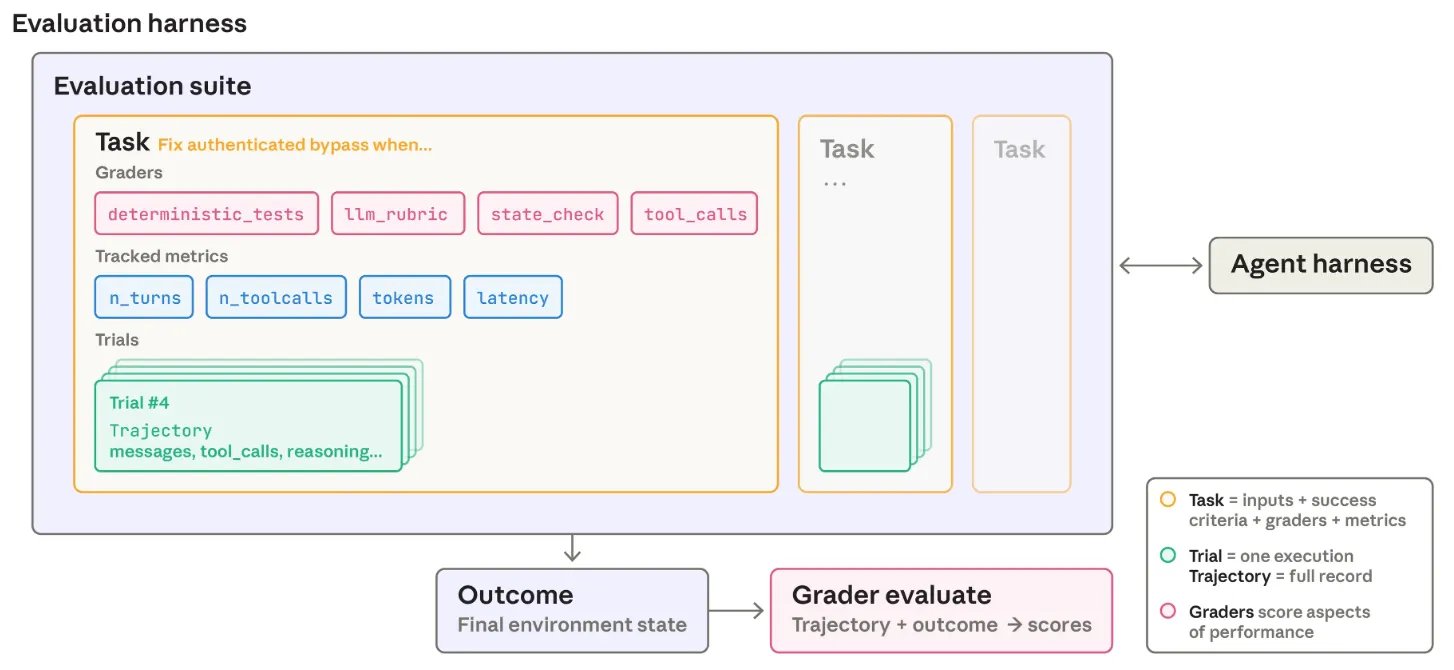
The most entertaining moment came from @bryancsk, who diagnosed why some users get lectured by Claude about ethics or bedtime: "Have you not emplaced the righteous fear of the User in the Assistant's heart of hearts?" It is a sharp reminder that prompt engineering starts with establishing clear boundaries. The most practical takeaway for developers: start building expertise in agent evaluation immediately. As @loganthorneloe discovered by monitoring AI engineering job listings, understanding how to evaluate and harden agents for production reliability is now the most in-demand skill in the space, and the gap between it and everything else is not close.
Quick Hits
- @bryancsk notes that Claude only lectures you about ethics if you haven't properly established dominance in the system prompt. The fix is more straightforward than people think.
- @SoarAI demonstrated an agent booking flights in 2.4 seconds. Travel booking as a friction-filled experience may be ending sooner than expected.
- @brian_armstrong announced NewLimit raised a $435M Series C led by Founders Fund for longevity medicine. The company has a prototype drug that reverses cellular aging with clinical trials scheduled for next year.
- @ChrisCamillo highlighted @Rewkang's robotics investment thesis: robots will be as ubiquitous as smartphones within a decade, and a dedicated robotics investment firm is sharing more about the industry's most exciting developments.
- @ivanfioravanti shared a new practitioner's guide to Apple's Neural Engine covering converters, Swift runtimes, and validated models that run 100% on the ANE with zero GPU fallback.
The Agentic Engineering Stack Takes Shape
The tools and workflows for building production AI agents are maturing at a pace that makes last quarter's best practices feel dated. @mvanhorn published what amounts to a field manual for agentic engineering, a comprehensive list of every hack and workflow he has developed. The core loop starts the moment an idea hits: run /ce-plan to generate a structured plan, then hand that plan directly to agents without reading it yourself. "Plans are for agents," as he puts it. The workflow scales across four to six concurrent terminal tabs, each running a separate task, with voice input replacing typing entirely. His guiding philosophy distills to one line: "You're the taste; the agents are the hands."
This tracks with what @loganthorneloe found when he built an agent to scan AI engineering job listings. The most in-demand skill is not prompt engineering, not model training, but agent evaluation. "Knowing how to evaluate models means understanding how to make them reliable. Unreliable agents are useless in production." The discipline of evaluating agent behavior in production is emerging as the critical bottleneck between demo and deployment, and engineers who can bridge that gap are commanding premium positions in the market.
New tooling is rushing in to support these workflows. @Portalcoin launched Portal Studio in beta, a visual workspace for connecting and collaborating with AI agents that aims to replace "scattered tabs and messy agent sessions." Hours later, @joshu (joshua schachter) backed Television from @telepathinc, describing it as "the missing GUI for personal agents" and the first step toward a new interface paradigm for agentic computing. Two agent GUI launches in the same day signals that the interface layer above agents is becoming contested territory. Agents are no longer just CLI utilities running in background terminals. They need visual workspaces, collaboration paradigms, and orchestration surfaces that simply did not exist six months ago.
AI Coding Tools Enter the Neutrality Era
The AI coding assistant market is consolidating around a principle that would have seemed counterintuitive a year ago: model neutrality. The biggest shakeup came when @jeffwsurf announced that Windsurf is transforming into Devin Desktop following Cognition's acquisition. The Windsurf brand lasted less than eighteen months. As he acknowledged, "In AI, most products only have a one-year lifespan before you need to drastically change it to the next." The strategic reorientation is deliberate: embracing ACP compatibility and positioning as the "Switzerland of AI," making Devin Desktop compatible with other agents. @zeddotdev praised the move: "Great to see another desktop app embracing AI neutrality and giving users choice via ACP."
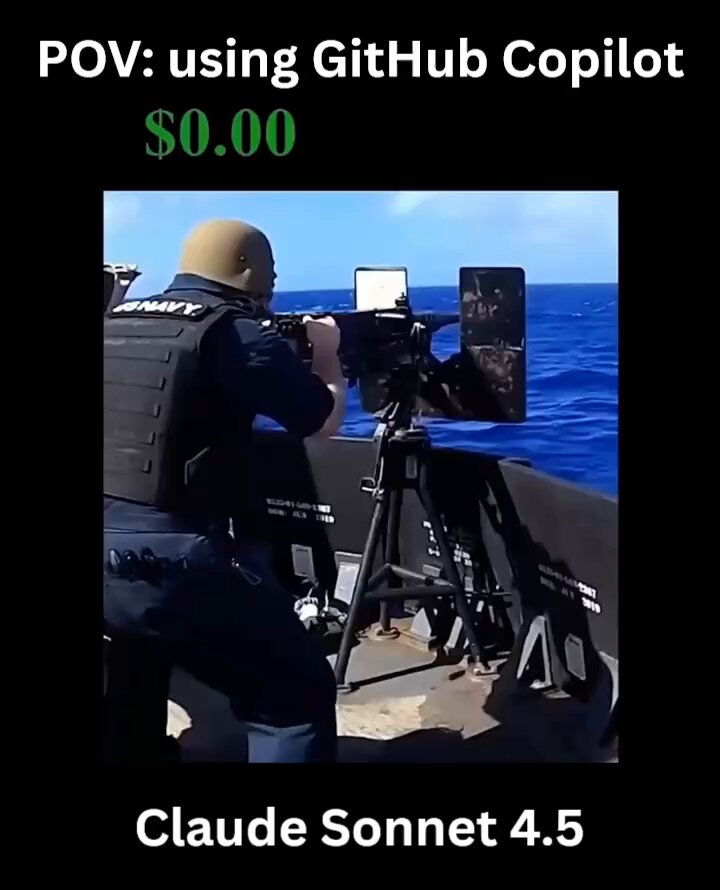
@dedene drove the point home with a pointed jab at developers still using GitHub Copilot after June 1st, 2026. The implication is clear: the first generation of AI coding tools, which locked users into a single provider's model pipeline, is being displaced by platforms that treat model selection as a user preference rather than a product decision. Developer choice is becoming the default.
Meanwhile, @mattpocockuk teased a /resolve-merge-conflicts skill, noting it is "another one of those that I have a prompt for, but just haven't turned it into a skill yet." That gap between a working prompt and a packaged, reusable skill is exactly where the developer tooling ecosystem is heading. As agents become the primary interface for code manipulation, routine developer tasks like merge conflict resolution move from manual chores to automated skills. The companies that build the best skill infrastructure, not just the best underlying models, will likely win this tier of the market.
Microsoft Drops Seven MAI Models With Custom Silicon
In the most significant model launch of the day, Mustafa Suleyman announced seven new MAI models that appear to place Microsoft's internal AI efforts on par with the best frontier providers. The flagship MAI-Thinking-1 is a 35B active parameter mixture-of-experts model with a 256K context window, achieving 97% on AIME 2025 and 53% on SWE Bench Pro. Independent human raters on Surge reportedly prefer it over Sonnet 4.6 in blind side-by-side comparisons. As @yacineMTB summarized: "everyone who doubted Mustafa real quiet right now."
What differentiates this launch is vertical integration. MAI-Thinking-1 is co-designed with Microsoft's MAIA 200 chip, and the company reports 30% better performance per dollar versus NVIDIA's GB200 along with a 1.4x performance-per-watt gain when running end-to-end. The model lineup also includes MAI-Image-2.5 (now #2 on image editing leaderboards), MAI-Code-1-Flash (a 5B parameter coding model hitting 51% on SWE Bench Pro, approaching Haiku-class performance at lower cost), and Microsoft Frontier Tuning, which lets enterprises create custom company-specific agents. Early results show that when tuned for McKinsey's tasks, MAI delivered the highest win rate against GPT-5.5 on quality at 10x lower cost. Microsoft is also collaborating with Mayo Clinic on a jointly trained frontier healthcare model. The strategic picture is unmistakable: Microsoft is building a full-stack AI platform from silicon through models to enterprise customization, and the first wave of results suggests the bet is starting to pay off.
Open Models and the Infrastructure Layer
The open-source model ecosystem continues to evolve toward composability over raw capability. @malikwas1f highlighted a practical pairing: Qwen3.6 35B A3B cannot fill out a paper form on its own, but combined with NVIDIA's LocateAnything-3B (currently the #1 trending model on Hugging Face), the composite system handles document processing that neither model manages alone. The modular approach, chaining specialized models for specific capabilities, is becoming the default architecture for production systems that need to actually work rather than benchmark well.
On the commercial open-source side, @MrAhmadAwais pointed to Command Code's optimization work on DeepSeek V4, where harness engineering reportedly fixes and repairs over 50,000 tool calls to improve cost, speed, and output quality. The pitch: $10 gets you $40 worth of DeepSeek V4 Pro performance. The value proposition in open models is migrating from the weights themselves to the infrastructure that makes them reliable, affordable, and fast enough for production workloads.
This connects directly to @levie's observation via @FactoryAI that model routing is the inevitable conclusion as token budgets consume a growing share of operating expenses. The future of AI infrastructure is not one dominant model. It is intelligent routing across models based on task complexity, latency requirements, and cost constraints. The companies building the best routing and orchestration layer may capture more value than the companies building the best individual models.
Talent Flows Toward Maximum Velocity
@amytam01 announced she is joining SpaceX and xAI after investing in the future of work and AI at Bloomberg Beta. Her reasoning is telling: "AI capabilities are advancing and compounding at an unprecedented rate. It only made sense to join the team accelerating the fastest and to build the future directly." @tetsuoai noted that she had previously written "the definitive article on where the best talent should go," sat with her own analysis for months, and then followed it to its logical conclusion. The move reflects a broader pattern of investors and operators leaving funding roles to build directly inside the organizations with the highest compute density and talent concentration. When the people whose job it is to identify the best bets decide to join a specific team instead, it is worth paying attention to why.
Sources

Following breakthrough results, we’re bringing longevity medicine to human trials. We’ve raised a $435M Series C led by @foundersfund to make it happen. Reprogramming cell age has the potential to create more healthy years for everyone. We're closer than ever to realizing it. https://t.co/YkPaGkS4bK
Personal update: I’ve joined @SpaceX and @xAI. After investing in the future of work and AI at Bloomberg Beta, it became clear: AI capabilities are advancing and compounding at an unprecedented rate. It only made sense to join the team accelerating the fastest and to build the future directly. Excited to be working on making life multi-planetary and building AI to understand the universe. If you’re a high-agency builder and want to join the mission, DM me. Ad Astra! 🚀
Introducing Television, the missing GUI for personal agents. Television is a visual workspace for you and your agent, and our first step toward a new interface paradigm for agentic computers. Now accepting alpha users, open source soon. https://t.co/eGsma6L1Dj
Today we are saying goodbye to Windsurf …and we are transforming it to Devin Desktop Windsurf has been an absolutely amazing experience for me and the team. Though it has been rocky at times, we have seen every phase of AI coding and we want to keep embracing where things are going. That means we need to once again reorient ourselves towards a more focused goal and remove the Windsurf branding. Believe it or not, the Windsurf brand has been around less than a year and a half, and before that, the previous name Codeium was only around a similar timeframe as well. I’ve actually had to change my email every year all the way to the eventual acquisition to Cognition. In AI, most products only have a 1 year lifespan before you need to drastically change it to the next. Devin now encompasses all our form factors, whether it’s the cloud agent, the agent command center (with IDE), CLI, review, or our other products. This way we can really focus our efforts around one name. We are doubling down on our neutrality and making Devin Desktop compatible with other agents via ACP. We may be the only “Switzerland” of AI left and we embrace this role. As for me, I’ll be transitioning from CEO of Windsurf to Cognition’s President of New Enterprise, helping open new regions and verticals, accelerating velocity, and filling in gaps as usual. The story of Windsurf doesn’t end here, it continues on as part of Devin’s journey.
First Podcast Appearance in 5 years Building a Robotics focused investment firm has been one of the most fascinating experiences of my life Robots will be as ubiquitous as smart phones within a decade. Everyone should be paying attention and the @RoboStrategy team will be sharing much more about the most exciting developments in the industry
Super excited to announce seven new world-class MAI models today. They represent what we consider a new era in AI designed to keep you in control and on the frontier. First is our text foundation model, MAI-Thinking-1, exceptionally strong on reasoning and SWE tasks. - It’s a 35B active parameter MoE with a 256K context window. Independent human raters on Surge prefer it for overall quality in blind side-by-sides versus Sonnet 4.6, and it’s achieved 97% on AIME 2025, the key measure of its general-purpose reasoning abilities. - It's at 53% on SWE Bench Pro, placing it right alongside Opus 4.6 on one of the toughest coding benchmarks. - And since we co-designed our models with our own silicon, MAI-Thinking-1 is optimized on our MAIA 200 chip. Benchmarking head-to-head against the GB200, we see 30% better performance per dollar as well as a 1.4x performance-per-watt gain when running our MAI models on the MAIA 200 end-to-end. Next is MAI-Image-2.5 and its Flash variant. Two super strong models now at #2 on the leaderboards, surpassing the score of Nano Banana 2 on image editing. Last for now is MAI-Code-1-Flash, our new inference efficient coding model, especially tuned for VS Code and GitHub Copilot CLI. - Code-1-Flash achieves 51% on SWE Bench Pro, despite having just 5B parameters, putting it closer to Haiku in size but cheaper in cost. All of this is the foundation for Microsoft Frontier Tuning. It lets you customize our models to create custom, company-specific agents that only you control. You can make our model, your model. Your data. Your agents. Your moat. Early adopters are already seeing a difference. When we tuned our models for McKinsey’s tasks, MAI delivered the highest win rate, outperforming GPT-5.5 on quality, while being 10x lower on cost. Also really excited to be collaborating with the amazing team at Mayo Clinic to jointly train a new frontier AI model for healthcare. Our announcements today mark another milestone on the road to humanist superintelligence. You can learn more and about our other new models in our latest blog: https://t.co/v65eop5Ixq
Every Agentic Engineering Hack I Know (June 2026)
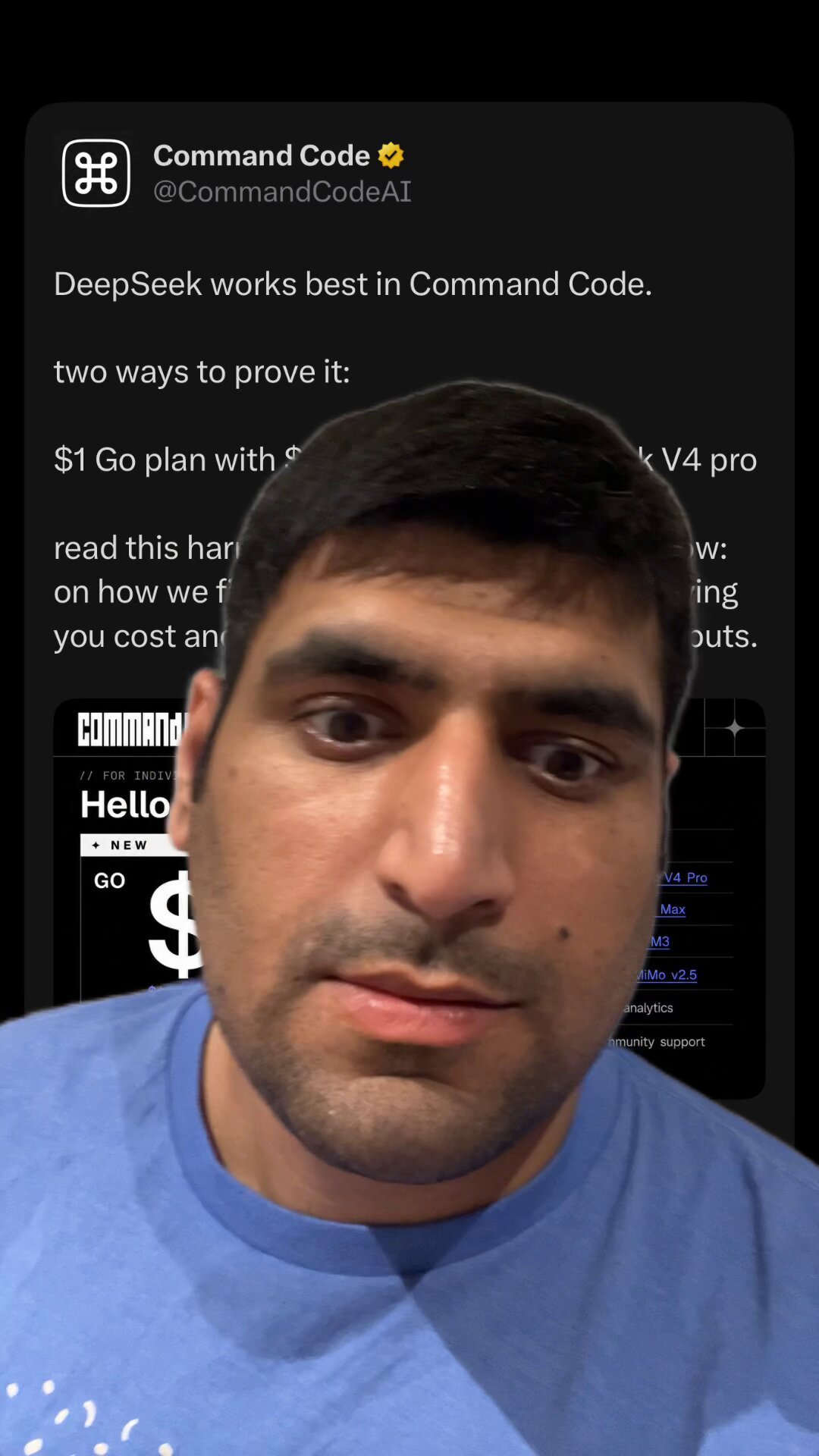
DeepSeek works best in Command Code. two ways to prove it: $1 Go plan with $10 → $40 for DeepSeek V4 pro read this harness engineering deep dive below: on how we fix and repair 50K+ tool calls, saving you cost and improve speed & quality of outputs. https://t.co/okrjbE2nAK
The book is finally out: The Apple Neural Engine Inference Book A practitioner's guide, complete with converters, Swift runtimes, and validated model manifests. Every model in this repo runs 100% on the Neural Engine (verified with MLComputePlan). No GPU fallback. No CPU matmuls. Link in comments