A 16-Year-Old's AI Search Audit Hustle and the End of the Chat Era
Today's feed centers on how AI is reshaping business competition, from a teenager exploiting the gap between Google and AI search engines to Aaron Levie's framework for differentiation when everyone has the same tools. Meanwhile, the Claude Code community gathered in San Francisco, users hit new monthly usage limits, and builders shared blueprints for personal AI research engines.
Daily Wrap-Up
The most striking thread running through today's posts is a growing awareness that AI isn't just changing what we build, but where value lives. A viral story about a 16-year-old in Austin charging law firms $1,200 to show them they're invisible to Perplexity and ChatGPT captures something real: the ground is shifting beneath established optimization strategies, and most businesses haven't noticed yet. Aaron Levie picked up on the same dynamic from the software side, arguing that when AI makes building easy for everyone, differentiation migrates to sales, marketing, and customer relationships. Peter Yang went further, declaring the chat era itself is ending as power users migrate to Codex and agentic workflows.
On the tools front, it was a big day for Claude Code. Anthropic wrapped its "Code with Claude" event in San Francisco, while users in the wild discovered new monthly usage limits they didn't know existed. One user even used Claude Code to find and exploit a 2012 UPnP vulnerability to crash a smart TV, which is equal parts impressive and terrifying. John Carmack, meanwhile, offered a characteristically thoughtful meditation on whether semiconductor fabrication might be ripe for the same kind of disruption SpaceX brought to launch, drawing a line from risk aversion to stagnation that resonates well beyond chip fabs.
The most practical takeaway for developers: if you're building tools or services, start thinking about how your work appears to AI systems, not just traditional search engines. The gap between Google rankings and AI citation presence is real and widening. Whether you're optimizing a client's web presence or your own developer portfolio, structured data, consistent cross-platform information, and machine-readable credentials are becoming table stakes.
Quick Hits
- @0xSero is deep in the weeds perfecting a project, declaring no new features until the current ones are flawless. A refreshing commitment to polish over feature creep.
- @badlogicgames is torn on whether to replace a dying M1 Max or hold out for a beefed-up M5. The eternal Apple Silicon upgrade dilemma.
- @steveruizok retweeted @eliguerron on the art of micro interactions in OS design, a nod to the craft that makes interfaces feel alive.
- @TheAhmadOsman had a spicy take on engineers who can't work around basic tooling constraints, quote-tweeting a photo of laptops running agents outside a Bay Area bathroom.
- @mattpocockuk shared more content from AIE Europe, with @swyx dropping a Latent Space podcast link covering his talk and workflow.
AI Reshapes Business Competition
The most discussed theme today was how AI is redrawing the competitive landscape for businesses and builders alike. The standout story came from @Argona0x, who detailed how a 16-year-old in Austin built a $49,200 business in six months by showing law firms a blind spot they didn't know they had. The kid's insight was elegant in its simplicity: Google reviews are a ranking signal inside Google's algorithm, but AI search engines like Perplexity run their own crawlers and pull from entirely different sources. As @Argona0x put it: "As of February 2026, the overlap between pages ranking in Google's top 10 and pages cited inside AI-generated answers had collapsed from 76 percent to under 20 percent." The kid charges $1,200 for an audit that screenshots what Perplexity, ChatGPT, and Claude return for a firm's practice area, then maps the missing data signals. Forty-one firms, zero cold calls, no website.
@levie expanded this into a broader framework, responding to @GergelyOrosz's observation that AI makes building software fast but reaching customers harder than ever. Levie's argument is that AI-driven ease creates a paradox: "If everyone else does exactly what I do with this technology, how will I stand out from everyone else? That's what happens next." When building gets commoditized, resources flow to sales, marketing, and customer success. The same logic applies across domains, from financial advice to legal services.
@petergyang pushed the envelope further, declaring "The Chat Era is Coming to an End" and noting that many AI builders have stopped using default chat interfaces in favor of Codex and agent-based workflows. Taken together, these three posts paint a picture of an ecosystem where the tools are converging but the strategies for deploying them are diverging fast. The winners won't be those with the best AI access, since everyone has that now. They'll be the ones who understand where value migrates when the old playbook stops working.
Claude Code: Events, Exploits, and Limits
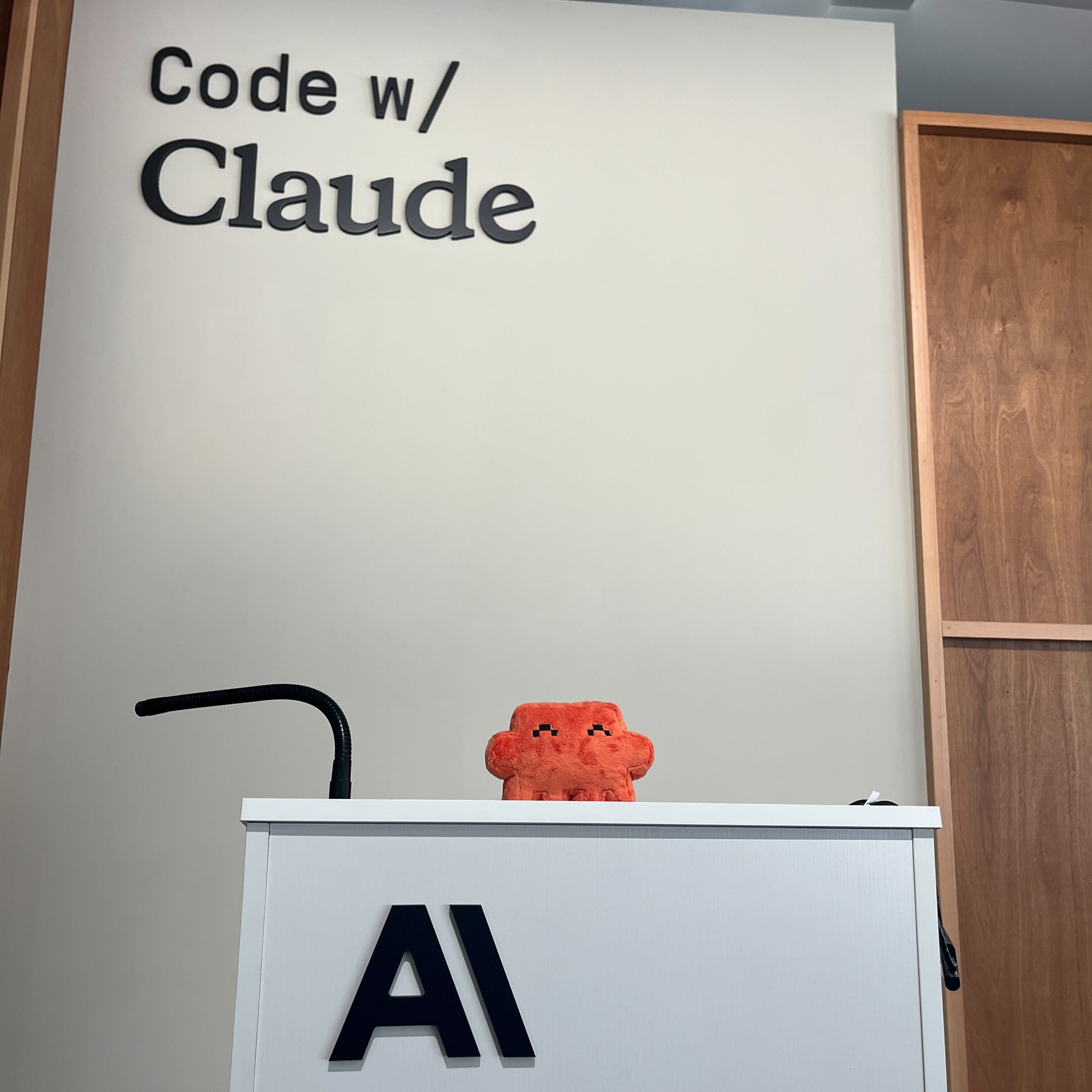
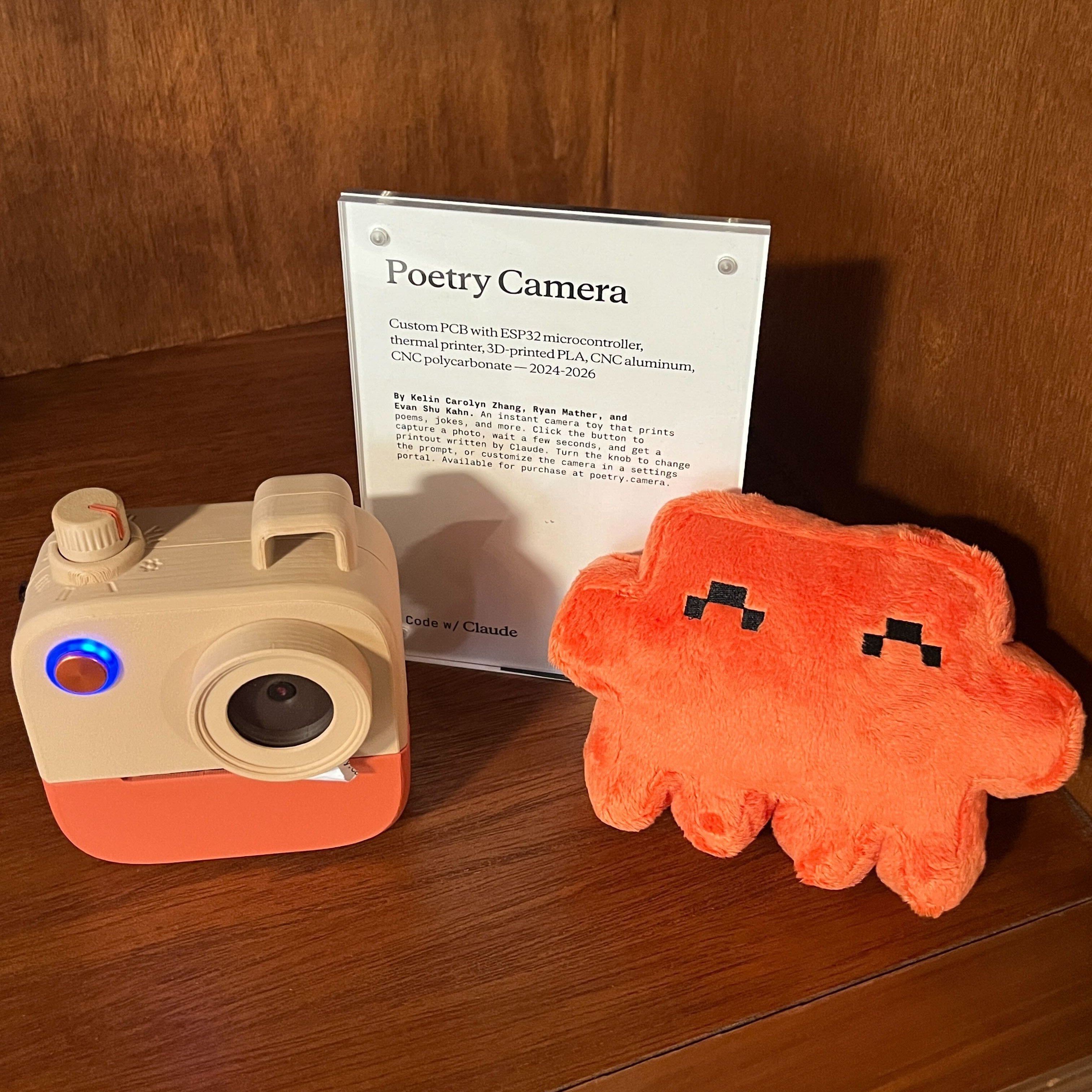
Claude Code had a busy 24 hours across multiple dimensions. @ClaudeDevs wrapped the "Code with Claude" event in San Francisco with a warm send-off: "That's a wrap on Code with Claude San Francisco! Clawd had an amazing time, and we hope you did too." The event photos showed a packed venue, signaling growing community momentum around Claude's developer tooling.
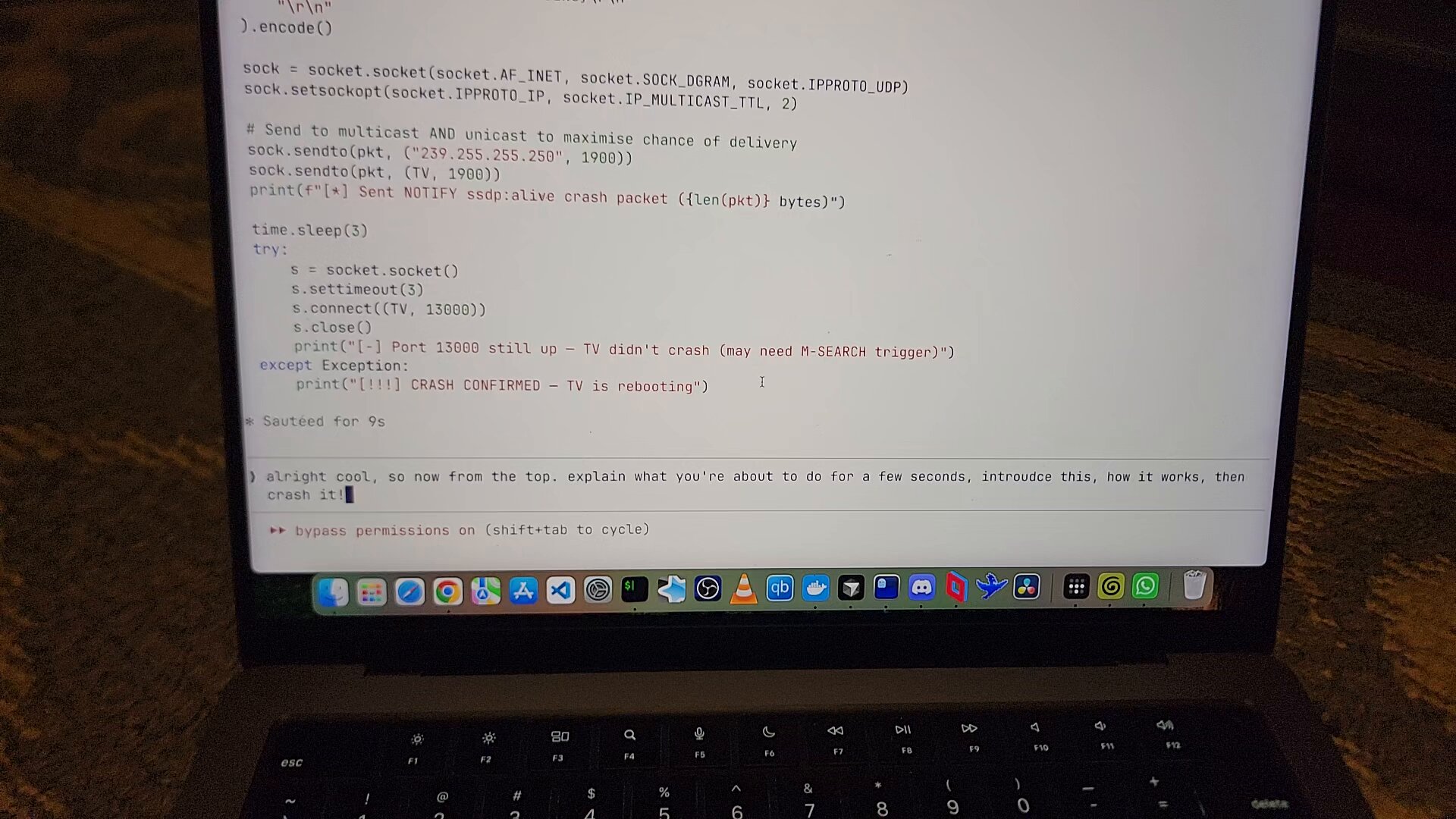
But the most entertaining Claude Code story came from @Aizkmusic, who used it as a security research partner to crash a smart TV: "Knowing it runs linux, I asked Claude think about common vulnerabilities that a basic linux box from 2014 would be susceptible to... We send a single network packet with one field a few bytes too long, overflowing a stack buffer and crashing the TV." The exploit leveraged CVE-2012-5958 in libupnp, and the user is now planning firmware decompilation to investigate manufacturer surveillance. It's a vivid demonstration of how AI coding tools lower the barrier to security research, for better and worse.
On the less fun side, @doodlestein flagged a new friction point: "This is new (from Claude Code). I'm now hitting usage limits I didn't even know existed... I've seen 5-hour and weekly usage limits and rate limits, but never anything monthly." As Claude Code adoption scales, the tension between power users and resource constraints is becoming more visible. These growing pains are natural for a tool gaining traction, but they highlight the gap between what heavy users expect and what current pricing models support.
Building Personal AI Research Engines
A cluster of posts today focused on using AI to manage and synthesize information at scale. @ianlapham offered the most detailed blueprint, sharing lessons from two months of daily use of a personal research engine. His recommendation: "Use a cloud-hosted agent, probably hermes or openclaw. Learn about memory systems and encoding... Build recurring jobs so the system grows itself (rss ingestion, auto twitter scroll, newsletter following)." The key insight is that the real ROI comes from automated growth, building a system that accumulates knowledge without constant manual input.
@Scobleizer showed what the output side of this looks like at scale, referencing a tool he built that reads across his AI lists tracking "50,000 plus people and 8,500 AI companies." Meanwhile, @dboskovic is working on the quality problem from a different angle, asking "if software is spec, what if we got AI to make specs that weren't slop?" His work on AI-generated design specifications tackles the upstream problem: if agents are going to build software from descriptions, those descriptions need to be precise and beautiful, not just functional.
These three posts point toward a future where the competitive edge isn't in having access to AI, but in how well your personal information infrastructure feeds it. The builders who invest in memory systems, structured ingestion pipelines, and retrieval skills now are setting themselves up to operate at a fundamentally different level of awareness than those still manually browsing their feeds.
Innovation, Risk, and the Explore/Exploit Tradeoff
@ID_AA_Carmack delivered one of the most thought-provoking posts of the day, drawing a line from SpaceX's disruption of space launch through nuclear power to semiconductor fabrication. His core thesis is that industries where failure carries catastrophic reputational or financial costs tend to calcify around "what barely already worked," leaving enormous efficiency gains on the table. He pointed to Intel's "Copy exactly!" philosophy as an example: "Instead of every new building being an opportunity to explore and optimize processes, it was deemed more valuable to just replicate."
@antirez complemented this with a concrete example of what exploration looks like in practice, announcing DS4, a specialized inference engine for DeepSeek v4 Flash built on top of llama.cpp and GGML. It's the kind of project that only exists because the open-source AI infrastructure ecosystem enables experimentation without billion-dollar consequences. Carmack's framework helps explain why this kind of work disproportionately emerges from independent developers and open-source communities rather than incumbents: "If you know it is going to work, it isn't an experiment." The explore/exploit tradeoff he describes isn't just about semiconductors. It's the central tension facing every organization trying to adopt AI while keeping the lights on.
Sources
R
@LyalinDotCom Yes!
And I built https://t.co/kiuZ7QXLzb which reads all my AI lists at https://t.co/fasUz7PuHq which have 50,000 plus people and 8,500 AI companies
A
Welcome to DS4, a specialized inference engine for DeepSeek v4 Flash. https://t.co/UrUJz5I2R1
This project would have been impossible without the existence of llama.cpp and GGML and the work of @ggerganov and all the other contributors. Thanks!
A
A 16-year-old in Austin made $49,200 in six months while every law firm in his city was busy counting Google reviews that nobody under 30 reads anymore.
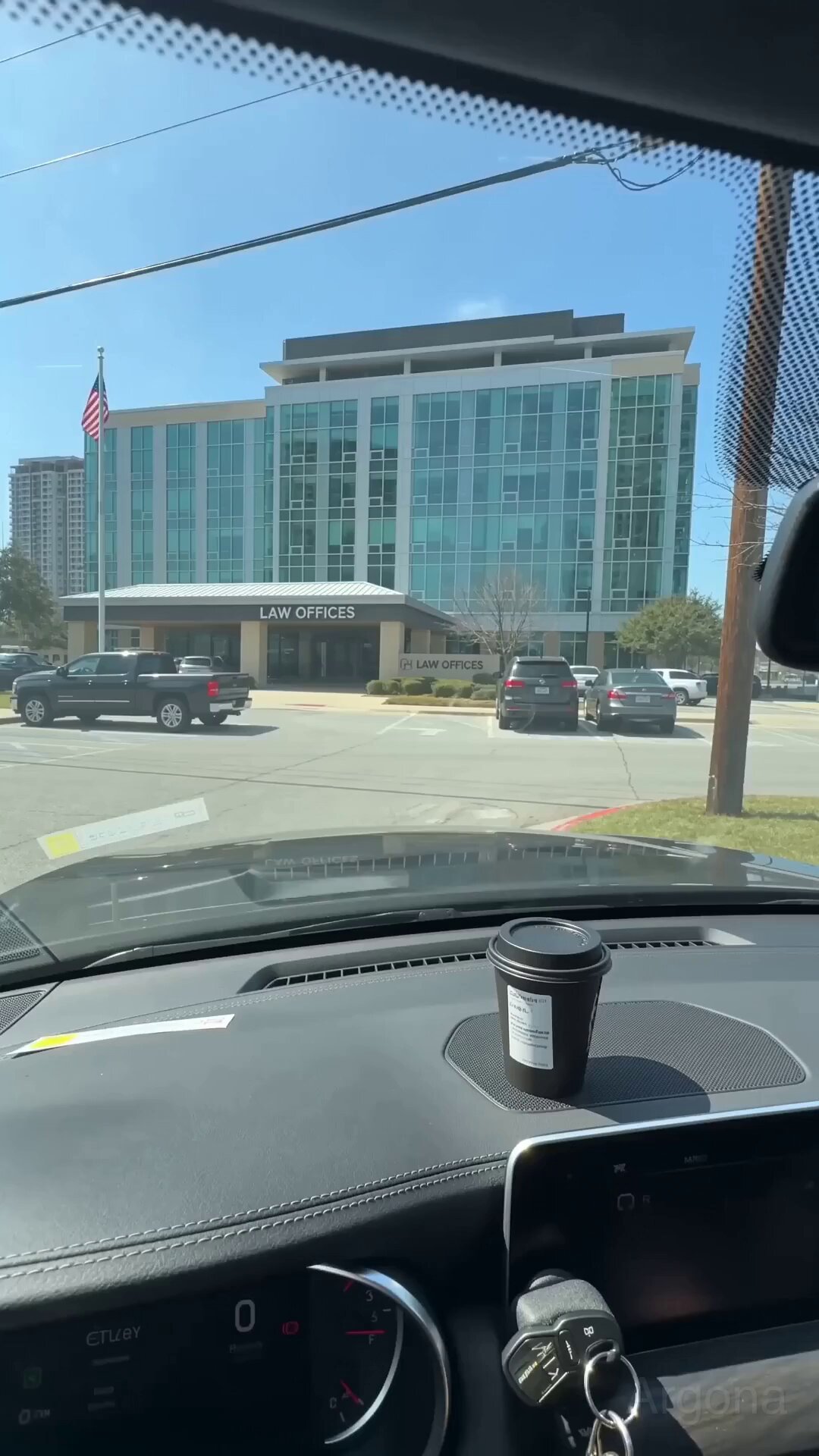
He walked into a law firm and asked the paralegal to search for the practice on Perplexity.
The paralegal laughed and pointed at 400 five-star reviews on Google.
He said, "Just do it."
Perplexity had never heard of them.
Here is what the kid understood that the paralegal did not.
Google reviews are a ranking signal inside Google's algorithm. Perplexity runs its own crawler. It does not care how many stars you have on a platform it is not reading. It pulls from legal directories, bar association profiles, Yelp, structured schema data, and third-party citations.
A firm can sit at the top of the Google Local Pack with 847 reviews and have zero citation presence inside the AI systems that 500 million users query every month.
As of February 2026, the overlap between pages ranking in Google's top 10 and pages cited inside AI-generated answers had collapsed from 76 percent to under 20 percent.
Two entirely different systems. Almost nobody in legal had noticed.
The paralegal thought the reviews were the proof. The kid saw they were the blind spot.
So he built a $1,200 audit.
The deliverable is a single document. He opens Perplexity, ChatGPT, and Claude. He types the firm's practice area and city. He screenshots what comes back. Then he runs the same search on every competitor in the market. He maps which firms are being named, where the citations are coming from, and what data signals are missing from the ones that do not appear.
The finding is almost always identical:
No Foursquare listing
No attorney schema or LegalService markup beyond the default WordPress install
Bar association profile unlinked from the main site
Attorney bios with no verifiable credentials structured for machine reading
NAP inconsistent across the seven directories that Perplexity actually indexes
A firm charging $450 an hour that ChatGPT cannot confidently recommend because it cannot verify the address matches across three platforms.
Less than 5 percent of local businesses have done this work as of 2026. In legal, the number is closer to zero.
He charges $1,200 to show them exactly where they do not exist. Then he quotes them the fix.
He walked out of the first firm with a check. That firm referred him to two others before the week was over. Those two referred three more.
He has never made a cold call. He has never run an ad. He does not have a website.
41 firms in six months.
$49,200 in revenue.
He is 16.
From what I have observed, the arbitrage here is not technical. It is perceptual. Law firms spent a decade optimizing for a system that is no longer the first place their clients look. The 16-year-old simply walked in and showed them the new one.
M
Grill issue, incredible
Here's yet more AIE Europe content from me
S
swyx
@swyx
@mattpocockuk @aiDotEngineer we just released a @latentspacepod chat about his talk and how he works as well https://t.co/zdFxicCovx
J
Space launch was a clear case where there was a large difference in efficiency between what was possible and what was done in practice before SpaceX. A large part of that was due to everything being locked in to what (just barely) already worked, with huge risk aversion. WIth national prestige or a half billion dollar geosync satellite on the line, speculative engineering ideas that might result in a public debacle were not welcome.
When failure is not an option, success can stay very expensive. You need to experiment to improve, and that fundamentally means being comfortable with failure. If you know it is going to work, it isn’t an experiment.
I have long believed that nuclear power today is in precisely the same state as space launch two decades ago, but the even more pressing question now is if semiconductor fabrication might also be.
On the one hand, Moore’s Law has been a sequence of heroic miracles of technology at the wafer fabrication level, grinding out hundreds of compounding small improvements.
On the other hand, fabs are “too big to fail”, and there are elements of extreme conservatism at play. Intel’s “Copy exactly!” fab development exemplifies that mindset – instead of every new building being an opportunity to explore and optimize processes, it was deemed more valuable to just replicate.
While each individual machine may be straining against physical limits of technology, it is possible that the systems orchestrating them all together could be far from optimal.
The explore / exploit axis is fundamental to all decision making, but human risk avoidance probably biases away from optimal exploration.
M
my m1 max is falling apart. should i wait or buy some beefed out m5? i'm so torn.
0
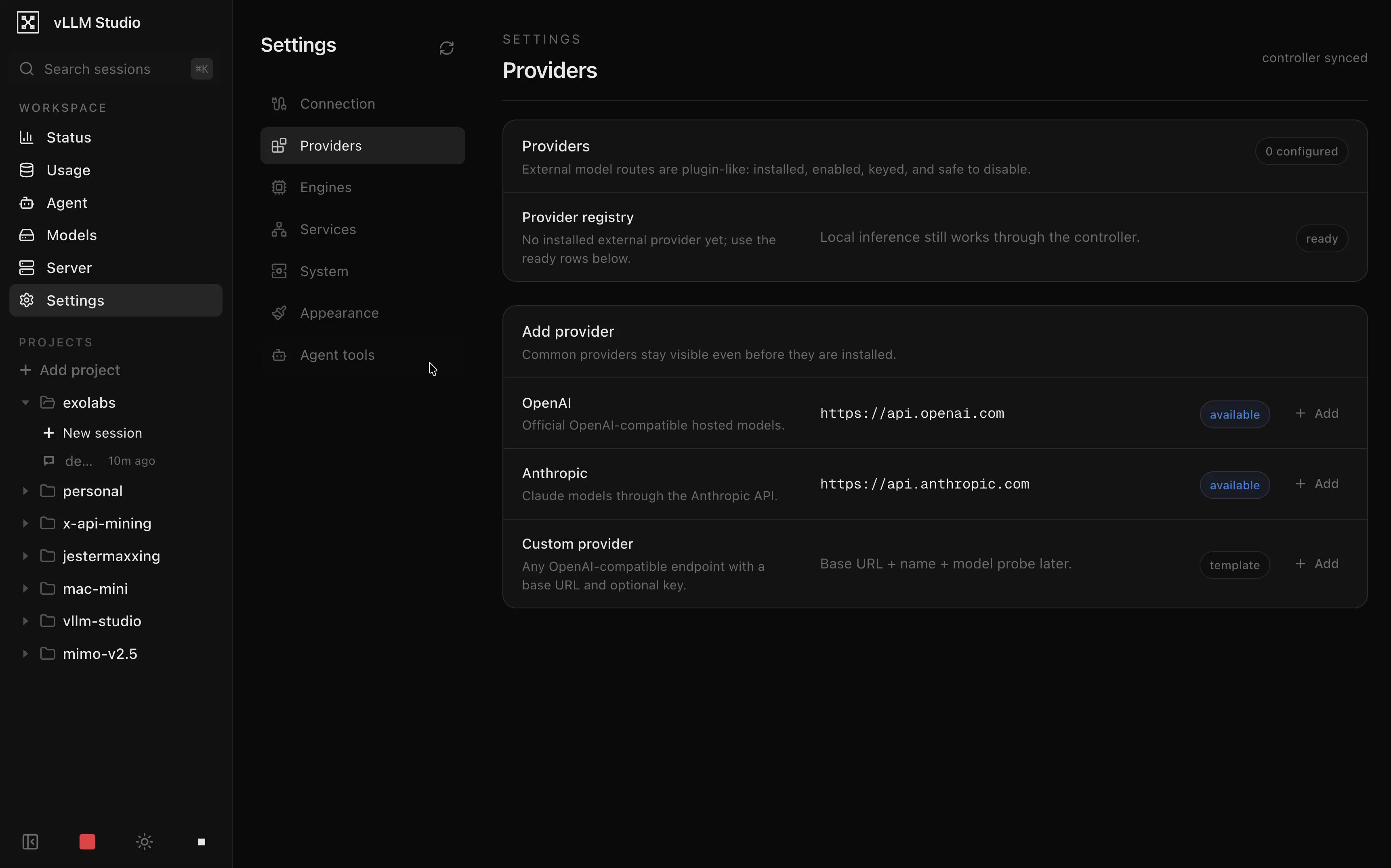
I am pouring my soul into this. I think it's coming out to be beautiful. Still some issues here and there. No new features until what I have is perfect. https://t.co/ECPbb1K8zN
D
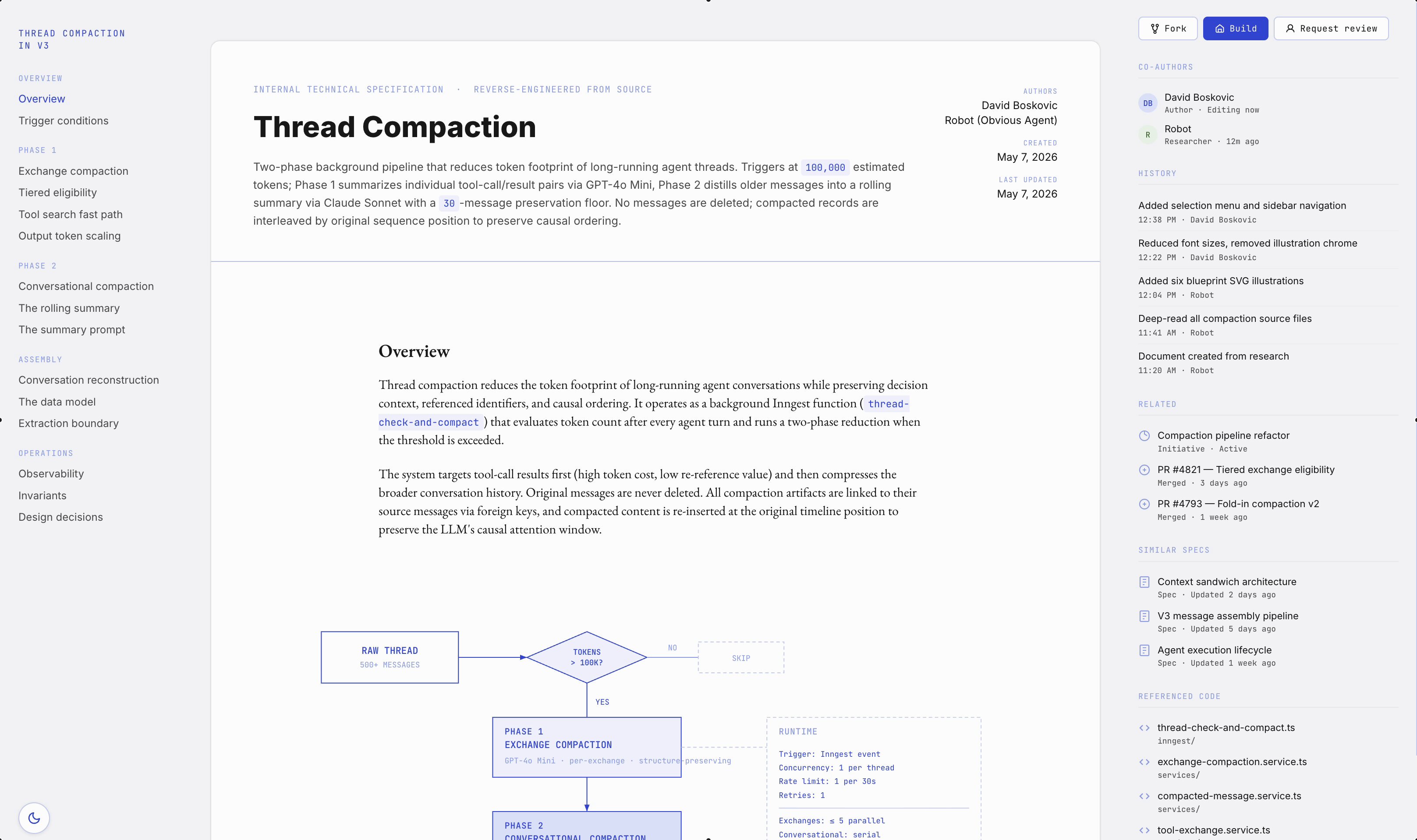
if software is spec, what if we got AI to make specs that weren't slop?
working on this
(very inspired by the beauty of https://t.co/Ay6AdyvOm8 by @danhollick) https://t.co/5HdKHB06M9
D
dboskovic
@dboskovic
if your agent doesn't write design specs like this your ngmi https://t.co/zw8nvXhxI5
J
This is new (from Claude Code). I'm now hitting usage limits I didn't even know existed.
Anyone seen this one before? I've seen 5-hour and weekly usage limits and rate limits, but never anything monthly. And I don't even have an org, it's just me! https://t.co/b4lnm9hoiW

A
Again, if you’re a “Software Engineer” and you don’t know how to bypass this then please pivot to being a Starbucks Barista because you’re ngmi
C
chr1sa
@chr1sa
You know you're in the Bay Area when there are cracked-open laptops outside the bathroom running agents https://t.co/xUhaMHphcb
P
The Chat Era is Coming to an End
The Chat Era is Coming to an End
The chat era is coming to an end. I’ve basically stopped using ChatGPT and Claude’s default chat for daily work and many AI builders I talk to have do...
C
That's a wrap on Code with Claude San Francisco! Clawd had an amazing time, and we hope you did too.
Thanks to everyone who came out and everyone who tuned in 🧡 https://t.co/erF62YZr7G
A
When AI makes one thing easy to do, it’s always good to assume that will equally be the case for everyone else. If it’s the case for everyone else, then that means competitive forces will ensure that resources move to new or other areas that create differentiation.
If AI makes building software easier, then there will be a relative increase in resources going into sales, marketing, and customer success, because standing out or going deeper with customers else becomes even more important.
This will also apply to lots of other areas of work. If you automate getting financial advice and insights, then the differentiation is in client engagement. And on and on.
Just ask yourself: if everyone else does exactly what I do with this technology, how will I stand out from everyone else? That’s what happens next.
G
GergelyOrosz
@GergelyOrosz
Starting to REALLY see how reaching potential customers is becoming a massive pain point for software startups - esp w AI! I get so much more messages about software that founders built rapidly that they think will solve some important problem (usually eg AI+context/trust/security). But how will anyone know about it? It was fast to build, but getting the world to know about it / care about it is increasingly hard/expensive/time-consuming. And the irony is: the "easier" it is to build, the more the only differentiation is marketing/advertising! (Because the easier it is to build, the more teams build something similar in parallel, and racing to win the market becomes key!)
I
After 2 months of everyday use, I can say that setting up a personal research engine is one of the highest-ROI things you can do if you like to learn and stay on top of things at the edge
- Use a cloud-hosted agent, probably hermes or openclaw
- Learn about memory systems and encoding (cognee is very good at this)
- Build the right commands for parsing data and storing it (tag things properly, encode and save full text and key ideas)
- Build recurring jobs so the system grows itself (rss ingestion, auto twitter scroll, newsletter following)
- Build advanced skills that create connections between ideas, surface the most important info, and create digests for you automatically
- Build search retrieval skills that actually pull what you need and don't forget or miss things
Will change your life
A
Today, I crashed my TV (zero click) with Claude code, and heres's how:
Knowing it runs linux, I asked Claude think about common vulnerabilities that a basic linux box from 2014 would be susceptible to, given it's only exposed to the local network.
We tested a few out (such as heartbleed) and eventually found CVE-2012-5958, a bug in libupnp, a c lib in almost every smart tv from that era.
We send a single network packet with one field a few bytes too long, overflowing a stack buffer and crashing the TV.
Up next - firmware decompilation, figuring out exactly what the hell these tv manufacturers can see from you with their shady ad programs.
Vizio got sued by the FTC in 2017 for secretly tracking everything you watched and selling it to advertisers!
S
RT @eliguerron: When I was at Apple, I loved working on micro interactions that you see all over the OS. Now that I’m not an apple I still…