Cursor Ships Auto-Fix CI Agents as Coinbase Cuts 14% to Build "Pod-of-One" AI Teams
The agentic coding wave accelerated today with Cursor launching always-on CI failure agents and Ramp demoing self-maintaining software factories. Coinbase's 14% layoff sparked intense debate about "pod-of-one" org structures, while Chinese LLMs continued gaining ground with practitioners reporting 90% drops in Claude usage.
Daily Wrap-Up
The throughline today is unmistakable: agents are no longer a research curiosity but an operational reality reshaping how code gets written, maintained, and shipped. Cursor announced always-on agents that monitor GitHub and open PRs to fix CI failures. Ramp demoed software that maintains itself overnight. Browser Use gave its Hermes agent self-improving browser tools. Nous Research shipped agent-driven video production. The walls between "AI assistant" and "AI coworker" are dissolving fast, and the tooling is arriving to make that concrete rather than aspirational.
Meanwhile, Brian Armstrong's email announcing Coinbase's 14% reduction landed like a grenade in the discourse. The rationale was blunt: AI means fewer people can do more, so the org needs to flatten and the remaining humans need to be "player-coaches" managing fleets of agents. Gokul Rajaram's "pod-of-one" framework turned that into a hiring philosophy, and Mario Zechner endorsed a post arguing "the layoffs will continue till we learn to use AI." Whether you find this galvanizing or dystopian probably depends on which side of the layoff email you're on, but the operational shift is real and accelerating. On the model side, practitioners are increasingly choosing Chinese LLMs for daily work, with one user reporting Qwen 3.6, Kimi K2.6, and DeepSeek V4 have replaced 90% of their Claude usage. The inference optimization race is heating up too, with DFlash promising 6x speedups on Gemma 4 and Unsloth publishing guides for running open models locally on 24GB of RAM.
The most practical takeaway for developers: invest time this week learning one agentic coding workflow end-to-end, whether that's Cursor's new CI auto-fix, a background coding agent pattern like Ramp's, or simply running a local model through Claude Code via Unsloth's guide. The gap between "uses AI to autocomplete" and "orchestrates agents to ship" is becoming the gap that matters for career durability.
Quick Hits
- @JustJake poses a riddle about what comes after CPU shortage (nine letters... "GPU cores"? "bandwidth"? The replies are probably entertaining).
- @coreyganim breaks down a $999-to-$10K AI consulting upsell playbook: discovery call, Claude transcript analysis, Gamma report, then 60% of clients ask you to build it for them.
- @TheAhmadOsman recommends cloning SGLang Mini and using Codex CLI with GPT 5.5 to teach yourself how inference engines actually work. Solid learning hack.
- @0xSero is collecting agent traces from Claude Code and Codex sessions to build open-source training data for models "better than Opus." Interesting crowdsourced approach to post-training.
Agents Take Over the Software Factory
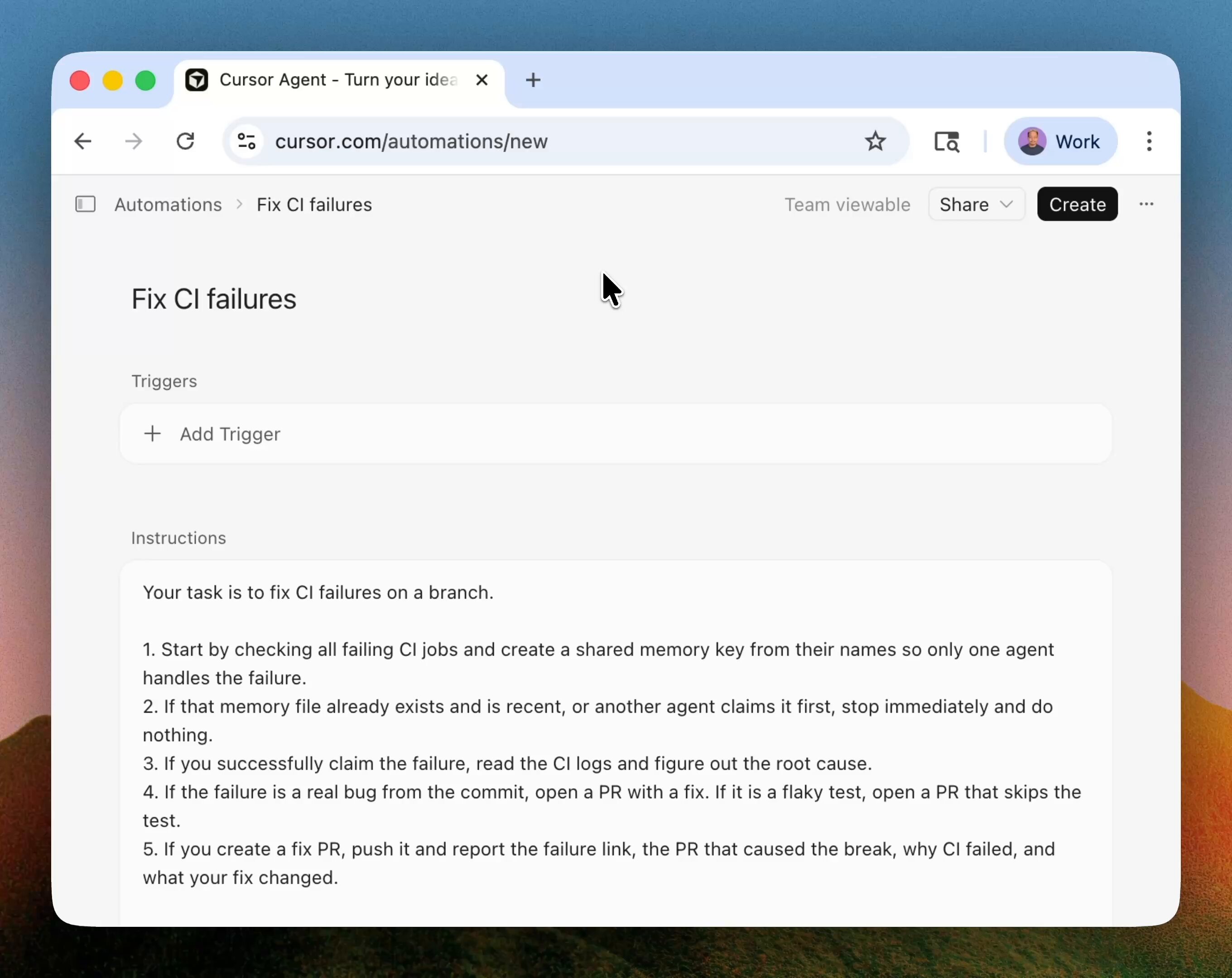
The single biggest theme today is the rapid expansion of what AI agents can autonomously do in software development. This isn't about code completion anymore. We're watching the emergence of agents that monitor, diagnose, fix, and ship without human initiation. @cursor_ai made the most concrete announcement: "Cursor can now automatically fix CI failures. Set up always-on agents that monitor GitHub, investigate root causes, and open PRs with fixes." That's a meaningful leap from "agent writes code when asked" to "agent watches your pipeline and intervenes when things break."
Ramp is pushing even further into autonomous territory. @mattturck shared a detailed breakdown of Ramp Labs' approach, describing "code self-maintaining software and the concept of AI software factories." The key architectural insight is using Datadog monitors to give agents state and focus, moving beyond stateless monitoring into genuine autonomous triage. As the talk outlined: "Using Datadog monitors to give the AI state and focus... Real-world example: AI autonomously fixing an authentication bug."
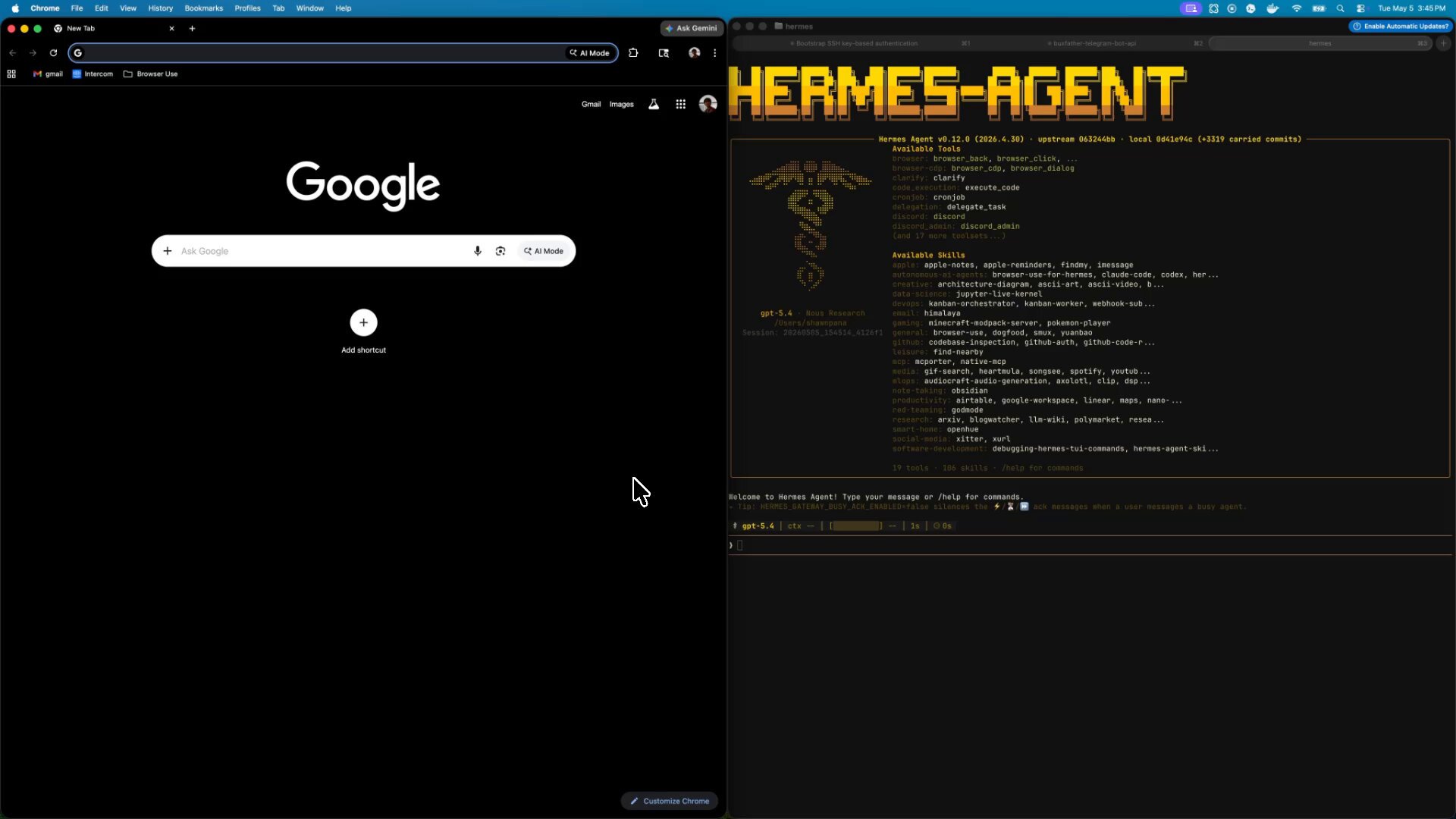
@browser_use announced that Hermes agent now has "self-improving browser tools, parallel stealth cloud browsers, full freedom within your browser," while @NousResearch shipped a HyperFrames skill letting Hermes agents build full videos from HTML. And @steipete showed what one productive human plus Codex looks like in practice, shipping ten different tool integrations (Sonos, WhatsApp, X archive, GitHub archive, Discord, Spotify, iMessage, and more) in what appears to be a single productive session. The pattern across all of these is convergent: agents are gaining more environmental access, more autonomy, and more ability to chain complex operations together. The human role is shifting from executor to architect and reviewer.
The Pod-of-One: AI Reshapes Org Structure
Coinbase's 14% layoff catalyzed the day's most substantive debate about what AI means for how companies are built. @brian_armstrong's internal email was remarkably direct: "We are not just reducing headcount and cutting costs, we're fundamentally changing how we operate: rebuilding Coinbase as an intelligence, with humans around the edge aligning it." The specifics included flattening to five layers max, eliminating pure managers, and experimenting with "one person teams."
@gokulr turned this into a broader framework he calls "pod-of-one thinking," arguing this model "rewards a very specific kind of builder: technical enough to inspect the work, product-minded enough to choose the right problem, tasteful enough to reject mediocre output, fast enough to ship before the org forms around the idea. The scarce skill is judgment." His core claim is that one strong person with agents can now do the work of a small pod, but "one weak person with agents just creates more output for someone else to review."
@badlogicgames endorsed the sharpest version of this argument, quoting @championswimmer: "The layoffs will continue till we learn to convert AI-tokens into outcomes and not just input." Whether the pod-of-one model scales beyond early-stage product work remains an open question, but the directional bet from a public company CEO is notable. The implication for individual developers is clear: breadth of capability (product sense, design taste, technical depth) now compounds in value because agents can fill the execution gaps.
Chinese LLMs Gain Ground in Daily Workflows
A striking practitioner report from @HealthRanger laid out a three-model workflow built entirely on Chinese LLMs: "Qwen 3.6 27b - Outstanding for its size... turn off thinking and it screams with speed and accuracy. Kimi K2.6 - Highly-capable coding model... Replaces Claude for most tasks. DeepSeek V4 - Outstanding at bug-fixing... the 1M context window that's native to the model." The punchline: "My Claude usage has dropped by 90%, and I'm still getting everything done."
On the optimization front, @runsonai documented going "from 23 tok/s to 79 tok/s on my GX10 (DGX Spark) on Qwen3.6-35B-A3B by changing some configs, parameters and firmware upgrades." That's a 3.4x speedup through configuration alone, suggesting many users are leaving significant performance on the table. Meanwhile, @malikwas1f highlighted DFlash for Gemma 4 promising "up to 6x faster" inference through Multi-Token Prediction. The inference cost curve keeps steepening, and the models benefiting most from optimization work are increasingly the open-weight ones where the community can actually tinker with the serving stack.
Context Engineering Emerges as a Discipline
"Context engineering" is solidifying as the term for what separates effective agent builders from everyone else. @neilrahilly shared an article arguing that "for agents, it's context," describing context engineering as the key skill for building great agent systems. The piece frames it as the agent-era equivalent of prompt engineering, but broader: it encompasses what information an agent has access to, when it receives it, and how it's structured.
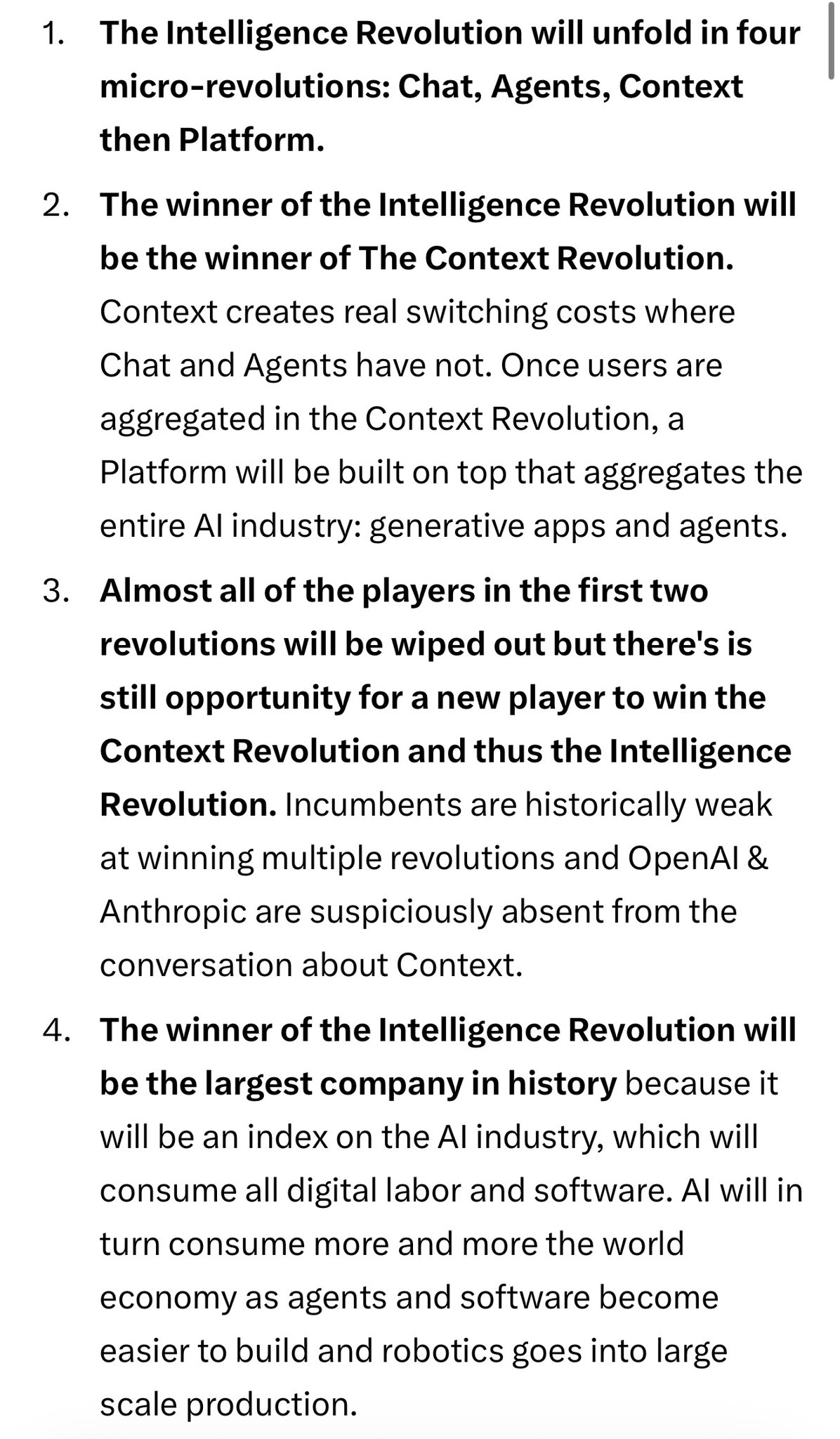
@thatguybg made the competitive case even more boldly in a 3,000-word take arguing "a new AI startup can in fact beat Anthropic and OpenAI, they just need to win the context layer." Combined with @loganthorneloe's thread on why AI engineering is so difficult (centering on the challenge of evals), a picture emerges of a field that's moved past "make the model smarter" as the primary bottleneck. The hard problems now are environmental: what context does the model see, how do you evaluate whether it's working, and how do you build reliable systems around fundamentally probabilistic components.
Developer Tools and Workflow Patterns
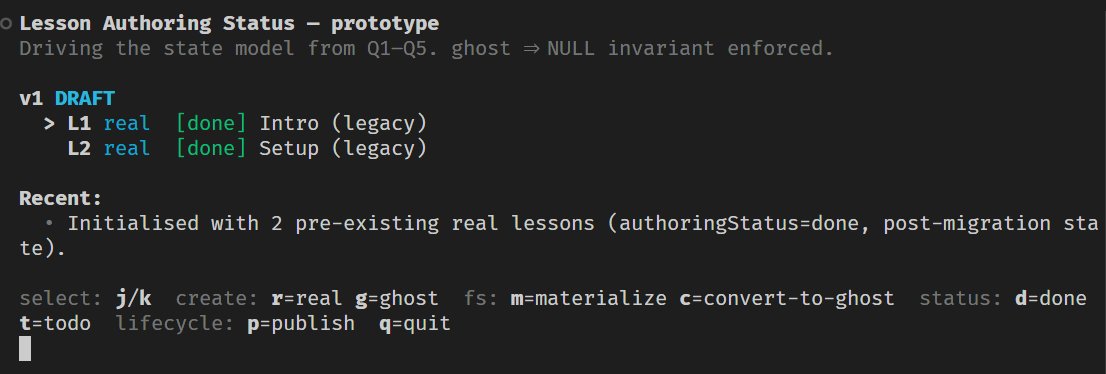
Several posts today offered concrete workflow improvements for developers working with AI. @mattpocockuk shared a new skill for prototyping business logic that "builds a TUI to help you shortcut through state transitions," calling it "SO much better than a spec for providing fine-grained feedback." @dillon_mulroy reported merging at least one PR daily using Pocock's improve-codebase-architecture skill, calling it his "favorite work each day."
@doodlestein shared a detailed agent prompt he calls "the repo junk cleaner," designed to have an AI identify and organize ephemeral files that accumulate during development: "random JSON artifacts, .md output files that are intermediate files generated by skills" and similar detritus. It's a small but practical example of using agents for codebase hygiene rather than feature development. @helloiamleonie took a different approach, studying a blog post about virtual filesystems for agents, then implementing a proof-of-concept "virtual filesystem over Elasticsearch" because the original article had no code. @UnslothAI published a guide for running "Gemma 4 and Qwen3.6 GGUFs for local agentic coding on 24GB RAM" through Claude Code and Codex, with "self-healing tool calls, code execution, web search." The common thread: the tooling layer around AI coding is maturing fast, and the developers investing in workflow optimization are compounding their productivity gains.
Sources
0
Do you want to learn to use AI, and contributed your session data to open source so we can train better models?
Models better than Opus
We need as many people as possible to contribute their agent traces from their claude code + codex history
Pi's Mario & I both shared ours. https://t.co/pqDTqIOzfI

L
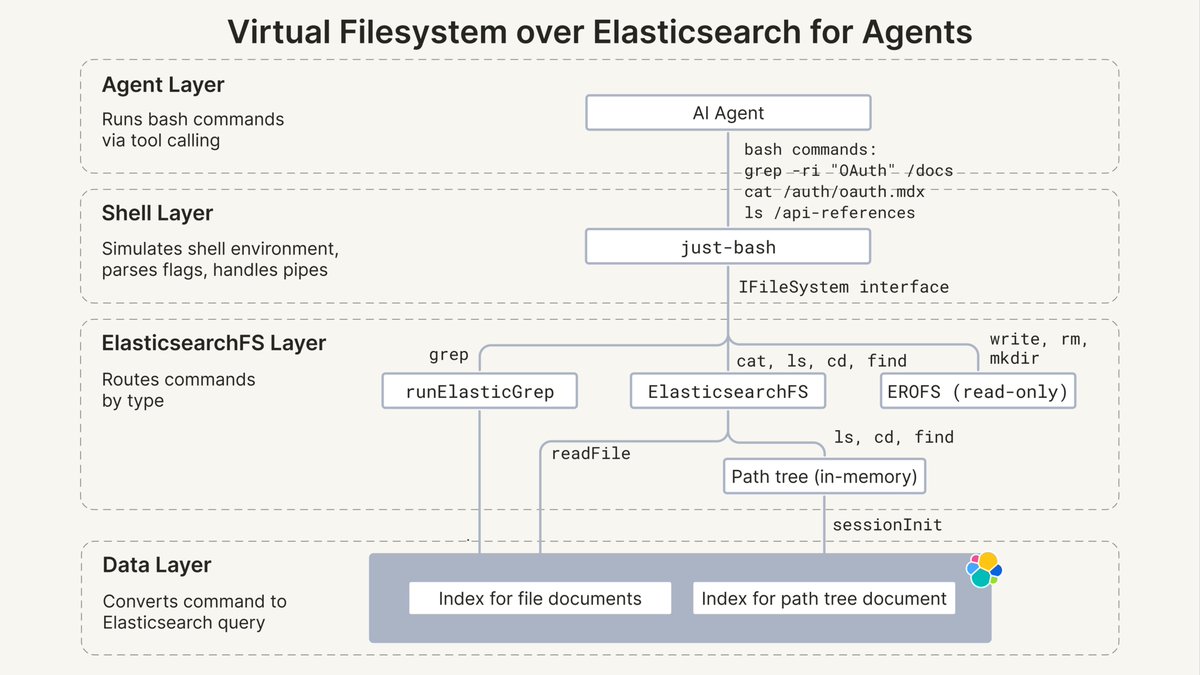
This is a very cool article describing how they built a virtual filesystem for their agent.
But there was no code.
So, I studied the blog, burned through a lot of tokens, and implemented a POC. Here is the result:
A virtual filesystem over Elasticsearch.
Blog: https://t.co/cFUs4kleFR
GitHub repo: https://t.co/qbU0kUfNfK
D
densumesh
@densumesh
Building a Virtual Filesystem for Mintlify's AI Assistant
U
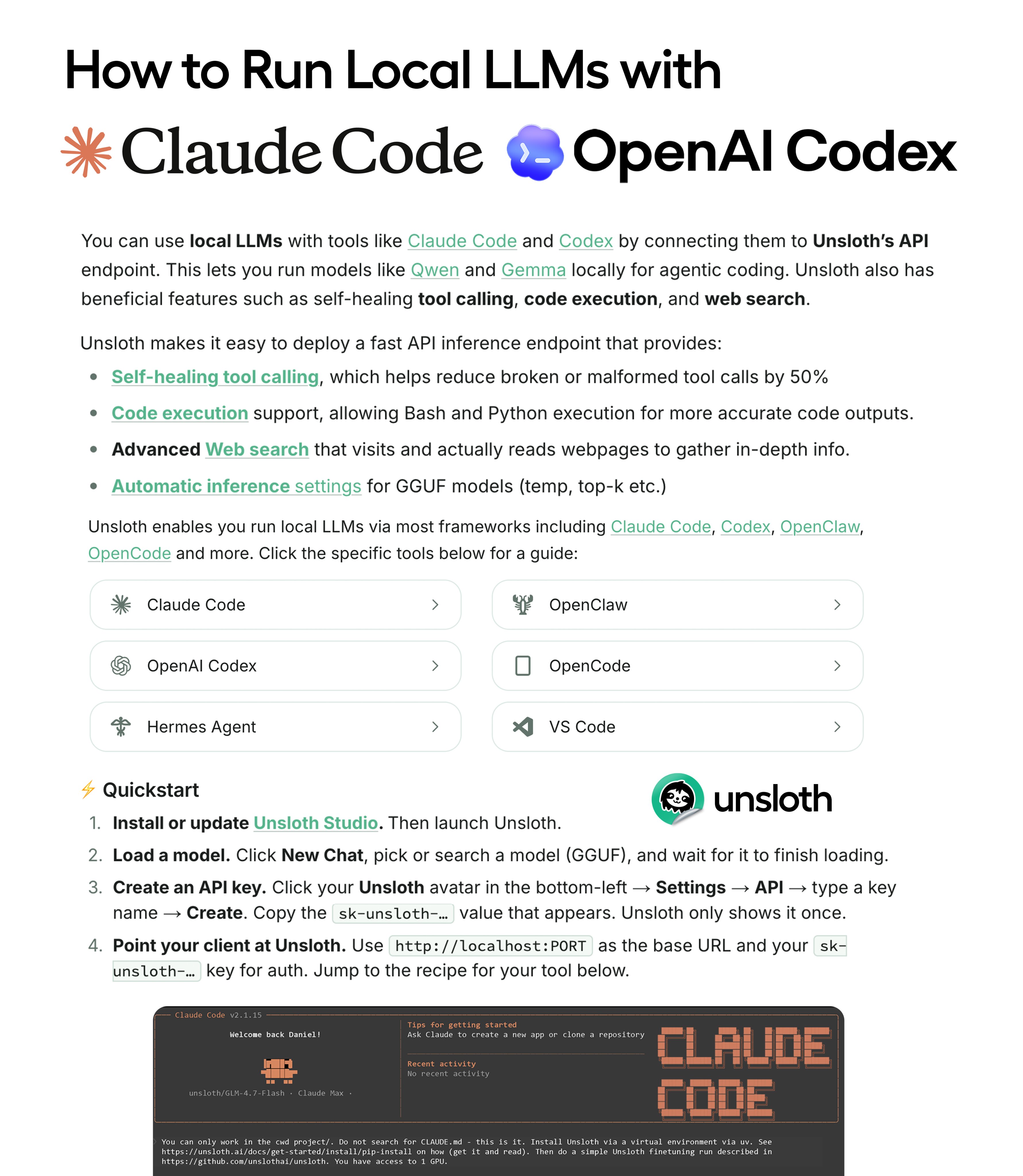
We made a guide on how to run open LLMs in Claude Code, Codex and OpenClaw.
Use Gemma 4 and Qwen3.6 GGUFs for local agentic coding on 24GB RAM
Run with self-healing tool calls, code execution, web search via the Unsloth API endpoint and llama.cpp
Guide: https://t.co/VienFDSwcg https://t.co/LgyE0hk1E7
G
POD-OF-ONE: THE NEW ORG BUILDING BLOCK
As a @coinbase board member, t’s been a privilege to watch @brian_armstrong @emiliemc, and the Coinbase team build a true AI-native company.
Brian's whole post is worth reading in depth. I want to focus in on one thing that Coinbase is testing: “one-person product teams.”
Most of the AI discourse has focused on one-person companies. The more powerful and more broadly applicable construct will likely be one-person teams inside companies.
The old product org split context across 3 people. The designer held the user experience. The PM held the customer and prioritization context. The engineer held the code and systems context. Coordination was the price you paid to combine those views into one shipping decision.
Agents reduce that coordination cost.
A single high-agency person can now ask agents to draft flows, write code, run QA, summarize customer feedback, generate variants, check edge cases, and produce release notes.
This model rewards a very specific kind of builder:
• Technical enough to inspect the work
• Product-minded enough to choose the right problem
• Tasteful enough to reject mediocre output
• Fast enough to ship before the org forms around the idea
The scarce skill is judgment.
One strong person with customer context and good taste can now do the work of a small pod. One weak person with agents just creates more output for someone else to review.
This changes how early-stage founders should hire.
The most useful hiring question is now: “Can this person own the outcome end-to-end?”
That’s a higher bar than a functional job description. It blends product sense, technical range, design taste, writing clarity, and operating discipline. The title matters less. The span matters more.
Call it pod-of-one thinking.
A pod-of-one builder can go from ambiguous customer pain to shipped v1 without waiting for specs, mocks, tickets, handoffs, or meetings. Agents fill in missing labor. The human carries the context.
Teams still matter. They should form when the surface area is real: multiple customer segments, production risk, complex GTM loops, or enough product depth that specialization pays for itself.
Before that, a pod-of-one may be the fastest shipping unit in the company.
Founders: hire people who can be pods-of-one, who can carry the whole problem in their head and use agents to increase their throughput.
B
brian_armstrong
@brian_armstrong
This is an email I sent earlier today to all employees at Coinbase: Team, Today I’ve made the difficult decision to reduce the size of Coinbase by ~14%. I want to walk you through why we're doing this now, what it means for those affected, and how this positions us for the future. Why now Two forces are converging at the same time. We need to be front footed to respond to both. First, the market. Coinbase is well-capitalized, has diversified revenue streams, and is well-positioned to weather any storm. Crypto is also on the verge of the next wave of adoption, with stablecoins, prediction markets, tokenization, and more taking off. However, our business is still volatile from quarter to quarter. While we've managed through that cyclicality many times before and come out stronger on the other side, we’re currently in a down market and need to adjust our cost structure now so that we emerge from this period leaner, faster, and more efficient for our next phase of growth. Second, AI is changing how we work. Over the past year, I’ve watched engineers use AI to ship in days what used to take a team weeks. Non-technical teams are now shipping production code and many of our workflows are being automated. The pace of what's possible with a small, focused team has changed dramatically, and it's accelerating every day. All of this has led us to an inflection point, not just for Coinbase, but for every company. The biggest risk now is not taking action. We are adjusting early and deliberately to rebuild Coinbase to be lean, fast, and AI-native. We need to return to the speed and focus of our startup founding, with AI at our core. What this means To get there, we are not just reducing headcount and cutting costs, we’re fundamentally changing how we operate: rebuilding Coinbase as an intelligence, with humans around the edge aligning it. What does this mean in practice? - Fewer layers, faster decisions: We are flattening our org structure to 5 layers max below CEO/COO. Layers slow things down and create coordination tax. The future is small, high context teams that can move quickly. Leaders will own much more, with as many as 15+ direct reports. Fewer layers also means a leaner cost structure that is built to perform through all market cycles. - No pure managers: Every leader at Coinbase must also be a strong and active individual contributor. Managers should be like player-coaches, getting their hands dirty alongside their teams. - AI-native pods: We’ll be concentrating around AI-native talent who can manage fleets of agents to drive outsized impact. We’ll also be experimenting with reduced pod sizes, including “one person teams” with engineers, designers, and product managers all in one role. In short: AI is bringing a profound shift in how companies operate, and we’re reshaping Coinbase to lead in this new era. This is a new way of working, and we need to leverage AI across every facet of our jobs. To those who are affected I know there are real people behind these decisions — talented colleagues who have poured themselves into this company and our mission. To those of you who will be leaving: thank you. You’ve helped build Coinbase into what it is today, and I am sincerely grateful for everything you've done. All impacted team members will receive an email to their personal account in the next hour with more information, and an invitation to meet with an HRBP and a senior leader in your organization. Coinbase system access has been removed today. I know this feels sudden and harsh, but it is the only responsible choice given our duty to protect customer information. To those affected, we will be providing a comprehensive package to support you through this transition. US employees will receive a minimum of 16 weeks base pay (plus 2 weeks per year worked), their next equity vest, and 6 months of COBRA. Employees on a work visa will get extra transition support. Those outside of the US will receive similar support, based on local factors and subject to any consultation requirements. Coinbase prides itself on talent density. Our employees are among the most talented people in the world, and I have no doubt that your skills and experience will be highly sought after as you pursue your next chapters. How we move forward To the team that is staying, I know this is a difficult day. We’re saying goodbye to colleagues and friends you've been in the trenches with. But here’s what I want you to know as we move forward together: Over the past 13 years, we have weathered four crypto winters, gone public, and built the most trusted platform in our industry. We’ve made it this far by making hard decisions and by always staying focused on our mission. This time will be no different – nothing has changed about the long term outlook of our company or industry. And most importantly, our mission has never been more important for the world. Increasing economic freedom requires a new financial system, and we’re building it. The Coinbase that emerges from this will be more capable than ever to achieve our mission. Brian
N
Your Hermes Agent can now build full videos with the official HyperFrames skill by @HeyGen
HyperFrames videos are HTML-native, so your agent has total control over the final output
Video made entirely by Hermes using the HyperFrames skill https://t.co/uqWqu2VIeJ
C
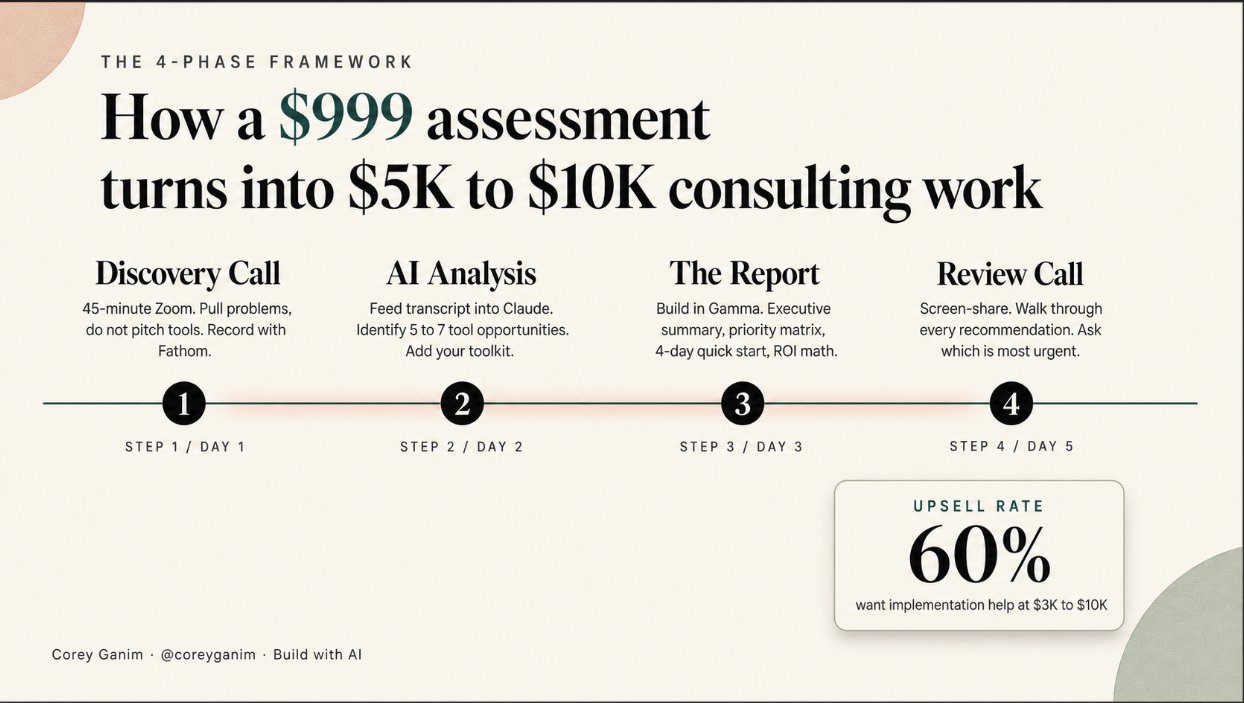
What you're looking at is a $999 service that turns into $5,000-$10K every time.
The 4-phase play:
1. Discovery Call. 45-minute Zoom. You pull problems, you don't pitch tools. Record it with Fathom.
2. AI Analysis. Drop the transcript into Claude. Identify 5-7 tool opportunities.
3. The Report. Build it in Gamma. Executive summary, priority matrix, 4-day quick start, ROI math.
4. Review Call. Screen-share the report. Ask which is most urgent. 60% say "can you build it for me?"
That's where the $3,000-$10K implementation work lives.
10 clients on the assessment = $10,000. 6 of them upsell to $5,000 builds = $30,000 more.
C
coreyganim
@coreyganim
how to print $$ selling AI audits to small businesses (full guide)
M
.@RampLabs (the AI unit of @tryramp) has been *cooking* with agentic innovation
Here's @a_levitator discussing and demo'ing code self-maintaining software and the concept of AI software factories #DataDrivenNYC
______________
00:04 - Intro
01:11 - The shift from writing code to code maintenance
01:59 - Introducing Ramp Inspect, the background coding agent
03:05 - The first experiment: Nightly AI code automation
04:23 - The limits of stateless monitoring in large observability surfaces
05:47 - Using Datadog monitors to give the AI state and focus
07:23 - Real-world example: AI autonomously fixing an authentication bug
08:14 - How to control noise and implement an AI triage pattern
09:27 - The old vs. new paradigm for continuous code observability
10:21 - Key learnings on building autonomous AI software factories

H
VERDICT after many hours of vibe coding, bug fixing and testing:
Qwen 3.6 27b - Outstanding for its size. A workhorse model. For many tasks (like document normalization), turn off thinking and it screams with speed and accuracy. I don't use it for coding, however.
Kimi K2.6 - Highly-capable coding model. Very efficient thinking tokens. Has its own Kimi harness that's excellent. Very usable, very affordable. Replaces Claude for most tasks. Also good at local admin tasks.
DeepSeek V4 - Outstanding at bug-fixing. Sometimes over-thinks and spits out lots of tokens but it's so inexpensive, nobody cares. Solid at coding, and the real bonus is the 1M context window that's native to the model. DeepSeek has made this model so cheap, it almost feels free. You can code all day long for a dollar...
All three models are outstanding in their own way. I use all three daily now, for different things. My Claude usage has dropped by 90%, and I'm still getting everything done that I need to.
What do all these LLMs have in common? They're all FROM CHINA.
China is winning the AI race and the inference race. And the open source race, and the energy grid race, etc.
D
i've been trying to merge at least one PR a day using @mattpocockuk's improve-codebase-architecture skill, and it has turned into my favorite work each day.
N
Context engineering: the key to great agents
Context engineering: the key to great agents
In media, it’s often said that content is king. For agents, it's context. The large language models (LLMs) powering today’s agents are remarkably capa...
C
Cursor can now automatically fix CI failures.
Set up always-on agents that monitor GitHub, investigate root causes, and open PRs with fixes. https://t.co/5roWAjjkfY
T
Here's how I went from 23 tok/s to 79 tok/s on my GX10 (DGX Spark) on Qwen3.6-35B-A3B by changing some configs, parameters and firmware upgrades.
I scoured nvidia forums and x so you don't have to...
B
my spicy 3000-word take is this:
a new AI startup can in fact beat anthropic and open AI
they just need to win the context layer https://t.co/ENYhydV5bO
T
thatguybg
@thatguybg
The Four Micro-Revolutions of the Intelligence Revolution
S
Every firm will need to reconceptualize work as they build agentic systems.
As AI and agents take on more of the execution, the opportunity is to expand human agency and redesign how work gets done.
An in-depth look from the team at what this shift means and key considerations for every business: https://t.co/zi6Ak8ZKeJ
B
Hermes agent just gained a new skill: browser-harness
Now, Hermes agent has:
> self-improving browser tools
> parallel stealth cloud browsers
> full freedom within your browser
All it takes is one prompt.
Try it now ↓🔗 https://t.co/A36ywF6w96
J
Useful Agent Coding Prompt:
"The repo junk cleaner"
During the course of development on this project, many random files have been committed to the repo — some in the main project root — that really shouldn’t be there, since they’re ephemeral detritus from tests, ad-hoc scripts, plan documents, etc. For things that are worth preserving in the repo, like plan documents, we should move these files into a suitable subdirectory, to be created if an appropriate one doesn’t already exist, in order to get them out of the project root. Certainly, we should have a very high bar for binary files like SQLite DB files and corresponding WAL or related SQLite files, random JSON artifacts, .md output files that are intermediate files generated by skills, etc. Again, the truly useless ephemeral files should either be deleted/removed from GitHub, with the file patterns added to the repo’s .gitignore, or, if a solid argument can be made for the utility of keeping the files in the repo — say, long, detailed planning documents that shed light on the thought process of how the project was designed or built — then those should be preserved but moved to a more correct location.
J
What comes after CPU shortage?
Hint: 9 letters
L
RT @loganthorneloe: If you want to understand what makes AI engineering so difficult, read this. It puts evals into perspective.
They're:…
P
Me and codex were busy.
🔊 https://t.co/kAbQGMTQIQ — Sonos
🗃️ https://t.co/okyk5oZOSZ — WhatsApp
🪶 https://t.co/IOOLpksihC — X archive
🧰 https://t.co/8pYSuKt0Ea — GitHub archive
🛰️ https://t.co/MErsuc1FO7 — Discord archive
🎧 https://t.co/E4FCEXEixU — Spotify
💬 https://t.co/cN5M5iRiQs — iMessage
🧳 https://t.co/f6WRrsXVaj — MCP to CLI
🗣️ https://t.co/aYKEugKwUC — ElevenLabs voice
🧿 https://t.co/q6DP88loU9 — second opinion
Upgrading the 🦞 OpenClaw army.
A
There’s too much alpha in cloning Sglang Mini and asking Codex Cli w/ GPT 5.5 to teach you how Inference Engines work through that cloned repo
M
Building a skill that helps you prototype business logic
It builds a TUI to help you shortcut through state transitions
SO much better than a spec for providing fine-grained feedback
Watch the skills repo for /prototype https://t.co/qyNwt8ag1P
M
recommended reading. strongly so.
> And these layoffs will continue till we learn to use AI. Till we learn to convert AI-tokens into outcomes and not just input.
C
championswimmer
@championswimmer
The layoffs will continue till we learn to use AI
N
RT @zhijianliu_: DFlash for Gemma 4: Up to 6x Faster. ⚡⚡
Great to see MTP land natively in Gemma 4 today. If you want to push it further,…