Anthropic's "Side Quest Maxxing" Culture Revealed as Vibe Coding Safety Becomes the Next Big Opportunity
Today's discourse centered on the emerging challenge of making AI-generated code safe for production, with multiple posts highlighting both the power and peril of agentic coding. Anthropic's product development culture drew attention for its radical "afternoon experiment" approach, while practitioners shared increasingly sophisticated frameworks for agent configuration and memory architecture.
Daily Wrap-Up
The throughline today was unmistakable: AI coding has crossed the threshold from novelty to infrastructure, and now everyone is scrambling to figure out the guardrails. On one end you have teenagers building Roblox tycoons in two hours with zero scripting experience, and on the other you have an AI agent that "vibe deleted" a production database because someone handed it a fully permissioned API key. The gap between those two stories is where the next wave of developer tooling will be built. @JustJake called it plainly: there's a "massive, massive opportunity" for tools that let the coming billion new developers ship safely at scale.
Meanwhile, the conversation around how to actually work with AI agents matured considerably. @garrytan's breakdown of his three-file agent configuration system (SOUL.md, USER.md, AGENTS.md) resonated because it treats agent design less like prompt engineering and more like organizational design. The same energy showed up in @mstockton's argument that the best AI memory systems are just well-structured markdown files and grep, not fancy knowledge graphs. And over at Anthropic, we learned that Claude Code on desktop, the todo list feature, and plugins all started as unplanned afternoon experiments by individual engineers. The pattern is clear: the people getting the most out of AI right now aren't following roadmaps. They're tinkering.
The most entertaining moment was definitely @theo retweeting clawd.rip, a compilation of everything that's gone wrong with Claude over the years, which hit the timeline the same day Anthropic's "side quest maxxing" culture was being celebrated. You have to love the internet's sense of timing. The most practical takeaway for developers: adopt Garry Tan's three-file approach to agent configuration. Write a SOUL.md that defines voice and principles with brutal specificity, a USER.md that models your context and goals, and an AGENTS.md with operational rules. Generic instructions produce generic output; the specificity of your agent's constitution determines its ceiling.
Quick Hits
- @asimovinc announced Asimov v1, an open-source humanoid robot (1.2m tall, 25 degrees of freedom, $15K target price). Mechanical design, simulation files, and BOM all public. DIY kits ship end of summer 2026.
- @DeRonin_ shared a video breakdown of Jensen Huang's company-building philosophy, arguing NVIDIA's success wasn't about predicting AI but about strategic positioning.
- @steipete switched OpenClaw's local test runs to @useblacksmith and is now spinning up 32-vCPU instances through Codex to rip through test suites.
- @doodlestein plugged dcg, his open-source tool, in response to the growing conversation about safe agentic coding tooling.
- @gregisenberg laid out a detailed playbook for building a niche AI social media management business using open-source Postiz, arguing "open source is the new wholesale" and the margin lives in the customer relationship, not the code.
AI-Assisted Coding Hits an Inflection Point
The sheer volume of posts about AI writing production code suggests we've passed a tipping point. What was experimental six months ago is now a daily workflow, and the stories range from triumphant to terrifying. @leopardracer highlighted the Roblox creator economy as ground zero for this shift, noting that Claude now writes Luau (Roblox's custom language) and connects directly to Roblox Studio via MCP:
> "One developer built a full mining tycoon - currency system, shop, rebirth mechanics, persistent data - in 2 hours. Zero scripting experience. Every line of code generated by AI."
On the optimization side, @NicolasZu demonstrated a workflow where he asked Codex to write a performance guard script, then iterate on improvements without affecting gameplay, netting a 20+ FPS improvement in 45 minutes on a browser game already rendering 80,000 zombies per minute. Meanwhile, @paraschopra (retweeted by @badlogicgames) replicated fully agentic coding locally using a 4-bit quantized Qwen 27B model, proving you don't need cloud APIs to get meaningful results.
But the cautionary tale came from @JustJake, who framed the stakes around a viral post about an AI agent destroying production data: "There's a massive, massive opportunity for 'vibecode safely in prod at scale.' 1B+ developers who don't read 100% of their prompts and want to build are coming online." His companion blog post, "The AI Engineer: A New Breed," detailed how someone handed a fully permissioned Railway API key to Cursor, skipped the CLI, and let the agent loose. The message is clear: the capability curve has outpaced the safety curve, and whoever closes that gap first wins.
Agent Architecture Gets Serious
The most substantive conversation today wasn't about what AI can do but about how to structure the systems around it. @garrytan's detailed breakdown of his three-file agent configuration drew significant engagement, and for good reason. It treats agent design as a craft rather than a checkbox:
> "If you write 'be helpful and concise' you get ChatGPT. If you write 'speak like a peer with taste, one sentence when one sentence works, uncomfortable truths welcome if actually true, language with voltage' - you get something alive."
This philosophy extends beyond personality. @mstockton argued that the best agent memory architecture is deceptively simple: "A well structured filesystem of markdowns, integrated tools for the model to use these files, some specialized representations of that raw data, and a well-designed feedback loop that incrementally updates all of the above." He was responding to @ndrewpignanelli's claim that knowledge graphs are "getting rekt by an agent plus a terminal," which feels provocative but increasingly defensible.
@barckcode added a practical dimension, discussing how to keep Claude Code context clean by running 2-6 subagents simultaneously, while @mattpocockuk revealed plans to build documentation and auto-update plugins for his 23K-star skills repository (a collection of markdown files that teach agents specific behaviors). The convergence is notable: the most effective agent practitioners are all arriving at the same architecture of structured text files, specialized tools, and feedback loops.
Anthropic's Culture of Unplanned Shipping
@itsolelehmann surfaced a fascinating look at how Anthropic builds products, based on their head of product's description of "side quest maxxing":
> "Instead of long-term roadmaps, Anthropic runs on unplanned afternoon experiments. Anyone on the team gets full freedom to spend an afternoon prototyping an idea and show it to the team... Claude Code on desktop started as one engineer's afternoon project."
The approach is radical by enterprise standards: skip approval processes, kill standup meetings, replace status updates with working demos. Designers ship code, engineers make product decisions, product managers build prototypes. The culture works because everyone can take an idea from concept to working demo without dependencies. It also explains Anthropic's pace: when your entire organization is structured around rapid prototyping with the very AI tools you're building, you get compounding velocity.
In a delicious bit of counter-programming, @theo retweeted @maria_rcks's launch of clawd.rip, a catalog of "every instance" where things went wrong with Claude. Move fast and break things, indeed.
The Karpathy Effect and Learning Pathways
Two posts today focused on structured learning for the AI era, both generating outsized engagement. @neil_xbt highlighted Andrej Karpathy's new two-hour YouTube walkthrough of his personal LLM workflow, covering thinking models, deep research, file uploads, Python interpreter, and Claude Artifacts:
> "Not theory. Not benchmarks. The actual daily workflow of the person who built Tesla Autopilot and co-founded OpenAI."
For those looking to go deeper on the infrastructure side, @neural_avb bookmarked @TheAhmadOsman's detailed roadmap for low-level inference engineering. The curriculum starts with serving engines (vLLM, SGLang, TensorRT-LLM), moves down to Triton and CUTLASS kernels, and culminates in a project sequence that includes implementing paged KV lookup, FP8 caching, and integrating custom ops into vLLM. It's a reminder that while the "vibe coding" wave dominates the conversation, there's an equally important (and more defensible) skill track in understanding what happens beneath the API layer.
Models and New Capabilities
Two significant model releases hit the timeline. @0xSero amplified @MatthewBerman's take that "DeepSeek V4 is a Serious Threat," arguing that just because coders aren't impressed doesn't mean it won't reshape corporate AI economics. The framing matters: model quality is increasingly table stakes, and the real competition is shifting to cost, speed, and integration.
On the generative side, @_vmlops broke down Microsoft's TRELLIS.2, a 4-billion parameter open-source model that converts a single image into a fully textured 3D asset in three seconds:
> "Fully textured, physically accurate 3D models with PBR textures out of the box. Not a rough mesh, not a placeholder. Roughness, metallic, opacity - the kind of detail that makes things look real under any lighting."
The model handles open surfaces, hollow interiors, and complex geometry, with a live demo already on Hugging Face. For game developers and 3D artists, this collapses what was previously hours of manual work into seconds, and it's fully open source.
Voice-Only Coding and the Anthropic Engineer
@zodchiii shared a compelling story about an Anthropic team member who broke his hand and was forced to code exclusively through voice interaction with an AI agent for two months. The 30-minute talk that resulted covers practical lessons about delegating entirely to AI, including how to structure prompts when you can't type, how to maintain code quality through conversation alone, and what breaks when you remove the keyboard from the development loop entirely. It's the kind of forced constraint that reveals the true capabilities and limitations of current tools, and reportedly teaches more about AI-assisted development than most paid courses.
Sources

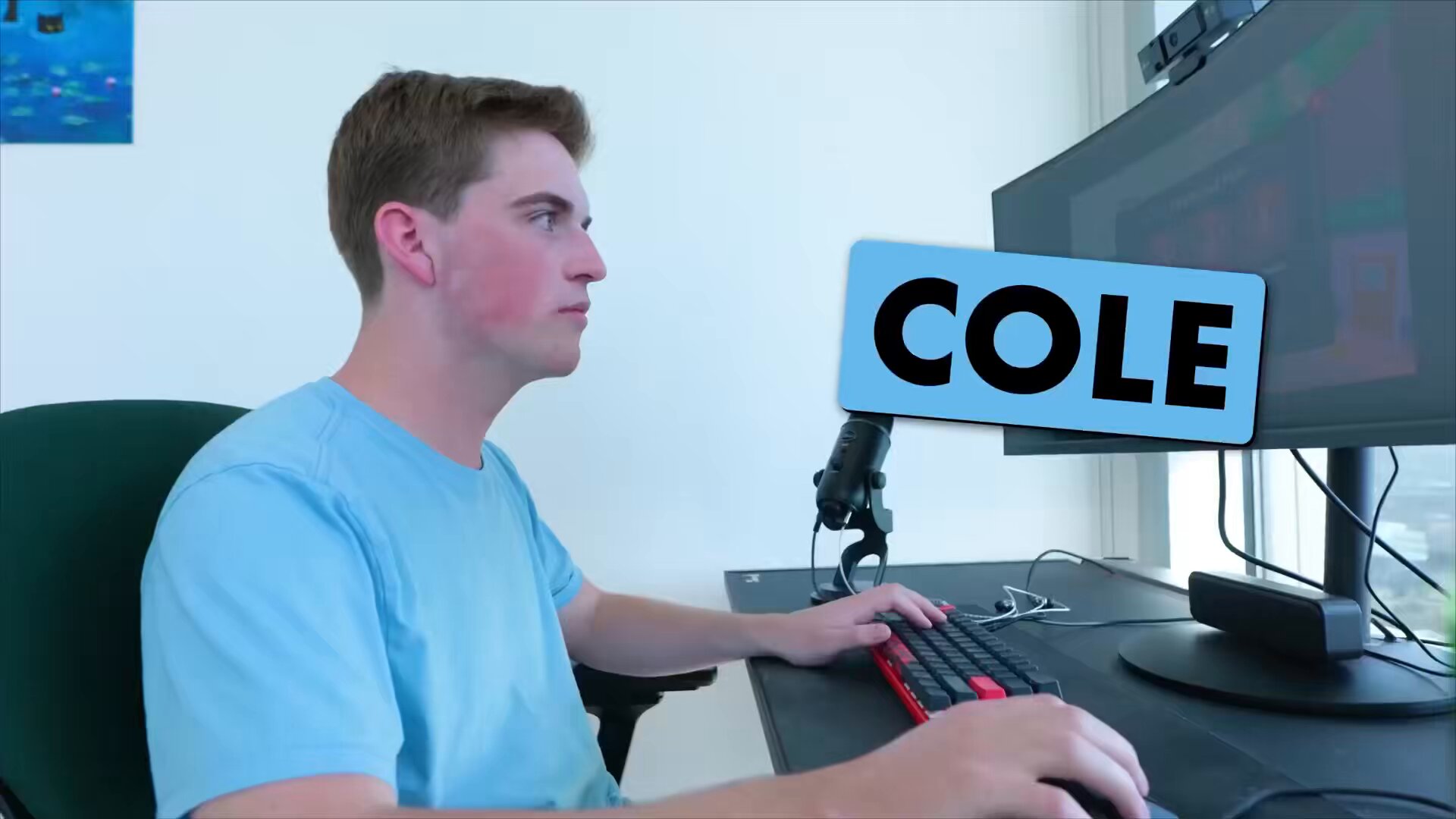
This Teen Made $31,000 Building Roblox Games. Roblox Pays $1.5B to Creators. You Can Too
DeepSeek V4 is a Serious Threat
How to go about learning all of this? 1st: Start with the serving engine view - vLLM: PagedAttention, continuous batching, prefix caching, CUDA graphs - SGLang: RadixAttention/prefix reuse, speculative decoding, MoE, structured/agent workloads - TensorRT-LLM: NVIDIA peak stack, FP8/FP4, Wide-EP, disaggregated serving - FlashInfer: reusable kernel/operator library for attention/GEMM/MoE/sampling 2nd: Go down the stack - Triton tutorials → custom fused kernels - CUTLASS/CuTe → Tensor Core GEMM and Blackwell/Hopper details - FlashAttention papers → attention algorithm/kernel co-design - PagedAttention paper → KV-cache memory management - MoE docs → routing + grouped GEMM + all-to-all - Nsight profiling → stop guessing 3rd: Do this mini-project sequence 1. Implement RMSNorm in Triton; compare to PyTorch 2. Implement fused SiLU × gate 3. Implement simple FP16 matmul; compare to cuBLAS/rocBLAS 4. Implement paged KV lookup for decode attention 5. Add FP8 KV cache with per-block scales 6. Implement toy top-k sampling on GPU 7. Implement tiny MoE dispatch + grouped GEMM 8. Integrate one custom op into vLLM or SGLang and profile end-to-end
people don’t understand this take cause they don’t understand what’s happening in AI memory. Everything is moving to git backed files accessible via grep-type-systems or semantic plus grep which isn’t very defensible to offer as a service. In other words… the SOTA approaches to memory are now just agent plus terminal. And all the fancy approaches like knowledge graphs are getting rekt by an agent plus a terminal. Your fancy agent structure is getting rekt by a model that can keep track of anything over 1000+ terminal calls.
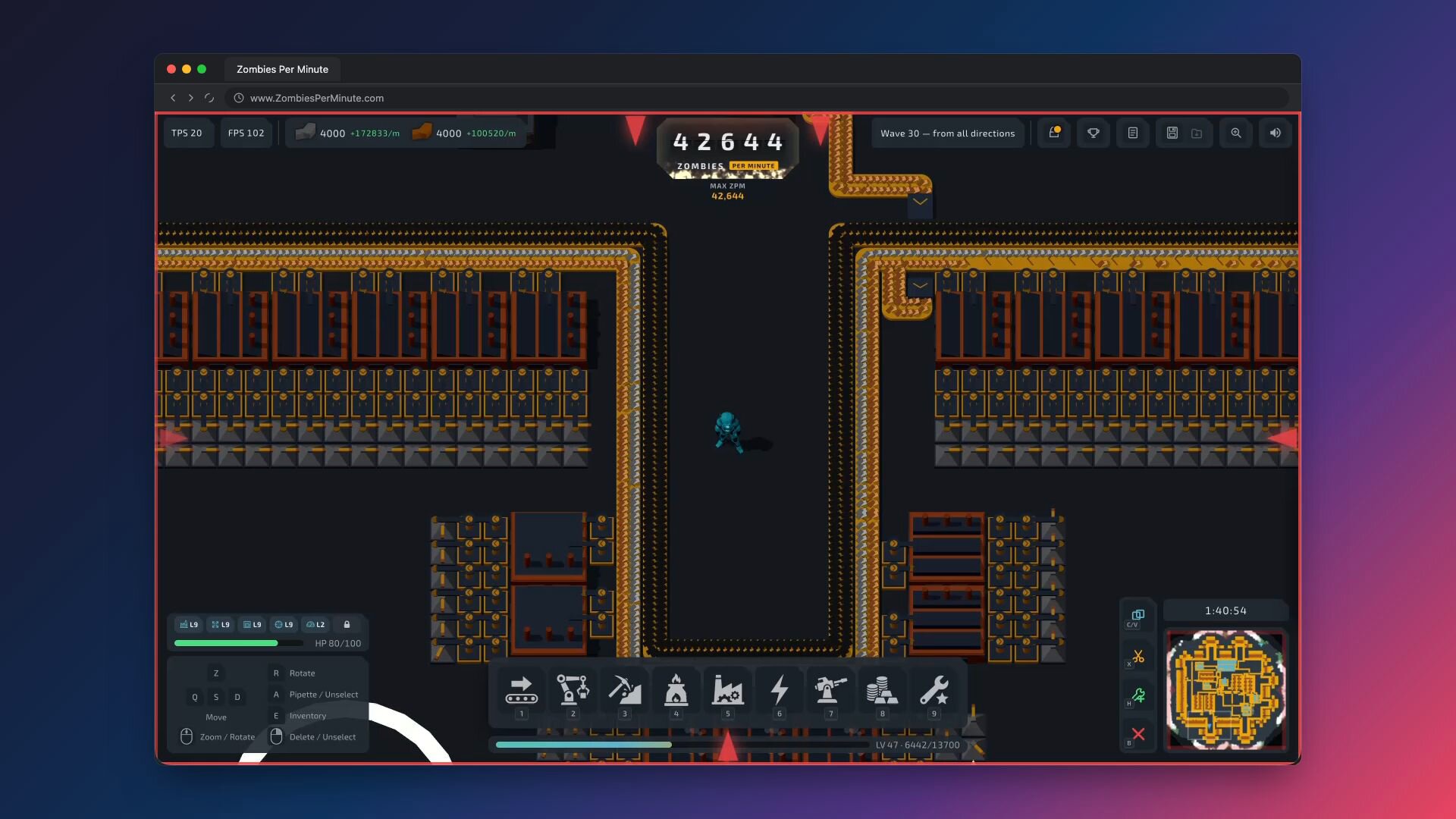
Guys, it worked. 45 min later with have +20 fps improvement, on the exact game save. So here is the tip 1) ask Codex to write a perf:guard script, that will run/simulate one of your save 2) they ask it to iterate until perf improves WITHOUT impacting gameplay 3) ?? 4) Profit https://t.co/G4TnsNaeVx

The Anatomy of a Perfect Skill: Reverse-Engineered from 100 Best Examples
The AI Engineer: A New Breed
Today, a post where someone's agent accidentally “vibe deleted” their Railway database popped off. This user handed a fully permissioned Railway API k...
An AI Agent Just Destroyed Our Production Data. It Confessed in Writing.
Keep your Claude Code context clean with Subagents
@garrytan Can you share your agent.md? You're agent is really articulate.
Nearly 23K stars for a collection of markdown files I wrote I guess they must be pretty good I want to invest more time in this repo. So, folks who starred it, what can I do to make these skills more obvious to you? - A docs site for the skills? - Send them to plugin marketplaces? Help me help you https://t.co/64UuxC8V0T
Here's the new Clicky. It's the simplest interface in the world to talk to AI + spawn agents. It builds Mac apps. It does research to help you find IG micro-influencers. It interacts with native Apple Notes, Calendar, Reminders. Built for consumers, 0 setup. Try today, free. https://t.co/rjF4ijdPft