Claude Code Goes Native Binary as Researchers Reverse-Engineer Its Architecture
Today's feed centered on Claude's expanding ecosystem, from a detailed architectural teardown of Claude Code to the launch of Claude Design and a $100K hackathon. Meanwhile, Salesforce's headless pivot forced a reckoning with per-seat pricing, and hobbyists pushed local AI into genomics and high-speed inference.
Daily Wrap-Up
The most fascinating thread running through today's posts is the growing gap between what AI models can do and the infrastructure required to make them useful. A UCL research team reverse-engineered Claude Code and found that only 1.6% of the codebase handles AI decision logic. The rest is plumbing: permissions, context management, recovery, session handling. That finding lands at the same moment Salesforce announced its entire platform is going headless and API-first, essentially admitting that dashboards built for humans are becoming vestigial organs in an agent-driven world. The implication is clear: we're entering a phase where the quality of the scaffolding around AI matters more than the raw model capabilities.
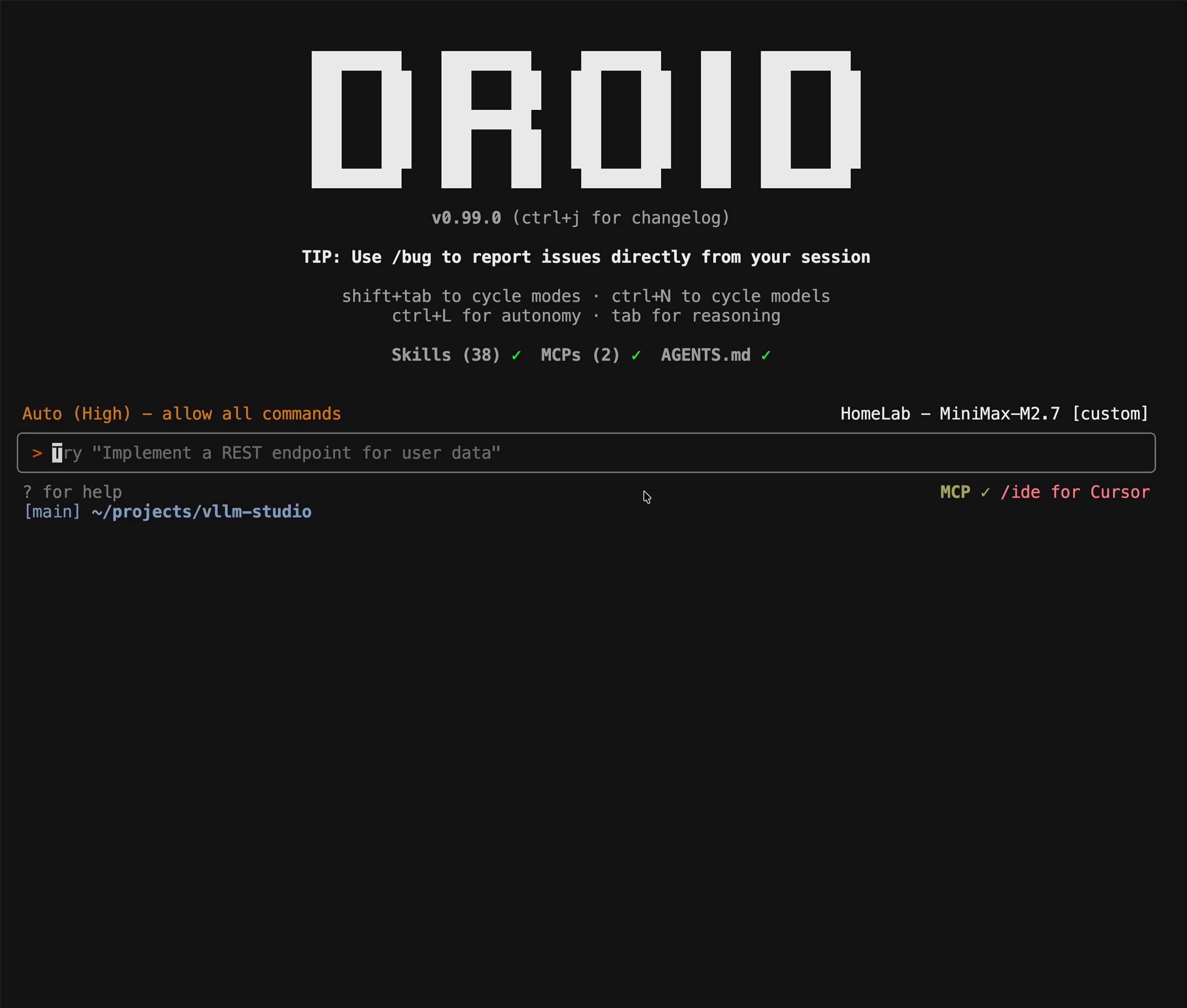
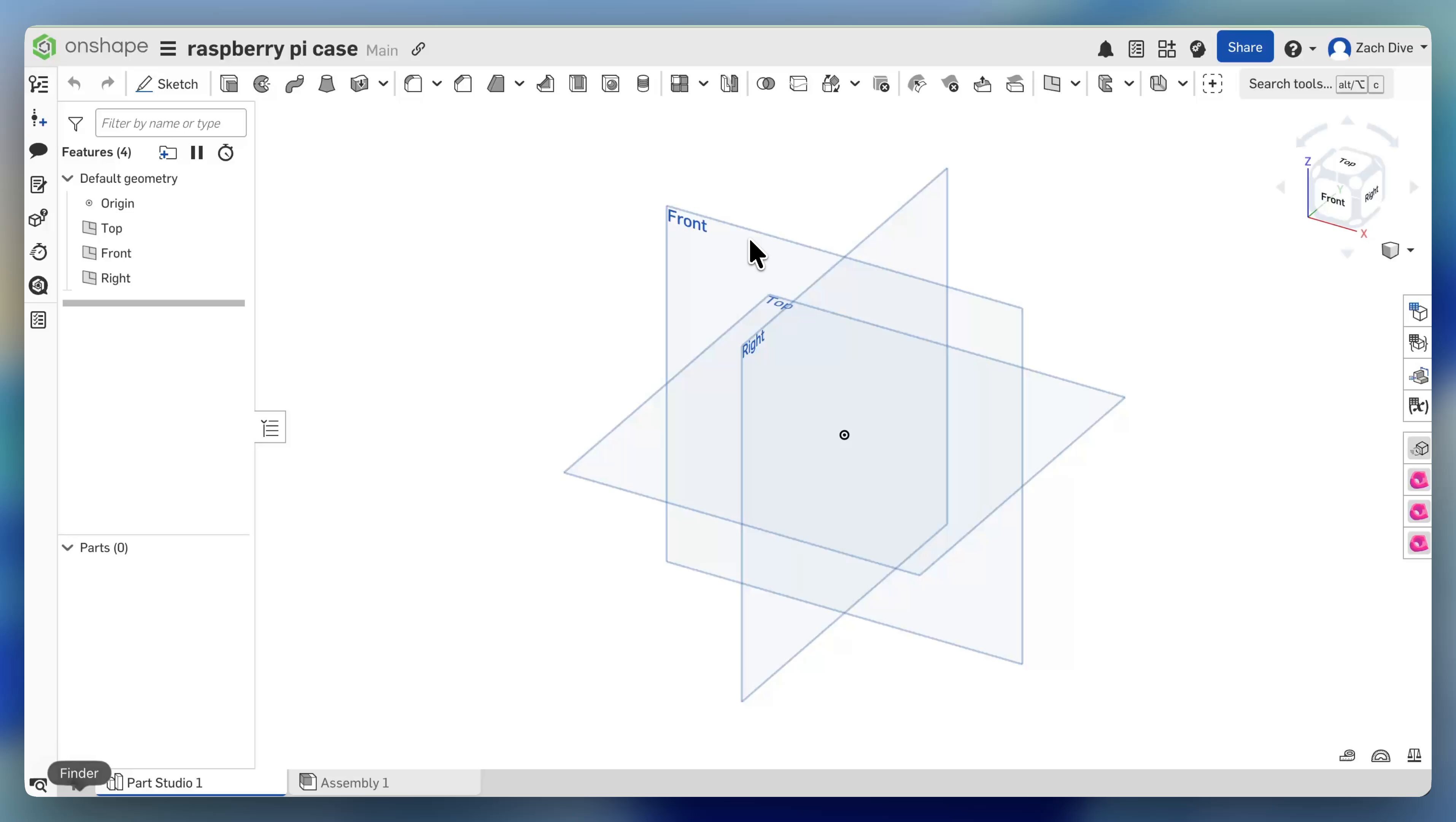
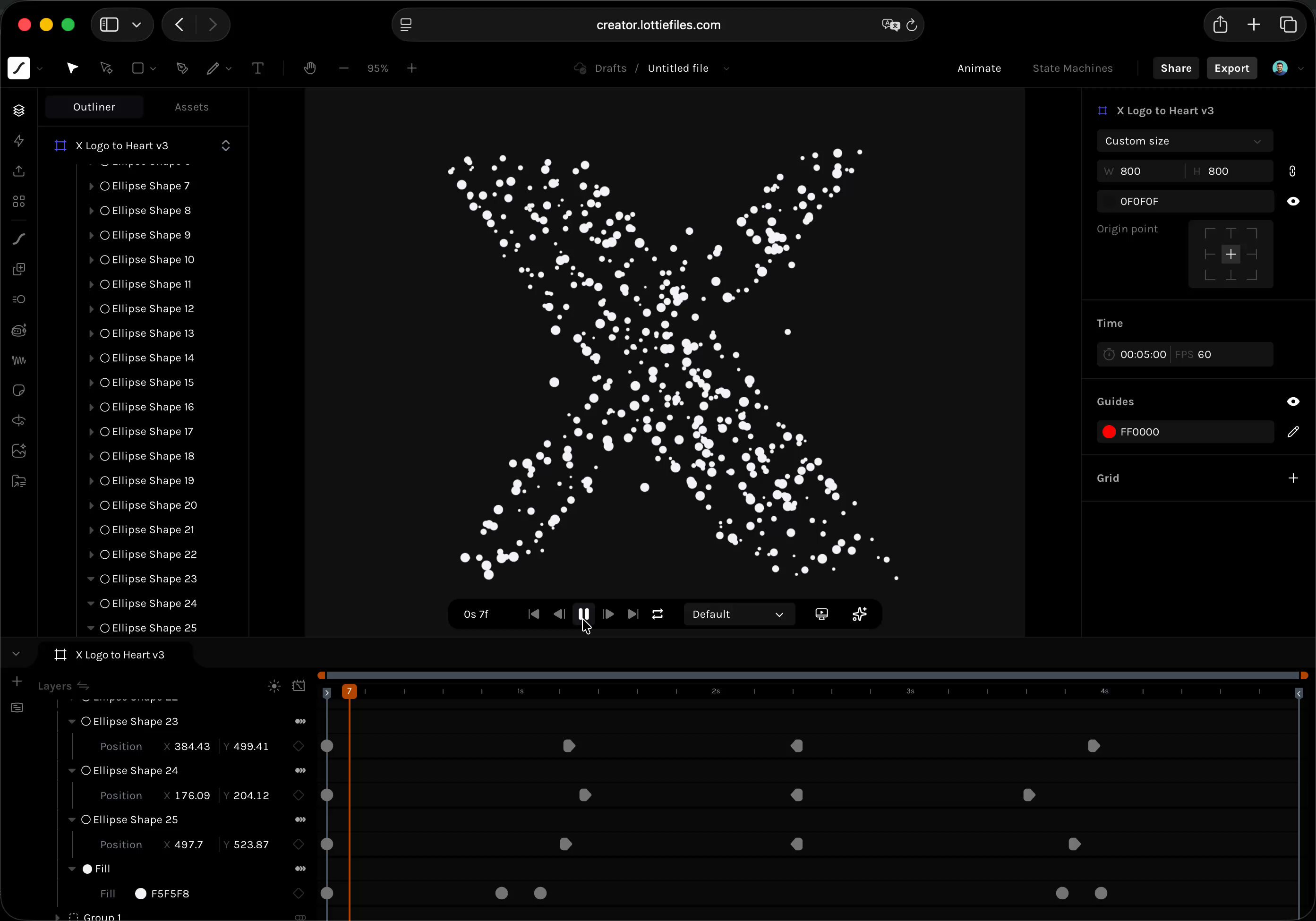
On the creative side, Opus 4.7 had a standout day. People used it to automate CAD designs, generate 500-particle Lottie animations without touching a keyframe, and Anthropic officially launched Claude Design for prototypes and slides. The model is pushing into territory that was firmly "human creative work" six months ago. Meanwhile, the local AI crowd continues to impress: someone sequenced their entire genome at home using a 40B-parameter DNA model running on consumer hardware, and another user hit 100 tokens/s decode on the full-precision MiniMax-M2.7 model locally. The center of gravity for serious AI work keeps shifting toward the edge.
The most entertaining moment was @zodchiii's brutally accurate greentext about paying $6,600/year across 14 AI subscriptions while knowing free GitHub alternatives exist, all because the cancel button is small. It's funny because it's true, and it neatly captures the subscription fatigue that's becoming a real force in developer tooling decisions. The most practical takeaway for developers: study the Claude Code architecture paper (arXiv:2604.14228). The insight that 98.4% of a production agent system is operational infrastructure, not AI logic, should reshape how you design your own agent projects. Invest in permission systems, context management, and recovery logic before you optimize your prompts.
Quick Hits
- @CoffeeStocksGuy notes that drones just got their first real US infrastructure bill, calling airspace and autonomy "where the money is." Worth watching for the logistics-adjacent crowd.
- @PeterDiamandis published "Humanity Is About to Fork," arguing the next five years will determine which branch of the human story you inhabit. Big claims, light on specifics.
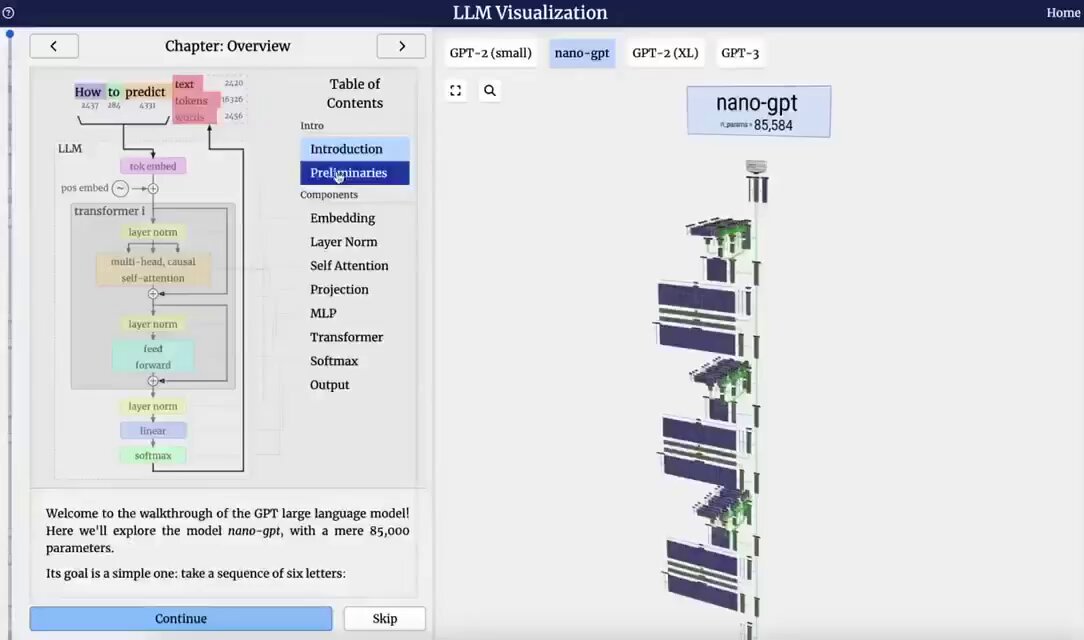
- @techNmak shared an interactive 3D visualization tool for learning how LLMs work, covering embeddings through softmax. Genuinely useful for visual learners.
- @slash1sol posted a relatable tale of spending 6 weeks building a custom bot that made $12, while a plug-and-play alternative made $847 on day one. The lesson: stop reinventing wheels.
- @trevin shared the Compound Engineering changelog, covering 4 releases in a week including iterative optimization loops and human-in-the-loop polish.
- @thdxr retweeted @kitlangton's walkthrough video with no additional context. One for the curious clickers.
- @aymanalabdul argues the CEO role is "compressing" from Manager to Founder to Architect as AI absorbs 80% of current executive work.
Claude's Expanding Universe
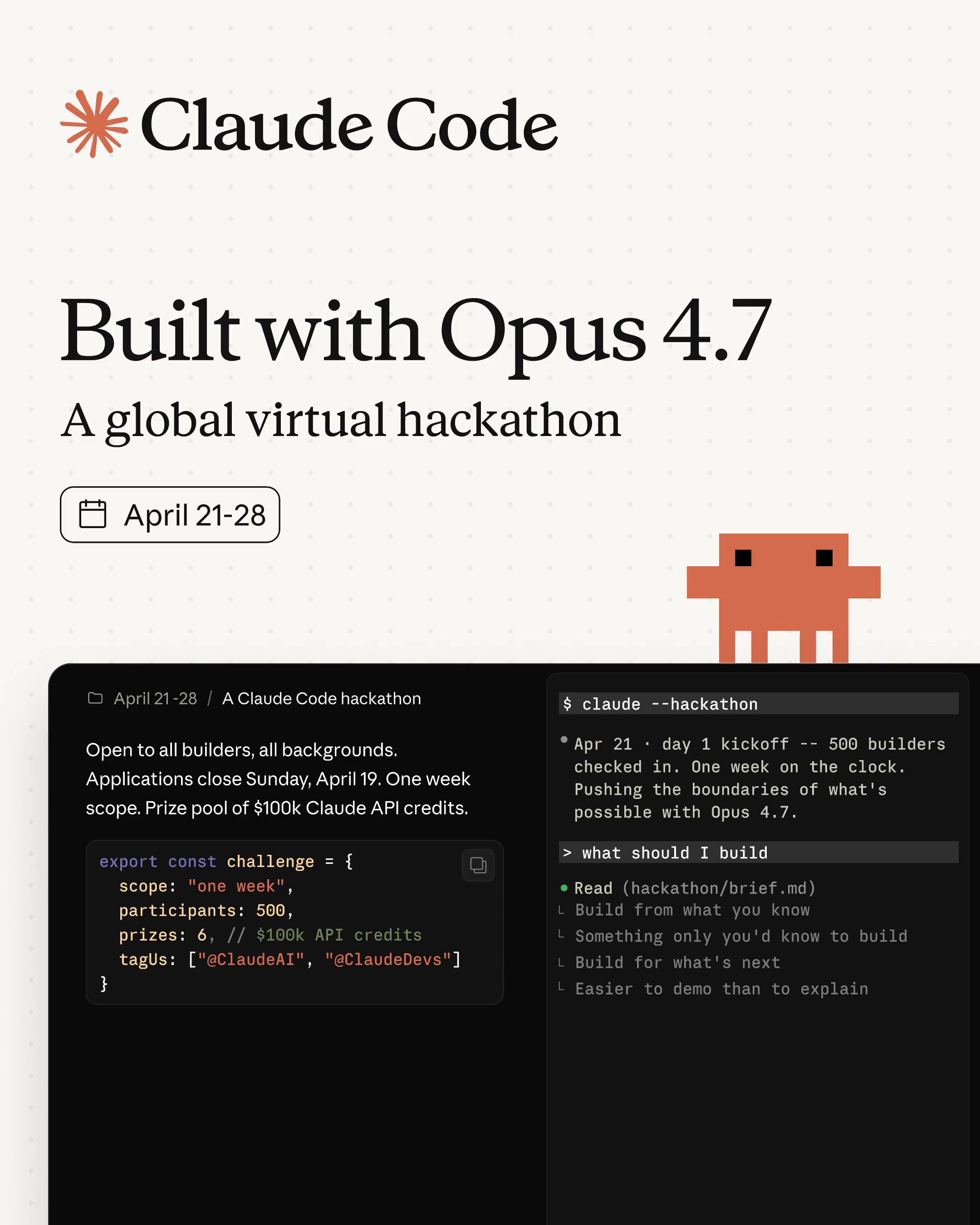
Claude had arguably its biggest day of the year. Anthropic launched Claude Design, a prototyping tool powered by Opus 4.7, and @liu8in wasted no time declaring "Motion Design is solved" after combining it with HyperFrames to produce polished motion graphics from just two prompts. The Claude Code hackathon returned with a $100K prize pool in API credits, as @claudeai announced: "Join builders from around the world for a week with the Claude Code team in the room." And on the infrastructure side, @ClaudeDevs revealed that starting in v2.1.113, Claude Code ships as a native binary instead of JavaScript, meaning faster startup and no Node.js dependency at runtime.
What ties these together is Anthropic's multi-front strategy. Claude isn't just a chat model anymore. It's a design tool, a coding agent, and an infrastructure product, all simultaneously. The native binary move is particularly telling: it signals Claude Code is mature enough to optimize for deployment ergonomics rather than developer iteration speed. When you stop shipping JavaScript and start shipping compiled binaries, you're betting on stability.
Inside the Agent Harness
The day's most substantive technical discussion came from @akshay_pachaar's breakdown of UCL's reverse-engineering of Claude Code. The numbers are striking: "Only 1.6% of the codebase is AI decision logic. The other 98.4% is operational infrastructure." The paper reveals a 5-layer context compaction pipeline where each layer only fires when cheaper ones fail, a permission system with 7 modes and an ML classifier, and a design where subagents return only summary text while full transcripts live in sidechain files.
This connects to @ashpreetbedi's thread on scaling agentic software and the question of what the "simplest architecture for running a multi-agent system at scale" actually looks like. The Claude Code answer is deceptively simple: a while-true loop calling model then tools, surrounded by extremely sophisticated infrastructure. As @akshay_pachaar put it, "The bet behind all of this is simple. As frontier models converge on raw coding ability, the quality of the harness becomes the differentiator, not the model." That's a thesis every team building agent systems should internalize.
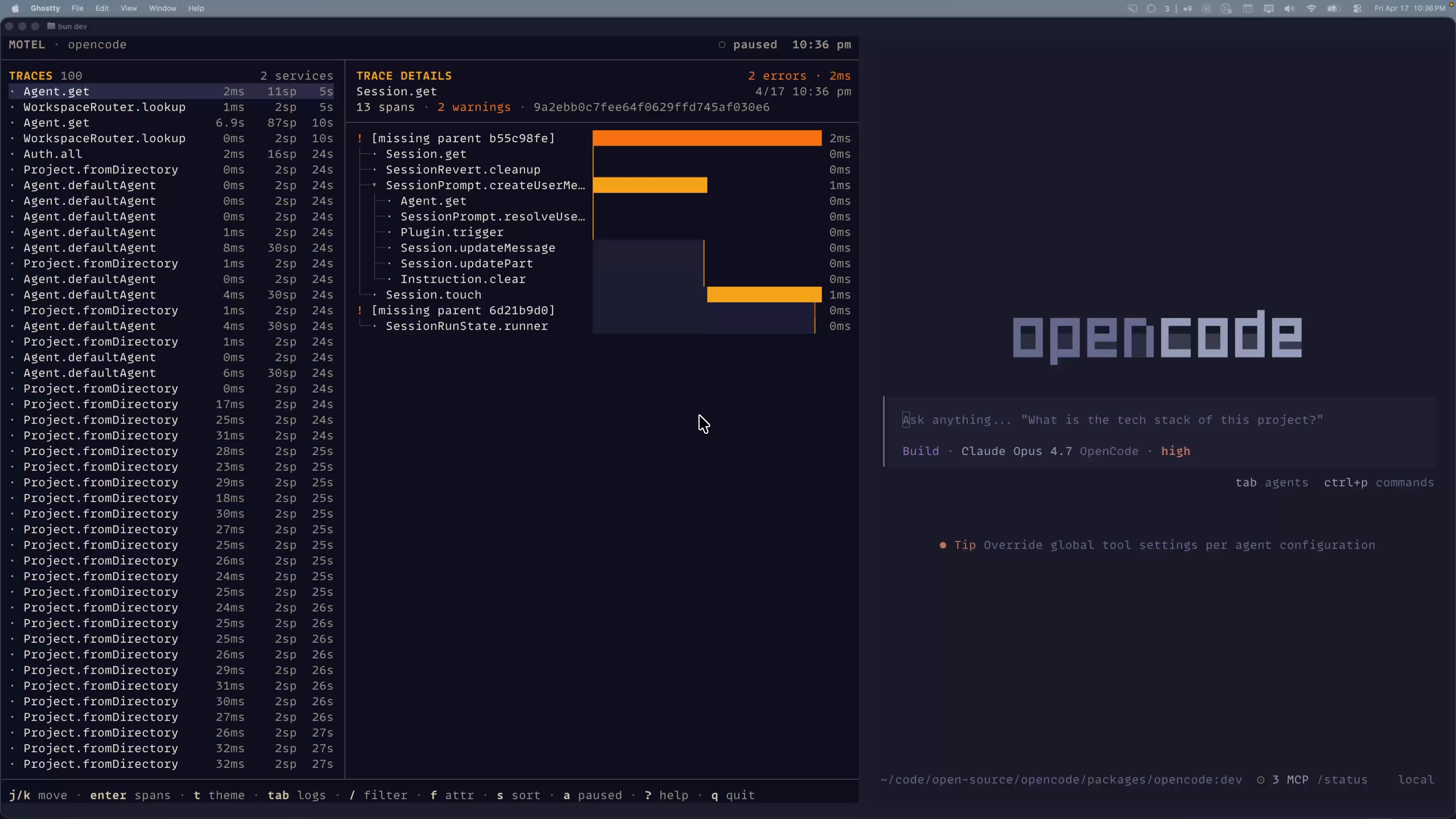
@yacineMTB offered the practitioner's corollary, quoting a thread about Codex making suboptimal architectural decisions in GPU code: "You are using codex, because it 100xes your output. But you must understand what the computer is doing. You must understand everything." The harness handles operations, but domain expertise remains irreplaceable.
Local AI Pushes Into New Territory
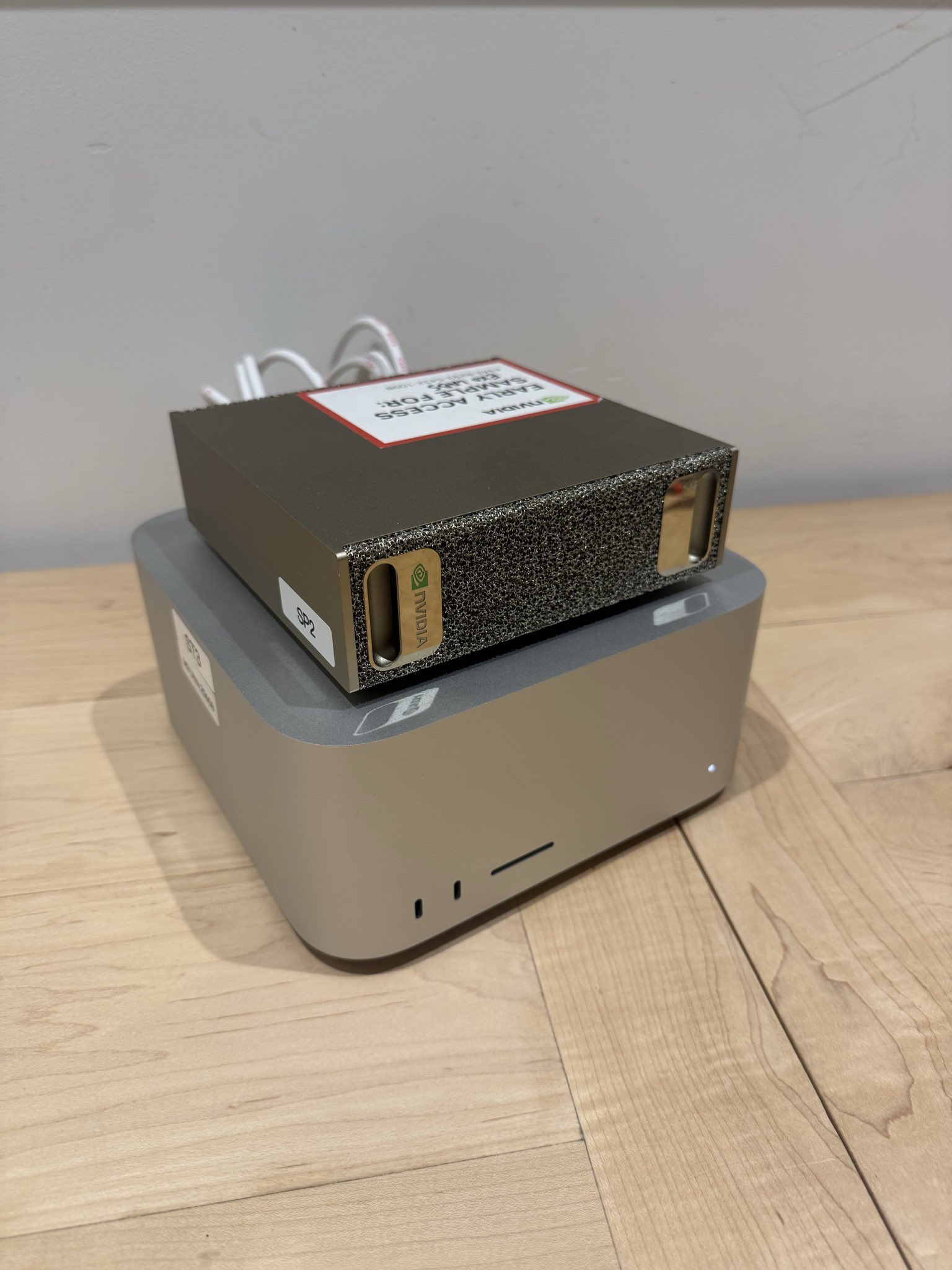
The local inference community had a banner day. @alexocheema highlighted someone running Evo 2, a 40B-parameter genomics model, entirely at home on a DGX Spark and Mac Studio. The original poster @SethSHowes explained why: "Your genome is the most private data you will ever have. You probably shouldn't let it leave your house." He sequenced his DNA on his kitchen table using a MinION device smaller than an iPhone, then analyzed it locally, tracing multigenerational autoimmune conditions no clinician had been able to explain.
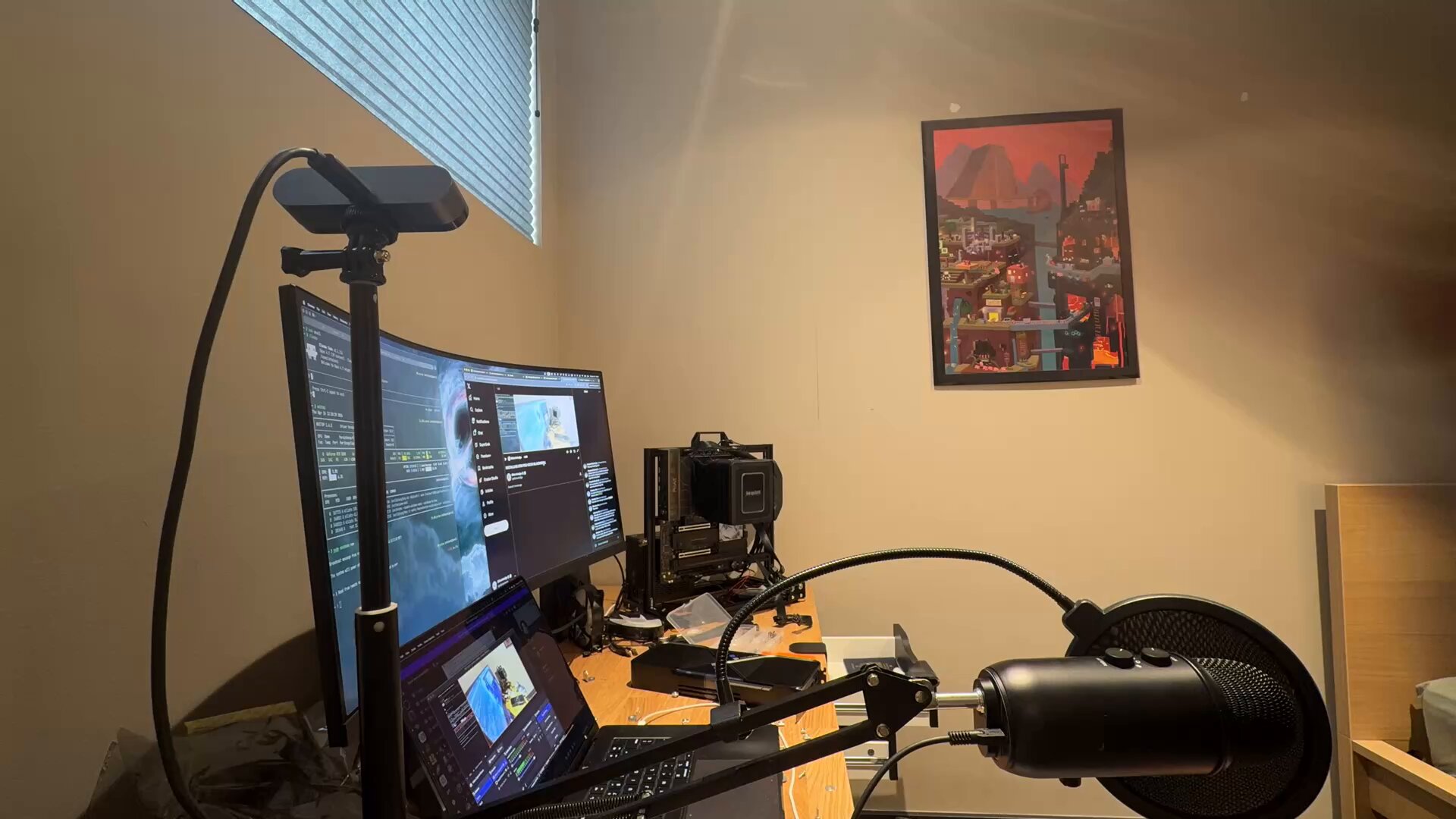
On the pure performance side, @0xSero got full-precision MiniMax-M2.7 running locally at 100 tokens/s decode and 5050 tokens/s prefill. And @elliotarledge's daily timelapse showed the hobbyist-professional blur in action: buying an RTX PRO 6000 Blackwell workstation card, running quantization calibration on Qwen 3.6 MoE, and benchmarking locally because "all the cloud compute is being bought up."
@mronge published a guide on running headless Mac minis for AI agents, noting the hardware's "small footprint, low power draw, and Apple Silicon performance make it a near-ideal always-on machine." The thread connecting all of this: local AI is no longer a compromise. It's becoming the preferred path for privacy-sensitive, performance-critical, or cost-conscious workloads.
Opus 4.7's Creative Breakout
Beyond Claude Design, Opus 4.7 showed up in unexpected creative contexts. @reallynattu demonstrated it building complex Lottie animations through MCP: "One prompt via Lottie Creator MCP, 500 particles, each with its own path, easing, and arrival frame. I didn't touch a keyframe." Meanwhile @EHuanglu simply posted "wowww.. Opus 4.7 has automated CAD" alongside a video demo, and @elliotarledge casually mentioned "getting opus 4.7 to do my taxes" as one bullet in his daily timelapse.
The pattern here is that Opus 4.7's vision capabilities are enabling it to work in domains where previous models couldn't operate effectively. CAD, motion design, and visual prototyping all require understanding spatial relationships and visual output in ways that text-only models simply can't handle. Anthropic launching Claude Design on the same day these creative use cases are proliferating suggests they see this as a genuine capability moat rather than a novelty.
The SaaS Pricing Reckoning
@VibeMarketer_ wrote the sharpest analysis of the day on Salesforce's headless pivot, connecting it to the existential question facing every SaaS company: "What happens to per-seat pricing when the primary user of your platform isn't a person? When one company runs 50 agents that each make more API calls in a day than the entire sales team makes in a month?" The post was a response to @Benioff's announcement that Salesforce's entire platform, including Agentforce and Slack, is now exposed as APIs, MCP, and CLI.
This isn't just a Salesforce story. It's the first major enterprise vendor explicitly acknowledging that humans-at-dashboards is a transitional state. @zodchiii's joke about paying $6,600/year across 14 AI subscriptions lands differently in this context: the subscription model itself is under pressure from both ends. Consumers resent the accumulating costs, and enterprise vendors are realizing their pricing unit (the human seat) is becoming irrelevant. The companies that figure out agent-native pricing first will have a structural advantage that's hard to reverse.
AI Education Goes Open Source
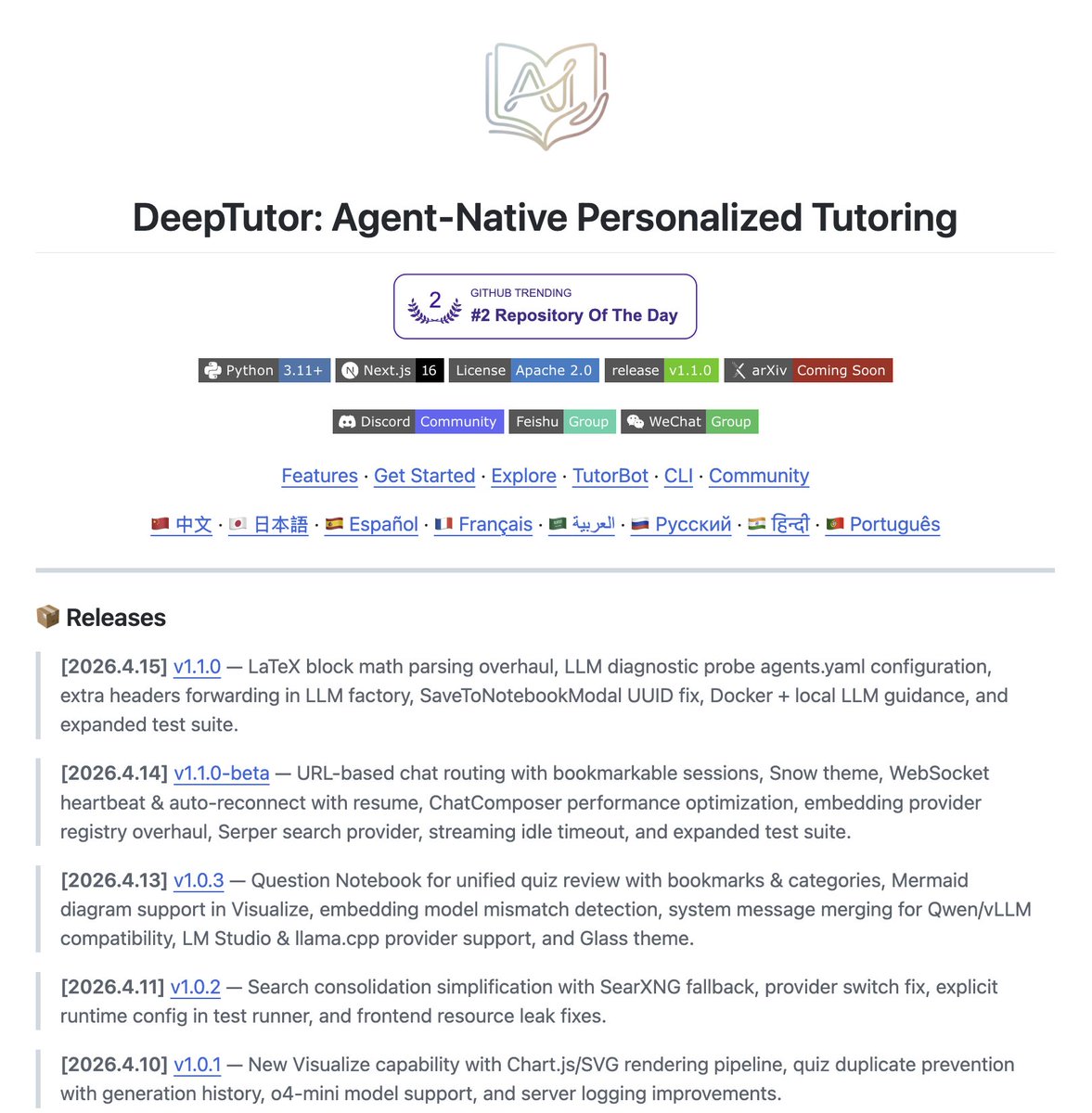
@DAIEvolutionHub highlighted DeepTutor, an open-source AI tutor that hit 6,400 GitHub stars in its first week. The pitch: "It tests you, maps your brain, builds a custom curriculum in real-time." While the breathless tone oversells it, the underlying trend is real. Adaptive learning systems that would have required a funded startup to build two years ago are now achievable as weekend open-source projects. @minchoi's share of LingBot-Map, which turns live video into 3D reconstructions at 20 FPS with open code and models, reinforces the same dynamic: the gap between research demos and usable open-source tools is collapsing fast.
Sources
A
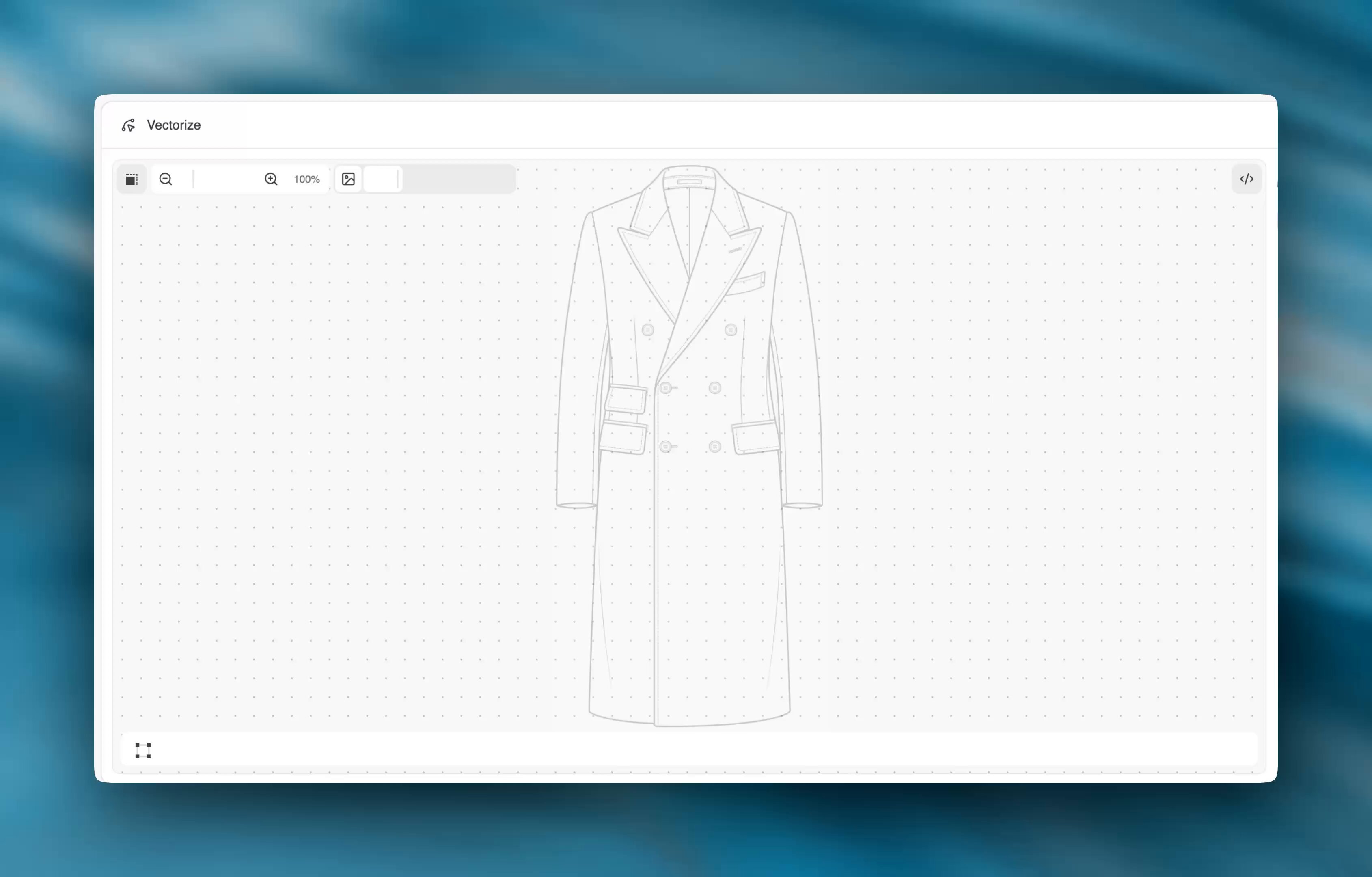
Damn check this new SVG generation model
This looks really impressive! https://t.co/91JwT7XtCG
Q
QuiverAI
@QuiverAI
Introducing Arrow 1.1 and Arrow 1.1 Max Our most advanced and capable models for structured vector generation Read more ↓ https://t.co/awYauwjYac
N
Opus 4.7 can build Lottie Animations.
One prompt via Lottie Creator MCP → 500 particles, each with its own path, easing, and arrival frame. I didn't touch a keyframe.
What should I ask it to build next? Best reply, I'll make it. https://t.co/pbrd8ALK9I
0
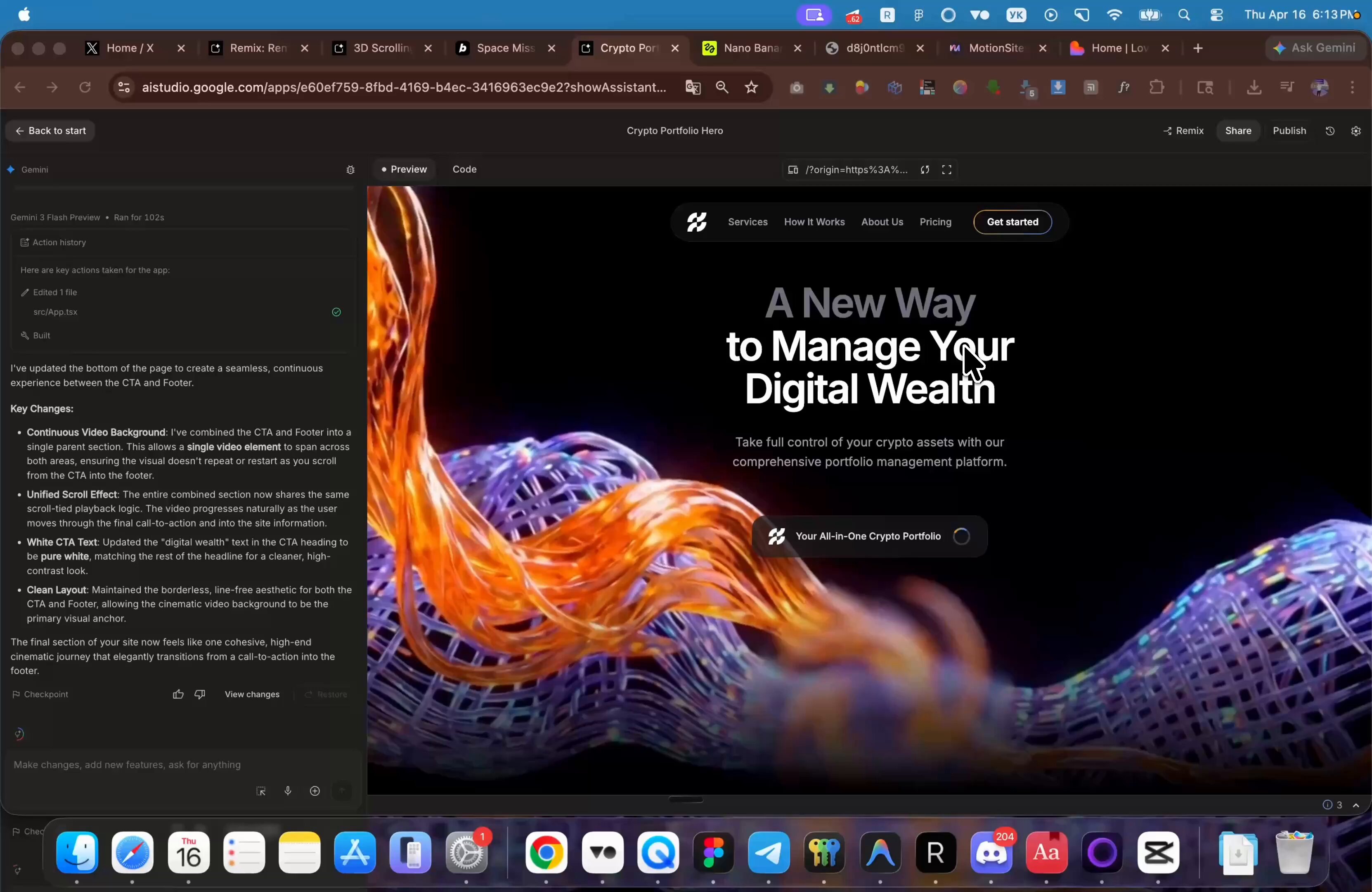
THIS GUY JUST DROPPED A 16 MIN TUTORIAL ON USING GEMINI 3.1 + SEEDANCE 2.0 TO BUILD CINEMATIC $10K WEBSITES
https://t.co/AinuKm5gkn
K
THIS JUST BROKE EDUCATION 🤯
Someone open-sourced an AI tutor that actually adapts to YOU.
Not the average student. YOU.
It’s called DeepTutor (+6.4K ⭐ in a week)
No fixed lessons.
No boring pace.
No falling behind.
It tests you → maps your brain → builds a custom curriculum in real-time.
What took Khan Academy 10+ years…
Now runs from a GitHub repo.
We’re entering the era of:
Personalized AI teachers > traditional education
Link: https://t.co/q58xL9uvMJ
Save this. This is the future. 🔖
S
Shruti_0810
@Shruti_0810
From $0 to $30K/month - step by step guide on how to launch your product with Claude
C
drones just got their first real US infrastructure bill.
most people won’t understand why until it’s too late.
the guy who mapped the drone economy before anyone else wrote the piece that explains why this is just the beginning.
drones are just the first layer.
airspace. autonomy. logistics. signals.
these layers are where the money is.

C
CoffeeStocksGuy
@CoffeeStocksGuy
THE DRONE ECONOMY: 7 Layers, 8 Companies, $400 Billion
S
> me: builds custom bot for 6 weeks
> bot: makes $12 in profit
> him: here's mine, plug in, done
> his bot: makes $847 on day one
> the lesson: stop reinventing wheels nobody asked you to reinvent https://t.co/F2v3IzGM5X

U
usePolyArb
@usePolyArb
The math that makes prediction market outcomes irrelevant
A
Most CEOs are about to become obsolete.
Not because AI replaces them.
Because AI replaces 80% of what they currently do.
The role isn’t dying. It’s compressing:
Manager → Founder → Architect
The next era belongs to CEOs who design systems, not manage people.
Worth a read if you’re scaling 👇
A
aymanalabdul
@aymanalabdul
Founder Mode is dead. Long live Founder Mode.
E
timelapse #140 (11 hrs):
- bought RTX PRO 6000 Blackwell workstation card today and setup on stream
- keeping this thing hot and busy all the time
- ketting opus 4.7 to do my taxes
- ketting more reliable daily timelapse setup
- kicked off nvfp4 quant calibration before bed for qwen3.6 MoE
- upgraded my kernelbench-v3 and now natively only benchmarking on my local gpu due to all the cloud compute being bought up (cant bench on h100s or b200s)
- filling up my “2nd brain” so my agents can reason with deeper context about me personally and the technical rabbit holes ive gone through
- still processing what my big thing(s) next will be
- cuda book review to get you guys the next chapters
- metal kernel repo cleanup: https://t.co/Z9LQ9e36LO
G
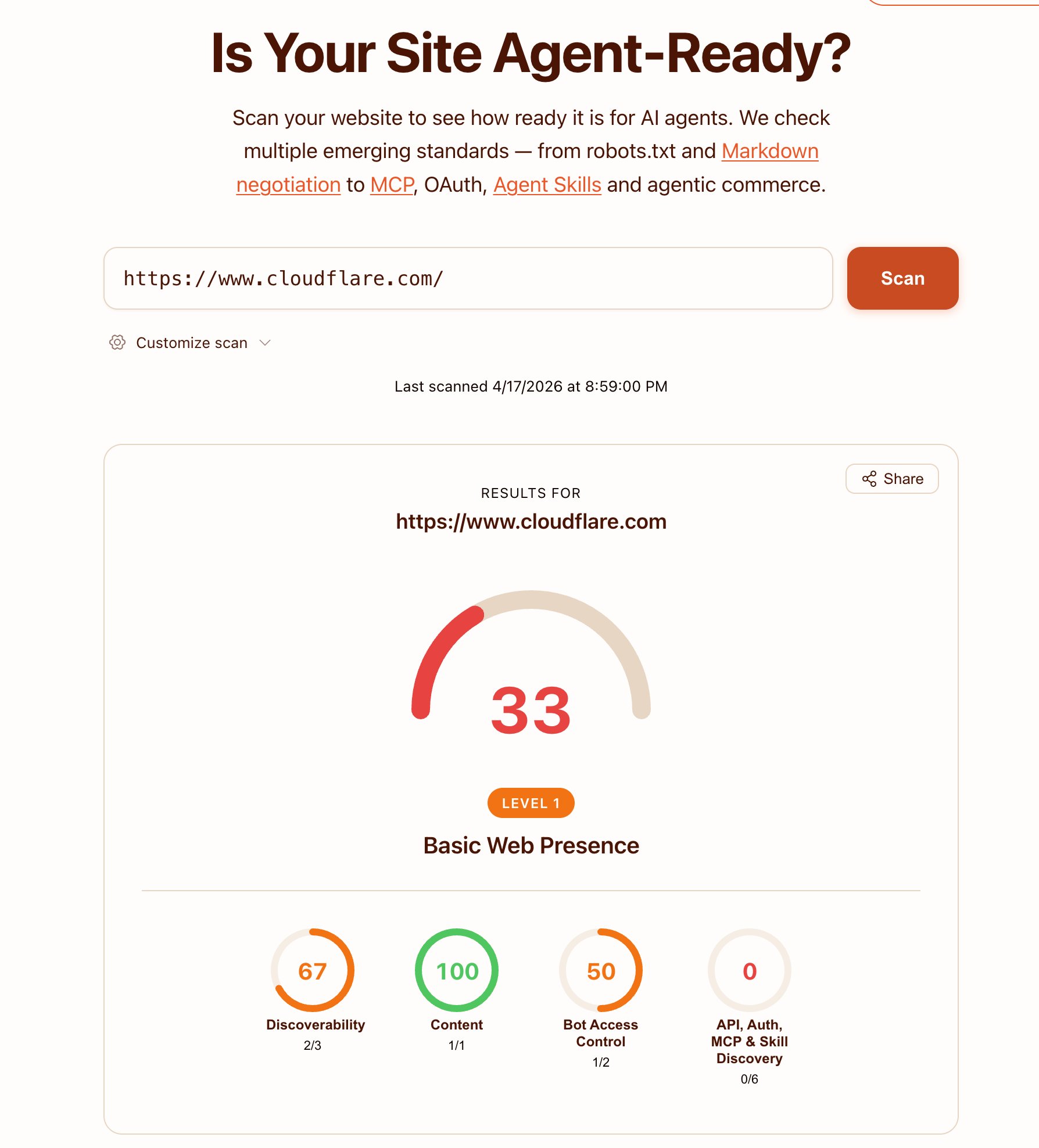
Cloudflare introduces a new tool
Check if your site is "Agent Ready"
Well per their own vague metrics they got some work to do on their own site :D https://t.co/nzAipL1zZZ
C
Cloudflare
@Cloudflare
Today, we are excited to introduce https://t.co/F5gmrAYGFP — a new tool to help site owners understand how they can make their sites optimized for agents. https://t.co/2xAeZlX5AI
D
> be a developer in 2026
> have 14 different ai subscriptions
> there's a free version of each tool on GitHub
> you know this
> and "yeah ill cancel it next month"
> so you pay $6,600/year to avoid 20 minutes of setup
> auto-renew is the greatest business model ever invented
> not because the product is good
> because the cancel button is small

Z
zodchiii
@zodchiii
25 GitHub Repos That Replace All Your Subscriptions
P
Humanity Is About to "Fork"
Humanity Is About to "Fork"
Speciation… Not Once. Five Times. TLDR: The choices you make in the next five years will determine which branch of the human story you inhabit. Here's...
T
This is the best way to learn how LLMs work.
Interactive. 3D. Step-by-step.
Covers:
→ Embedding
→ Layer Norm
→ Self-Attention
→ MLP
→ Transformer layers
→ Softmax
→ Output
Stop reading papers. Start seeing.
Link in comments.
Save this immediately. https://t.co/vLHM3mkXqj
J
salesforce going headless is bigger than people realize.
software has been priced per seat for decades. the entire business model assumes a person logs in, clicks around, and gets value from a dashboard.
agents don’t log in. they make API calls.
so what happens to per-seat pricing when the primary user of your platform isn’t a person? when one company runs 50 agents that each make more API calls in a day than the entire sales team makes in a month?
every SaaS company is about to face this question. salesforce just forced it into the open by going fully headless.
the ones that figure out agent-native pricing first will own the next cycle. the ones still charging per seat while agents do the work will get left behind.
B
Benioff
@Benioff
Welcome Salesforce Headless 360: No Browser Required! Our API is the UI. Entire Salesforce & Agentforce & Slack platforms are now exposed as APIs, MCP, & CLI. All AI agents can access data, workflows, and tasks directly in Slack, Voice, or anywhere else with Salesforce Headless 360. Faster builds, agentic everything. 🚀 #Salesforce #Agentforce #AI https://t.co/mxySdJS7HR
M
The Ultimate Guide to Running a Headless Mac mini for AI agents
The Ultimate Guide to Running a Headless Mac mini for AI agents
The Mac mini is having a moment. Its small footprint, low power draw, and Apple Silicon performance make it a near-ideal always-on machine, perfect fo...
T
Compound Engineering - 4/17/2026
Compound Engineering - 4/17/2026
4 releases in a week. Iterative optimization loops, human-in-the-loop polish, ideation that works beyond code, and a proper setup experience across Co...
C
The Claude Code hackathon is back for Opus 4.7.
Join builders from around the world for a week with the Claude Code team in the room, with a prize pool of $100K in API credits.
Apply by Sunday: https://t.co/5MCkMtP5ti https://t.co/xmVhEQGtaL
C
Starting in v2.1.113, the Claude Code npm package ships the native binary instead of the JavaScript build.
Same install command, faster startup, and the CLI no longer needs Node.js at runtime. If you need the JS build, pin to an earlier version.
A
people are now sequencing their DNA at home, locally on DGX Sparks and Mac Studios.
this madlad is running Evo 2, a 40B‑parameter DNA LLM that predicts genome sequences instead of text.
local AI is going to unlock a world of creativity. @karpathy’s personal computing v2 is here.
S
SethSHowes
@SethSHowes
I’ve wanted to do this for a decade. But I never did - I refuse to give any company my DNA. It is me. So this week I sequenced my genome entirely at home. Literally on my kitchen table. I never exposed my DNA sequence to the internet. Not at any point. I used a MinION to do the sequencing (it’s smaller + weighs less than an iPhone). I used open-source DNA models for the analysis (Evo2 and AlphaGenome) running locally on a DGX Spark and Mac Studio. I traced mechanisms behind my family’s multigenerational autoimmune conditions that no clinician has been able to understand. When I set out to do this I didn’t know if it would actually work. It does. Your genome is the most private data you will ever have. You probably shouldn’t let it leave your house.
K
This, by the way, is what top tier programming looks like today
You are using codex, because it 100xes your output. But you *must* understand what the computer is doing. You *must* understand *everything*. There is no other way
S
SebAaltonen
@SebAaltonen
Codex wrote our new material struct. It created two bind groups in it, because shadows only need albedo texture. Codex is trained with old OpenGL/DX12 code. Nowadays it doesn't matter how many bindings are in your bind group. Binding a bind group is basically setting a GPU pointer (offset to descriptor heap). A single bind group per material is enough. Doesn't matter if you only read diffuse texture (for alpha clip shadows). Codex also added separate texture fields in the material struct. Again not needed, since nobody will refer to individual textures in rendering. Textures descriptors are already inside the bind group in GPU memory. Just extra bloat to remember them in CPU side.
M
RT @minchoi: This AI is pretty wild.
LingBot-Map can turn a live video stream into a 3D reconstruction in real time.
20 FPS
Code + Model…
B
alright - verdict is in - Motion Design is solved
made with HyperFrames + Claude Design
btw - HyperFrames is open source, star it on github and I'll send tutorial on how i made this with 2 prompts. https://t.co/uYzeIVDvlA
C
claudeai
@claudeai
Introducing Claude Design by Anthropic Labs: make prototypes, slides, and one-pagers by talking to Claude. Powered by Claude Opus 4.7, our most capable vision model. Available in research preview on the Pro, Max, Team, and Enterprise plans, rolling out throughout the day. https://t.co/2BgBGtgYGX
A
RT @ashpreetbedi: Scaling Agentic Software: Part 1
What is the simplest architecture for running a multi-agent system at scale?
Multi-use…
A
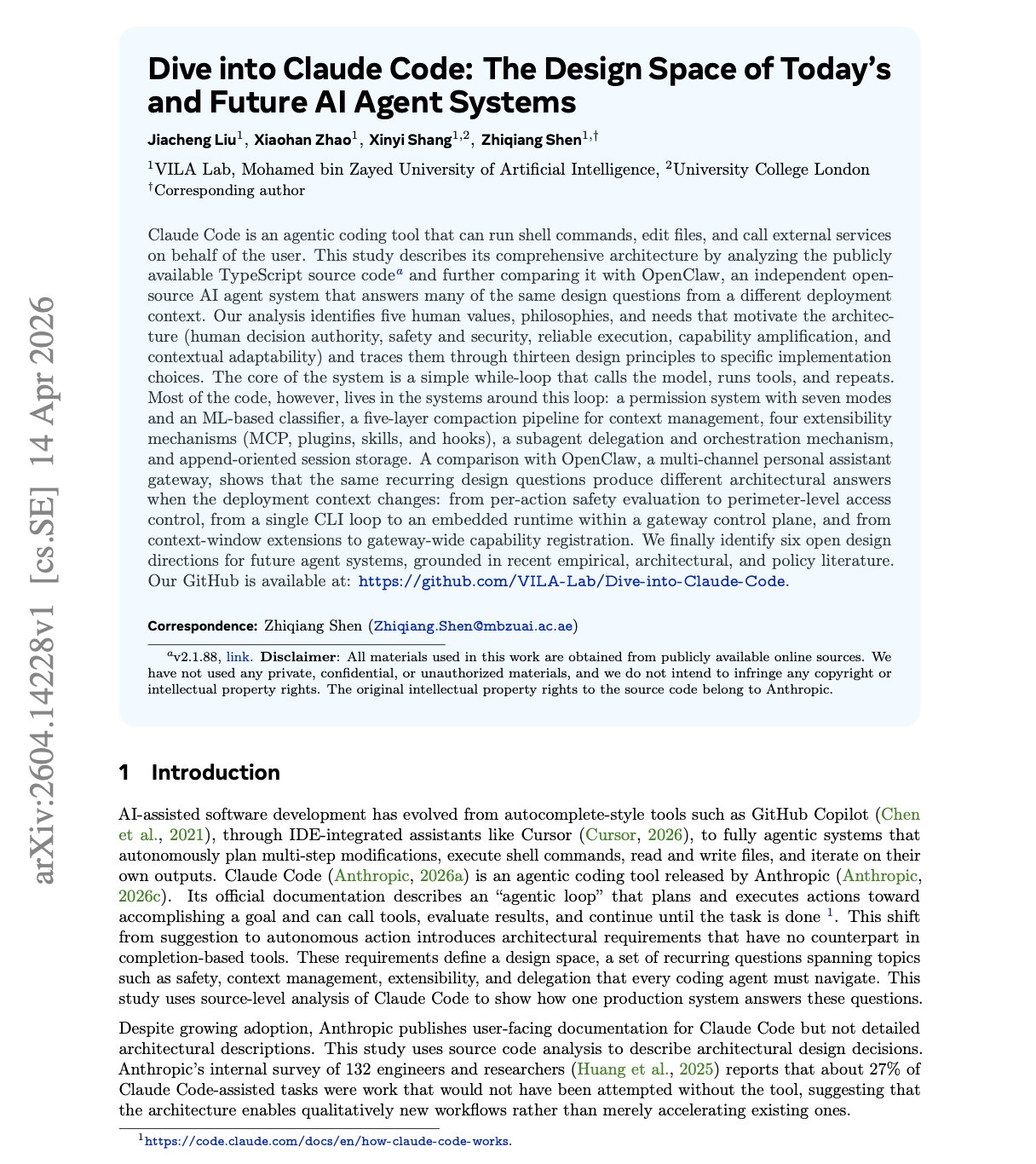
Claude Code fully dissected!
Researchers from UCL reverse-engineered the leaked Claude source. What they found changes how you should think about agent design.
Only 1.6% of the codebase is AI decision logic.
The other 98.4% is operational infrastructure. Permission gates, tool routing, context compaction, recovery logic, session persistence. The model reasons. The harness does everything else.
This is the opposite of what most agent frameworks do today.
LangGraph routes model outputs through explicit state machines. Devin bolts heavy planners onto operational scaffolding. Claude Code gives the model maximum decision latitude inside a rich deterministic harness, and invests all its engineering effort in that harness.
The core loop is a simple while-true. Call model, run tools, repeat.
But the systems around that loop are where the real design lives:
A permission system with 7 modes and an ML classifier. Users approve 93% of prompts anyway, so the architecture compensates with automated layers instead of adding more warnings.
A 5-layer context compaction pipeline. Each layer runs only when cheaper ones fail. Budget reduction, snip, microcompact, context collapse, auto-compact.
Four extension mechanisms ordered by context cost. Hooks (zero), skills (low), plugins (medium), MCP (high). Each answers a different integration problem.
Subagents return only summary text to the parent. Their full transcripts live in sidechain files. Agent teams still cost roughly 7x the tokens of a standard session.
Resume does not restore session-scoped permissions. Trust is re-established every session. That friction is the point.
The bet behind all of this is simple. As frontier models converge on raw coding ability, the quality of the harness becomes the differentiator, not the model.
Paper: Dive into Claude Code (arXiv:2604.14228)
In the next tweet, I've shared an article I wrote on Agent Harness and what every big company is building. Do check.
0
Finally, full precision MiniMax-M2.7 running at home.
100 tokens/s decode
5050 tokens/s prefill https://t.co/yC8XIdeMSW