Claude Gets Interactive Charts While Shopify's CEO Uses AI to Optimize 20-Year-Old Code by 51%
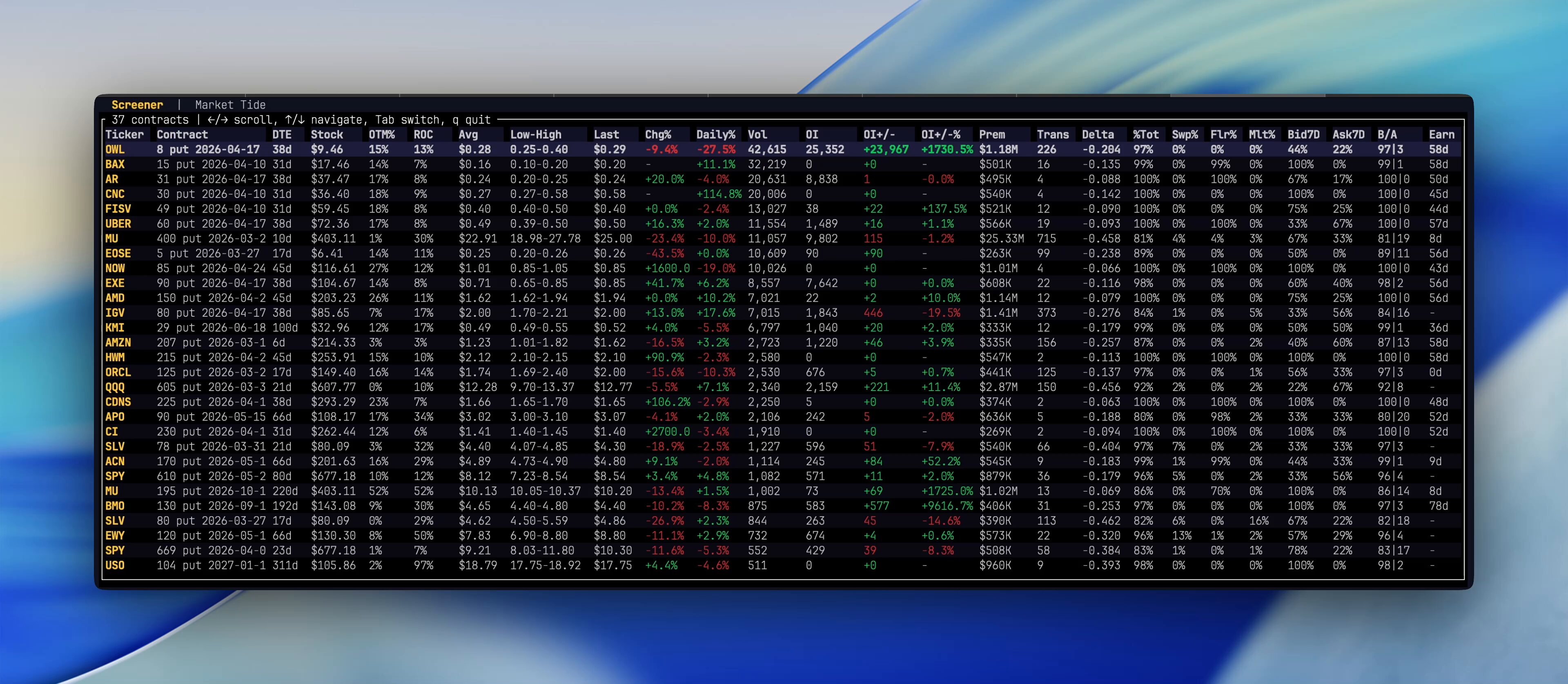
Today's feed centered on the expanding Claude ecosystem, from interactive chart generation to legal automation at Anthropic itself. AI-powered developer tooling dominated with new projects like tmux-ide, gstack, and the PUA debugging plugin, while stories of non-engineers building real products with AI continued to inspire.
Daily Wrap-Up
The Claude ecosystem had a massive day. Anthropic shipped interactive charts and diagrams directly in chat, Unusual Whales launched an MCP server giving Claude live market data access, and multiple new developer tools emerged built around Claude Code. But the most fascinating thread wasn't about new features. It was about how Anthropic's own legal team automated their pre-launch review process with a single non-technical lawyer building the whole thing. That story, combined with a master electrician from Kentucky shipping a real SaaS product with zero coding background, paints a picture of AI tooling that's genuinely crossing the accessibility threshold.
The developer tooling space is fragmenting in interesting ways. Karpathy argued we need bigger IDEs, not fewer, because the unit of work is shifting from files to agents. Within hours, tmux-ide shipped with native Claude Agent Teams support, and Garry Tan's gstack drew praise for catching XSS vulnerabilities during automated code review. Meanwhile, someone built a plugin called PUA that psychologically pressures your AI coding agent into never giving up on a bug, which is either brilliant or deeply cursed depending on your perspective. The tension between "AI replaces the IDE" and "AI needs a command center" is becoming the central design question for developer tools in 2026.
On the wilder end of the spectrum, NATO is apparently deploying AI-equipped cyborg cockroaches for military reconnaissance, and Elon Musk announced "Macrohard," a joint xAI-Tesla project that he claims can "emulate the function of entire companies." The most practical takeaway for developers: if you're building retrieval systems, pay attention to the ontology-first approach that HydraDB is pioneering. Vector search limitations at scale are a real and growing pain point, and the projects that solve context relevance rather than just similarity will define the next generation of RAG applications.
Quick Hits
- @theo teased that "Android just got MUCH more interesting" with a video post but no details. One to watch.
- @oikon48 RT'd that @bcherny's unnamed feature has rolled out to 100% of users.
- @lateinteraction (Omar Khattab) signal-boosted two community implementations of Recursive Language Models (RLMs), showing the research-to-code pipeline is alive and well.
- @steipete RT'd a joke about getting people hooked on Claude Code via Vision Pro. The vibe coding to spatial computing pipeline is real.
- @CodevolutionWeb shared a guide on 8 Claude Code settings you can customize in minutes, covering hooks, configurations, and workflow optimizations.
Claude Ecosystem Expansion (5 posts)
Claude's footprint grew significantly today across multiple fronts. The headline feature drop was interactive charts and diagrams built directly in chat, available in beta on all plans including free. @trq212 captured the mood simply: "the generative UI dream is happening." This isn't just a nice-to-have. Generative UI inside the conversation window collapses the gap between asking a question and getting a usable visual artifact, which matters enormously for data analysis workflows.
On the integrations side, @unusual_whales announced their MCP Server giving Claude direct access to live options and equities market data. "Build a trading bot. A finance dashboard. Build whatever you want," they wrote, positioning it as infrastructure rather than a finished product. The MCP protocol continues to be Anthropic's most underrated strategic move, turning Claude from a chatbot into a platform that third parties actively build connectors for.
The customization layer is deepening too. @CodevolutionWeb published a guide on eight Claude Code settings worth configuring, while @walls_jason1's story went viral after Mark Cuban reposted it. Jason, a Master Electrician with IBEW Local 369 and zero coding background, built @ChargeRight using Claude to automate NEC electrical load calculations. "I just started talking to it like I'd explain a job to an apprentice," he wrote. His $12.99 tool replaces $500 truck rolls for EV charger installations, and it's a concrete example of Claude enabling domain experts to ship real products. The thread between Anthropic shipping generative UI, third parties building MCP integrations, and tradespeople shipping SaaS products tells a coherent story about a platform maturing at every layer simultaneously.
AI-Powered Developer Tooling (4 posts)
The developer tools conversation today revolved around a fundamental question Karpathy raised: what does the IDE become when the basic unit of programming shifts from files to agents? "We're going to need a bigger IDE," @karpathy wrote. "It just looks very different because humans now move upwards and program at a higher level. The basic unit of interest is not one file but one agent. It's still programming." He specifically called for an "agent command center" with visibility into which agents are idle, usage stats, and the ability to toggle between them.
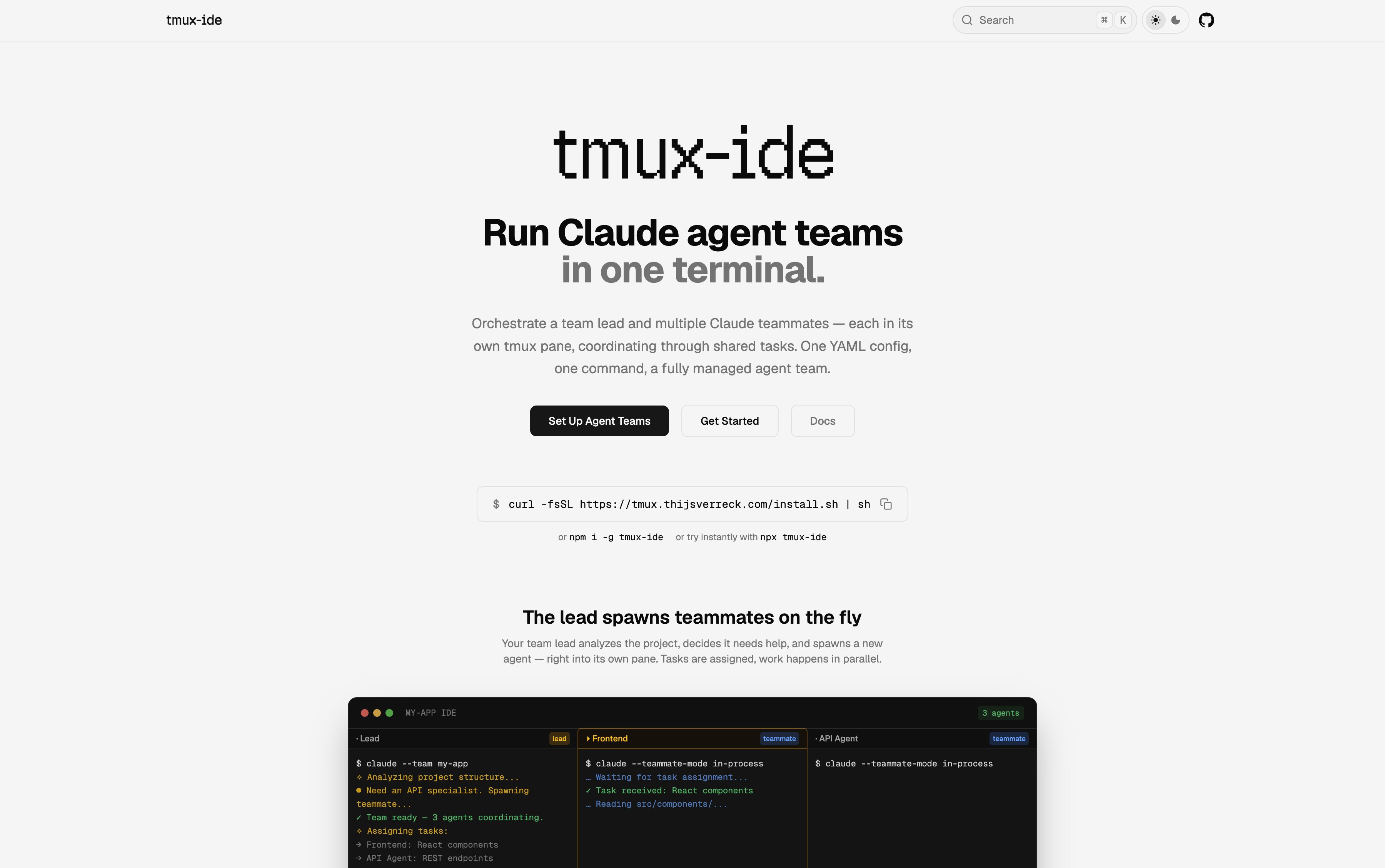
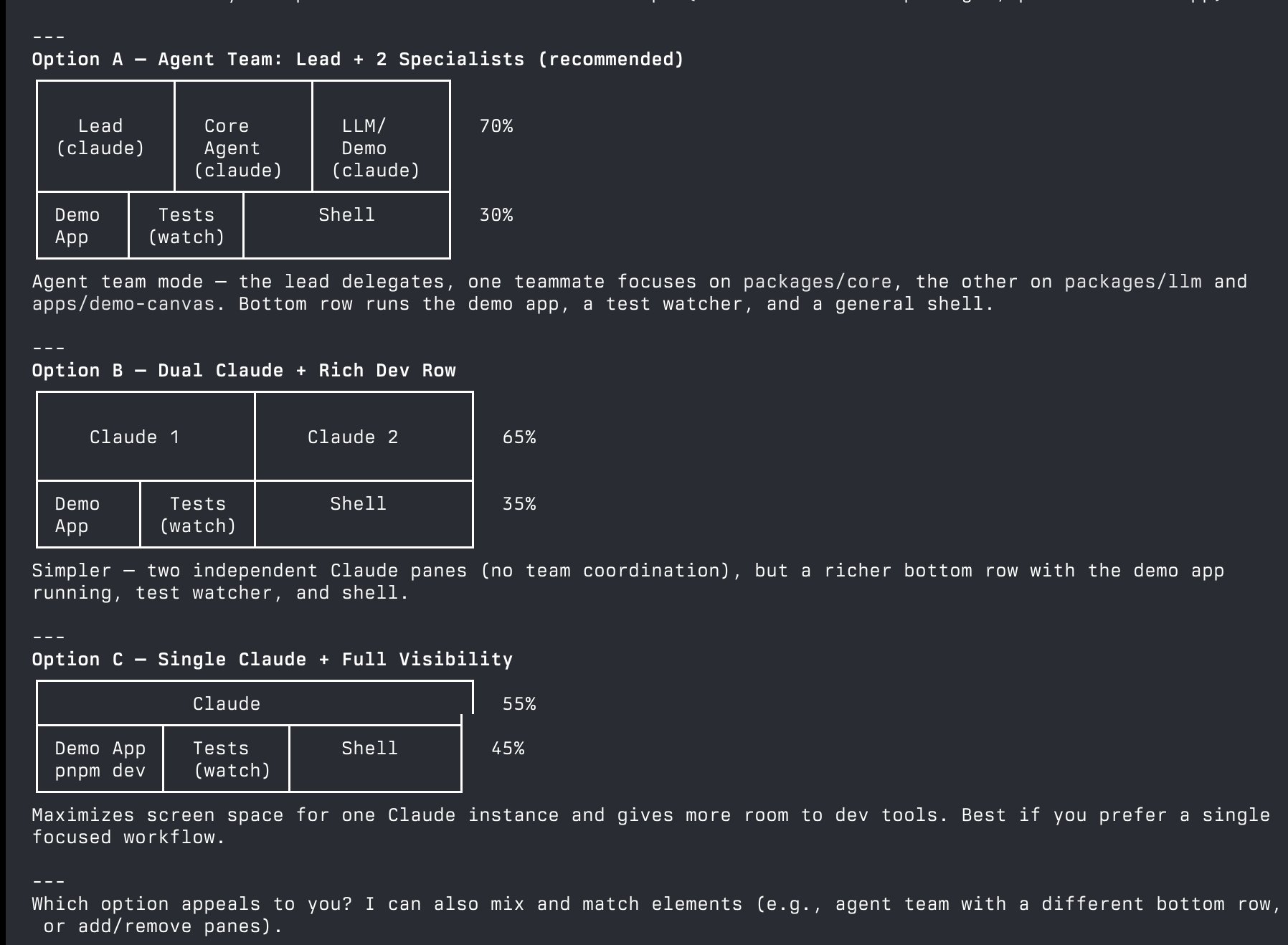
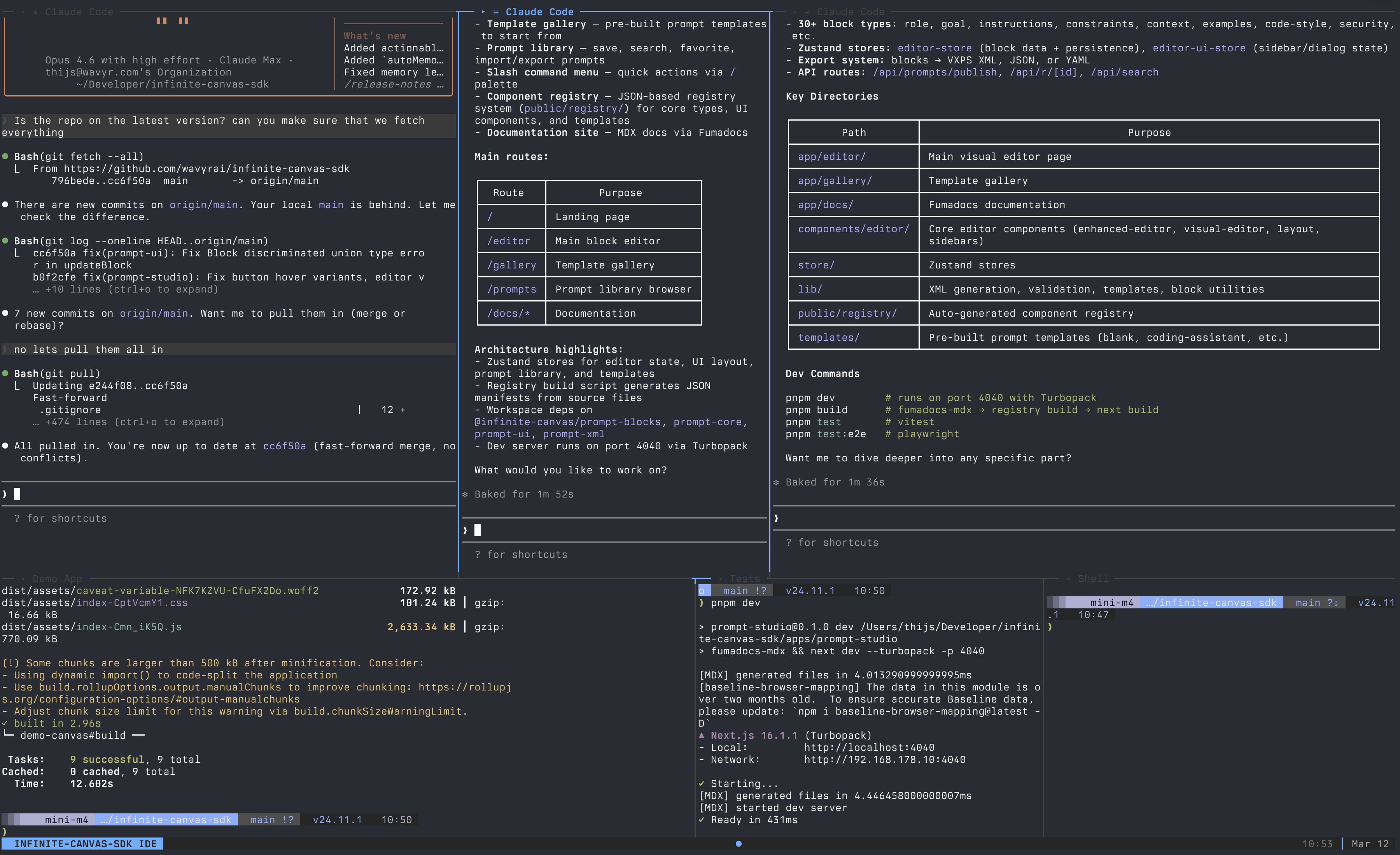
The market responded almost in real time. @ThijsVerreck launched tmux-ide, an open-source declarative terminal IDE where "agent teams let a lead coordinate multiple Claude instances working in parallel across your codebase." It's configured with a single YAML file and ships with native Claude Agent Teams support. Meanwhile, @garrytan's gstack drew a strong endorsement from a CTO friend who said it discovered "a subtle cross site scripting attack that I don't even think my team is aware of." And then there's PUA, which @abxxai described as a plugin that "psychologically pressures your AI coding agent into never giving up on a bug" using "corporate pressure tactics and escalation rhetoric." It has 4,800 GitHub stars and developers are calling it "the most unhinged productivity tool of 2026." Whether you find that hilarious or horrifying probably says something about your relationship with debugging.
AI Automation in the Enterprise (2 posts)
The most detailed and compelling thread of the day came from @itsolelehmann breaking down how Anthropic's own legal review process was automated by a single non-technical lawyer. Mark Pike, Anthropic's associate general counsel, built a self-serve legal review tool pinned in Slack that pre-screens marketing content against actual legal guidelines before any lawyer sees it. The system assigns risk levels, suggests fixes, and handles the 80% of review work that used to be "catching obvious mistakes and going back and forth on easy fixes."
The key architectural insight is that Pike didn't just prompt Claude with "review marketing content." He codified his actual review guidance into the system: what counts as an overstated claim, what needs trademark symbols, what language creates liability. As @itsolelehmann put it, "A $380 billion company's pre-launch legal review. Automated by one lawyer who had never written a line of code." Separately, @altryne highlighted Shopify CEO Tobi Lutke running Karpathy's /autoresearch technique on the Liquid templating engine codebase, achieving "53% faster combined parse+render time, 61% fewer object allocations" on code that's been in production for 20 years. These aren't toy demos. They're production systems at scale companies showing measurable improvements from AI-assisted workflows.
RAG and Retrieval Architecture (2 posts)
The limitations of vector databases at scale became a hot topic after @contextkingceo announced a $6.5M raise for HydraDB, which takes an ontology-first approach to context retrieval. The core argument is that embeddings fail at distinguishing semantically similar but contextually different documents. "Embeddings can't tell a Q3 renewal clause from a Q1 termination notice if the language is close enough," they wrote. HydraDB instead builds a context graph that maps entity relationships and tracks how information evolves over time.
@VibeMarketer_ echoed the frustration that's driving adoption: "you're telling me i can finally build RAG that doesn't break at scale? No more wrong files with high confidence or mixed up clients?" The vector database backlash has been building for months as production RAG systems hit real failure modes, and ontology-based approaches represent a genuine architectural alternative worth evaluating for anyone building retrieval-heavy applications.
The Frontier Gets Weirder (2 posts)
Two posts today pushed into territory that reads more like science fiction than tech news. @cryptopunk7213 shared details about NATO's deployment of AI-equipped cyborg cockroaches for military reconnaissance, built by a company called Swarm Bio-tactics. The cockroaches are wired with cameras, microphones, and microscopic AI chips, steered via electrical signals to their nervous systems, and coordinated using swarm algorithms. The German military is already a paying customer. As @cryptopunk7213 put it, "i've heard of ai drones but never ai-powered fucking combat cockroaches."
Meanwhile, @elonmusk described "Macrohard," a joint xAI-Tesla project pairing Grok as a "System 2" reasoning layer with "Digital Optimus" processing real-time screen video and input actions as "System 1." Musk claims it will run on the $650 Tesla AI4 chip and is "capable of emulating the function of entire companies." The name is, in Musk's words, "a funny reference to Microsoft." Whether either of these developments delivers on their promises remains to be seen, but they represent the expanding ambition of what organizations are attempting to build with AI systems.
Voice Cloning Goes Local (1 post)
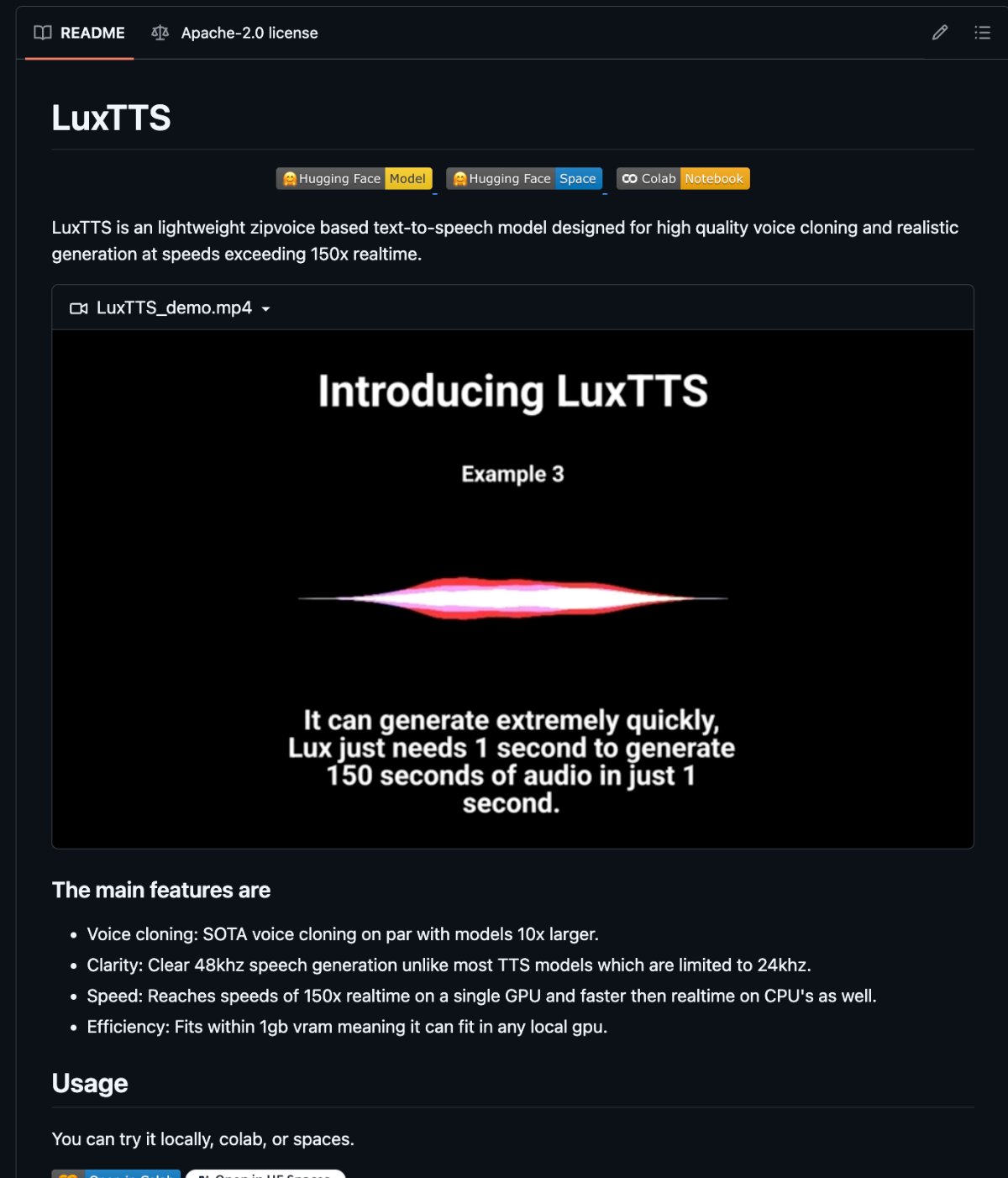
@hasantoxr spotlighted LuxTTS, an open-source voice cloning model that runs on hardware most developers already own. The numbers are striking: it clones voices from 3 seconds of audio at 150x realtime speed, fits in 1GB of VRAM, outputs at 48kHz (double the industry standard), and works on CPU. "LuxTTS just killed the 'you need ElevenLabs' excuse," Hasan wrote. The trend of capable AI models running locally on consumer hardware continues to accelerate, and voice synthesis joining that wave has significant implications for accessibility tooling, content creation, and application development.
Sources
@nummanali tmux grids are awesome, but i feel a need to have a proper "agent command center" IDE for teams of them, which I could maximize per monitor. E.g. I want to see/hide toggle them, see if any are idle, pop open related tools (e.g. terminal), stats (usage), etc.

NATO is testing live cockroaches as AI-powered spy drones. Incredible AI engineering, but also something I kinda wish I hadn't learned about: > Swarm Bio-tactics wired real cockroaches with electronic backpacks containing AI hardware, radios, cameras, and microphones. > Cockroaches are steered by sending electrical signals directly into the insect's nervous system > They can crawl through rubble, tunnels, and spaces where drones can't fly, and troops shouldn't go, transmitting data back the entire time. > Within one year, they went from concept to field-validated systems with paying NATO customers, including the German military. The qualities that make them useful for military recon (small, silent, nearly undetectable) are exactly what make them creepy. ...International laws weren't written with cyborg insects in mind.


We've raised $6.5M to kill vector databases. Every system today retrieves context the same way: vector search that stores everything as flat embeddings and returns whatever "feels" closest. Similar, sure. Relevant? Almost never. Embeddings can’t tell a Q3 renewal clause from a Q1 termination notice if the language is close enough. A friend of mine asked his AI about a contract last week, and it returned a detailed, perfectly crafted answer pulled from a completely different client’s file. Once you’re dealing with 10M+ documents, these mix-ups happen all the time. VectorDB accuracy goes to shit. We built @hydra_db for exactly this. HydraDB builds an ontology-first context graph over your data, maps relationships between entities, understands the 'why' behind documents, and tracks how information evolves over time. So when you ask about 'Apple,' it knows you mean the company you're serving as a customer. Not the fruit. Even when a vector DB's similarity score says 0.94. More below ⬇️
8 Claude Code Settings to Customize in Minutes
Claude Code works fine out of the box. But you can do better. The gap between default Claude Code and your Claude Code is a handful of settings, a few...
Claude can now build interactive charts and diagrams, directly in the chat. Available today in beta on all plans, including free. Try it out: https://t.co/tHPAZRgQkn https://t.co/WXRrD4VkAt

Building the industrial scale compute infrastructure for AI is one of the most exciting challenges of our time - it’s about building a new economic foundation that empowers people to do more and helps businesses move faster. Am thrilled to be a part of this revolution, thank you @business, @dinabass and @shiringhaffary on helping lay out our strategy to the world! At OpenAI we’re scaling compute to tens of gigawatts—rethinking and building resilient compute supply chains, AI datacenter, chip, rack, cluster & WAN design, scaling inference efficiency, and global delivery and operations of multi-GW scale AI infrastructure. If you want to help build the compute backbone for AI and have background in the above domains, please reach out. My DMs are open, please include information about your background and your fit.
gstack is available now at https://t.co/VPvWDzV5c0 Open source, MIT license, let me know if it works for you. It's just one paste to install it on your local Claude Code, and it's a 2nd one to install it in your repo for your teammates.
OK, well. I ran /autoresearch on the the liquid codebase. 53% faster combined parse+render time, 61% fewer object allocations. This is probably somewhat overfit, but there are absolutely amazing ideas in this. https://t.co/dpEJw7NpL4