AI Learning Digest.

.agents/skills Standardization Sweeps IDEs as Apple Ships Claude Agent SDK in Xcode 26.3

Daily Wrap-Up

Today felt like a coordination event across the AI coding tool landscape. The .agents/skills specification quietly became a de facto standard, with VS Code, Copilot, Codex, and Cursor all announcing support within the same news cycle. @theo couldn't resist pointing out that Claude Code, whose ecosystem arguably popularized skills, is notably absent from the adopters list. Meanwhile, Apple shipped Xcode 26.3 with a full Claude Agent SDK integration, giving Swift developers the same autonomous agent capabilities that CLI users have had. The message is clear: the IDE wars have moved past autocomplete and into agent orchestration, and skills are the interop layer everyone is converging on.

On the model front, the story was about making powerful capabilities accessible at smaller scales. Alibaba's Qwen released a 3B-parameter coding model that reportedly matches Sonnet 4.5 on benchmarks, while @simonw flagged an Unsloth quantized model that might actually drive coding agents from local hardware. @karpathy continued his GPT-2 speedrun saga, getting training time down to 2.91 hours with fp8. The practical implication: the floor for "good enough" AI-assisted coding keeps dropping, and the ceiling keeps rising. Rumors of a Sonnet 5 soft-launch on claude.ai added fuel to the speculation fire.

The most entertaining moment was @banteg issuing a genuine challenge to "claude boys, ralph boys" to take two decompiled C files and rewrite an entire game in another language and engine, preferably browser-based. It's a perfect litmus test for where agent-assisted development actually stands. The most practical takeaway for developers: if you maintain any kind of coding agent configuration, start organizing it under .agents/skills/ now. The convergence across tools means your investment in skills will be portable across VS Code, Copilot, Cursor, and likely Claude Code soon enough.

Quick Hits

  • @DrJimFan teased "The Second Pre-training Paradigm" without elaboration, leaving the timeline to speculate.
  • @HuggingModels spotlighted GLM-4.7-Flash-Uncensored-Heretic, an unfiltered text generator optimized for raw reasoning with "zero guardrails."
  • @theworldlabs showed off persistent 3D scenes from their world model that users can build on top of indefinitely.
  • @minchoi shared Higgsfield AI's Vibe-Motion, a prompt-to-motion-design tool powered by Claude reasoning that targets ad agency workflows.
  • @minchoi also RT'd their own AI-generated content with "Haters will say no AI was used for this."
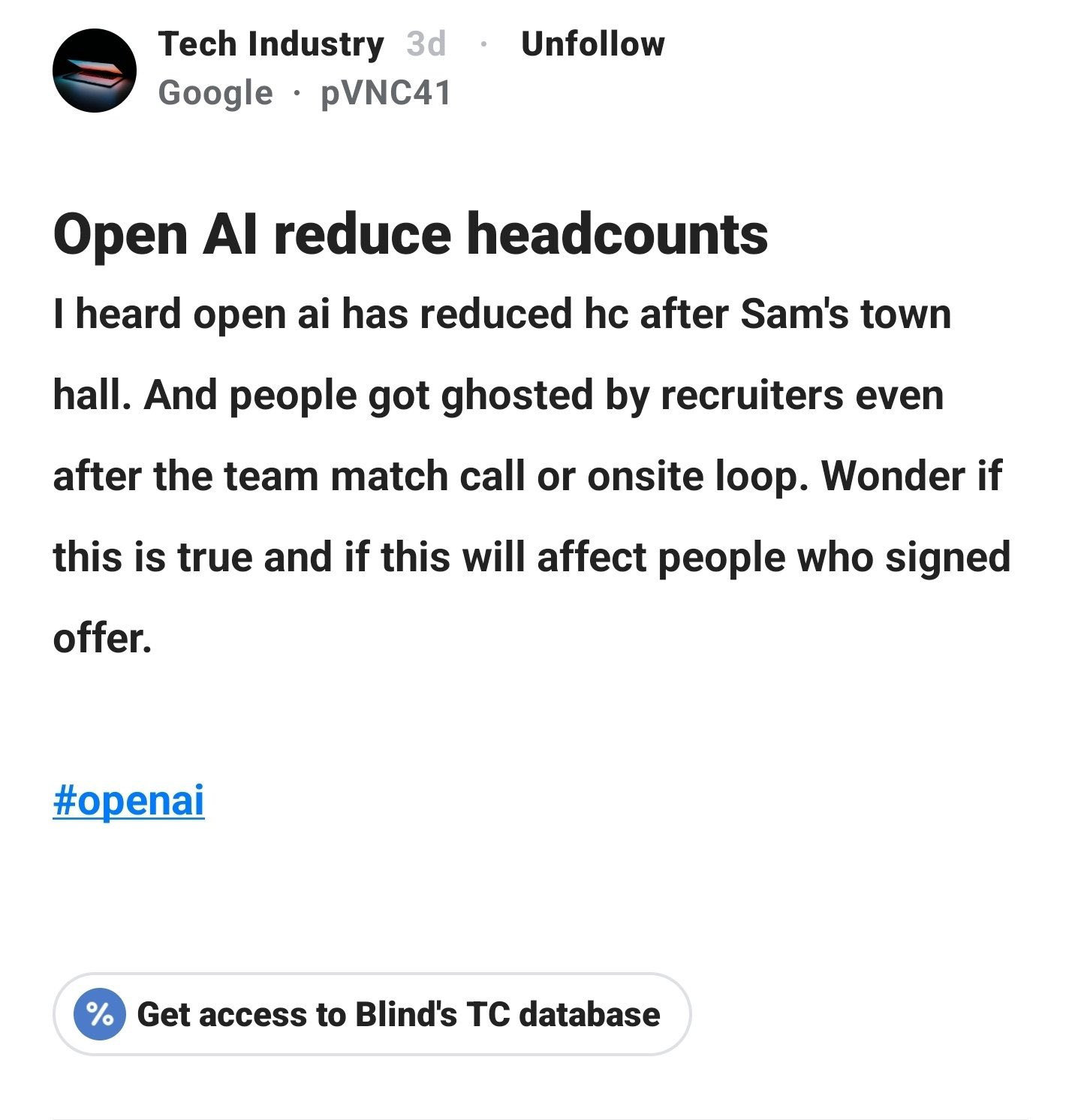
  • @jukan05 raised eyebrows asking whether OpenAI is already starting layoffs.
  • @OpenAIDevs announced a live Codex app workshop with @romainhuet and @dkundel for building apps end-to-end.
  • @KaranKunjur reflected on building a space company (K2) at the intersection of Starship and orbital compute, noting "concepts I thought were 5 to 10 years out are now foundational capabilities."
  • @cb_doge outlined Elon Musk's five-step plan to reach Kardashev Type II civilization through orbital AI data centers.
  • @kloss_xyz shared what a $200/month Claude setup looks like in practice.
  • @pierceboggan asked what to prioritize improving for developers using VS Code and GitHub Copilot CLI together.
  • @trq212 highlighted a Chrome browser connection for Claude via the VS Code extension, enabling frontend debugging and browser automation.
  • @felixleezd published a Claude Code guide specifically for designers.
  • @flaviocopes endorsed Docker sandboxes as "a fantastic way to run agents in YOLO mode without anxiety."
  • @o_kwasniewski stressed that build and lint passing isn't enough, and end-to-end testing of agent-built flows is crucial.
  • @micLivs had the most concise advice of the day regarding skills configuration: "just create a symlink and get on with your life."

Claude Code's Surface Area Expands

Anthropic had a busy day pushing Claude Code into new surfaces. The headline announcement was Xcode 26.3 shipping with a native Claude Agent SDK integration. As @mikeyk described it, "Devs get the full power of Claude Code (subagents, background tasks, and plugins) for long-running, autonomous work directly in Xcode." This isn't a lightweight autocomplete bolt-on. It's the same agent harness that powers the CLI, now embedded in Apple's IDE. @AnthropicAI positioned it as covering "iPhone to Mac to Apple Vision Pro," signaling that Claude's coding agent story extends beyond web development.

On the communication front, @claudeai announced Slack integration for Pro and Max plans:

"Search your workspace channels, prep for meetings, and send messages back to keep work moving forward, without leaving your conversation with Claude."

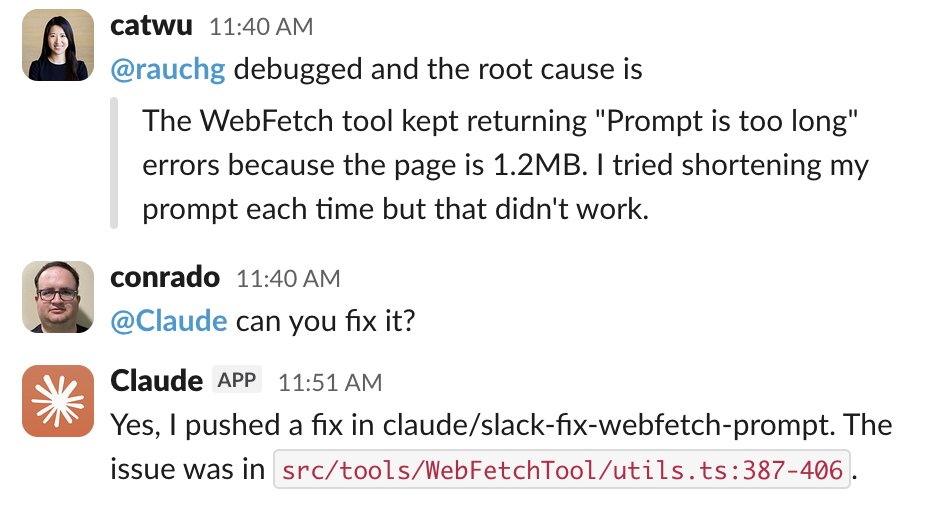
@_catwu from Anthropic demonstrated the practical workflow: "We have a user feedback channel where we regularly tag in @Claude to investigate issues and push fixes." Meanwhile, Claude Code 2.1.30 landed with what @ClaudeCodeLog documented as "19 CLI, 1 flag, and 1 prompt changes." @Yampeleg called out the new /insights command specifically. @lydiahallie announced session sharing, letting developers share full conversations with team members via web, desktop, or mobile.

The pricing discussion also heated up. @OrenMe did the math on Claude Code vs GitHub Copilot, calculating that $1000/month on Copilot's overage pricing would yield roughly 8,500 Opus requests versus Claude Code's flat-rate approach. @rockatanescu noted that Anthropic's $125/month business seats with limits comparable to the $100 consumer plan make it "an easy choice for businesses," adding that "surprisingly, OpenAI doesn't offer business plans with higher limits." The competitive dynamics are shifting from capability comparisons to unit economics.

The .agents/skills Land Grab

Something notable happened today: multiple competing IDE platforms converged on the same skills specification within hours of each other. @theo catalogued the adopters with characteristic directness:

"Products that moved to .agents/skills so far: Codex, OpenCode, Copilot, Cursor. Not Claude Code."

The irony is thick. Claude Code's ecosystem did more than anyone to popularize the concept of skills as portable agent instructions, yet the formal .agents/skills directory convention is being adopted by everyone else first. @pierceboggan confirmed ".agents/skills coming to @code!" and @leerob from Vercel added "We're adding support for .agents/skills in the next release! This will make it easier to use skills with any coding agent."

The standardization is already spawning its own economy. @EXM7777 declared "investing in skills is the best play you can make in 2026" while promoting SkillStack as a marketplace for buying and selling audited skills. @haydenbleasel launched AI Elements Skills with a one-liner install: npx skills add vercel/ai-elements. Whether this becomes a real marketplace or another npm-style dependency sprawl remains to be seen, but the convergence on a common directory structure is a genuine interoperability win. Developers who invest in writing good skills today are building assets that work across toolchains.

Small Models, Big Ambitions

The model releases today told a story about compression and accessibility. @itsPaulAi highlighted Alibaba Qwen's new coding model: "Only 3B active parameters, coding performance equivalent to Sonnet 4.5. Comparable to models with 10x-20x more active parameters. But you can run it LOCALLY." If the benchmarks hold up in practice, this is significant. A model that fits comfortably on consumer hardware matching a flagship cloud model on coding tasks changes the economics of AI-assisted development.

@simonw picked up a related thread, noting that Unsloth's 46GB quantized model might actually be capable of driving coding agent harnesses like Claude Code from local hardware: "I've had trouble running those usefully from other local models that fit in <64GB so if it works this is a really big deal." The gap between cloud-only and local-capable agents keeps narrowing.

@karpathy shared detailed fp8 training results, pushing his GPT-2 speedrun to 2.91 hours on 8xH100 (roughly $20 at spot prices). His technical breakdown was characteristically thorough, noting that fp8's theoretical 2x FLOP improvement on H100 translates to only about 5% real-world speedup at GPT-2 scale due to overhead from scale conversions and insufficient GEMM sizes. As he put it: "GPT-2 (7 years ago): too dangerous to release. GPT-2 (today): new MNIST!"

On Anthropic's side, @synthwavedd claimed to spot a Sonnet 5 soft launch on claude.ai, noting that "Anthropic have stealth launched models hours before release almost every time." @kimmonismus reported Anthropic's image model going live on LMArena. And @wzhao_nlp shared an emotional account of a model release where the team "redid midtraining because we saw cases where models failed to follow instructions on out-of-distribution scaffolds," choosing fundamental fixes over surface-level patches.

Agents as Developer Infrastructure

The conversation around agents shifted today from "will agents replace developers" to "how do developers manage fleets of agents." @rauchg framed it as a scaling problem: "Agents give developers horizontal scalability. The simple version of this is Ghostty splits and tabs, tmux sessions and the like, running CLI agents in parallel. Automating the full product development loop is now your job, and your edge."

@addyosmani confirmed this is already happening at Google: "I use a multi-agent swarm for most of my daily development. This is a future we're planning for more of at Google." His practical advice was notably grounded: "Be very intentional about what requires deep vs. shallow review" and "audit what Skills, MCPs really help."

The tooling to manage this is emerging. @tobi praised Pi as "the most interesting agent harness," describing how it "RLs itself into the agent you want" by writing plugins for itself during use. @zeeg asked what felt like the question of the day: "What's the best user interface you've seen for managing multiple claude code sessions? I want the navigation of each session and to easily be able to run multiple planning agents." @hasantoxr highlighted a Chinese open-source desktop automation agent that runs entirely locally, handling desktop apps, files, and browser automation without internet. The infrastructure layer for multi-agent development is still wide open territory.

Agentic Search Outperforms RAG on Real Codebases

A fascinating technical thread emerged around how coding agents should understand codebases. @dani_avila7 shared hard-won experience: "RAG + vector DB gives decent results, but agentic search over the repo (glob/grep/read, etc) consistently worked better on real-world codebases." Their team even tried RAG combined with embeddings, AST parsing, and tree-sitter, and while quality was excellent, the operational burden was high: "staleness and privacy, you need continuous re-indexing, and all the code and embeddings must live on your servers."

The conclusion was counterintuitive: "fast models + bash-style agentic search ended up outperforming general RAG search, even if it requires more tool calls." @e7r1us offered a middle ground for JS/TS projects: parse with Babel and create compact representations of hooks, constants, context, and function signatures with starting lines, then feed that to the agent as context. @aidenybai promoted React Grab as a tool that "extracts file sources rather than DOM selectors" because "agents can't actually do much with selectors, while sources are the source of truth." He also teased a post on making Claude Code 3x faster, likely through similar context optimization techniques.

The Shifting Identity of the Developer

Today's philosophical posts carried a heavier emotional weight than usual. @adityaag wrote a raw reflection on coding with Claude: "Something I was very good at is now free and abundant. I am happy... but disoriented." He noted that both the form and function of his early career (writing code, building social networks) are now produced by AI, adding "if anything, this whole period is showing me what it is like to be human again."

@naval offered a more clinical reframing: "Vibe coding is the new product management. Training and tuning models is the new coding." It's a clean formulation, but it papers over the emotional complexity that @adityaag captured. @TheGeorgePu reported that Meta now tracks 200+ data points on employee AI usage, with "high adoption = 300% bonus" and "low adoption = managed out," prompting @nomoreplan_b to respond simply: "AI fluency is becoming job security." The career implications are no longer theoretical. They're being encoded into compensation structures at the largest tech companies in the world.

Source Posts

f
flavio @flaviocopes ·
Been using Docker sandboxes for a while, it's a fantastic way to run agents in YOLO mode without anxiety
D Docker @Docker

For devs asking โ€œhow do I run coding agents without breaking my machine?โ€ Docker Sandboxes are now available. They use isolated microVMs so agents can install packages, run Docker, and modify configs - without touching your host system. Read more โ†’ https://t.co/VjlWMG5wqF https://t.co/7ssqWboten
M
Mike Krieger @mikeyk ·
Xcode 26.3 launched today with a native integration with the Claude Agent SDK, the same harness that powers Claude Code. Devs get the full power of Claude Code (subagents, background tasks, and plugins) for long-running, autonomous work directly in Xcode ๐Ÿค– https://t.co/vQvE29rWMJ
J
Jukan @jukan05 ·
What? Is it already time for OpenAI to start laying off staff? https://t.co/EufyrtcecK
D Damnang2 @damnang2

[๋ฏธ๊ตญ ๋ธ”๋ผ์ธ๋“œ ๊ตฌ๊ธ€ ์ง์›์˜ ๊ธ€ ๋ฒˆ์—ญ] ์ƒ˜ ์•ŒํŠธ๋จผ์˜ ํƒ€์šดํ™€ ๋ฏธํŒ… ์ดํ›„ OpenAI๊ฐ€ ์ธ์›์„ ๊ฐ์ถ•ํ–ˆ๋‹ค๋Š” ์†Œ์‹์„ ๋“ค์—ˆ์Šต๋‹ˆ๋‹ค. ์‹ฌ์ง€์–ด ํŒ€ ๋งค์นญ(Team Match)์ด๋‚˜ ์˜จ์‚ฌ์ดํŠธ ๋ฉด์ ‘(Onsite Loop)์„ ๋งˆ์นœ ํ›„์—๋„ ๋ฆฌํฌ๋ฃจํ„ฐ๋กœ๋ถ€ํ„ฐ ์—ฐ๋ฝ์ด ๋Š๊ฒผ๋‹ค๋Š” ๋ถ„๋“ค์ด ์žˆ๋‹ค๊ณ  ํ•˜๋„ค์š”. ์ด๊ฒƒ์ด ์‚ฌ์‹ค์ธ์ง€, ๊ทธ๋ฆฌ๊ณ  ์ด๋ฏธ ์˜คํผ๋ ˆํ„ฐ์— ์„œ๋ช…ํ•œ ์‚ฌ๋žŒ๋“ค์—๊ฒŒ๋„ ์˜ํ–ฅ์ด ์žˆ์„์ง€ ๊ถ๊ธˆํ•ฉ๋‹ˆ๋‹ค.

D
Daniel San @dani_avila7 ·
We saw exactly this in my previous startup RAG + vector DB gives decent results, but agentic search over the repo (glob/grep/read, etc) consistently worked better on real-world codebases. We even pushed further: RAG + embeddings + AST + tree-sitter. The quality was excellent But exactly as @bcherny mentions: staleness and privacy, you need continuous re-indexing, and all the code and embeddings must live on your servers. In practice, fast models + bash-style agentic search ended up outperforming general RAG search, even if it requires more tool calls This is what we built ๐Ÿ‘‡
B Boris Cherny @bcherny

@EthanLipnik ๐Ÿ‘‹ Early versions of Claude Code used RAG + a local vector db, but we found pretty quickly that agentic search generally works better. It is also simpler and doesnโ€™t have the same issues around security, privacy, staleness, and reliability.

C
Claude @claudeai ·
You can now connect Slack to Claude on Pro and Max plans. Search your workspace channels, prep for meetings, and send messages back to keep work moving forwardโ€”without leaving your conversation with Claude. Get started: https://t.co/p9xKFW2LUJ https://t.co/Y2mzo2QXUJ
G
Guillermo Rauch @rauchg ·
The new engineering is building the agents that "take your job", but now do it at 100x the scale. Agents give developers horizontal scalability. The simple version of this is Ghostty splits and tabs, ๐š๐š–๐šž๐šก sessions and the like, running CLI agents in parallel. Skills and MCPs help you direct the behavior of these agents. Sandboxes give the ultimate leverage: ~infinite parallelism, run while you sleep, on PRs, when an incident is filed, a customer reports an issueโ€ฆ Automating the full product development loop is now your job, and your edge.
N Naval @naval

Vibe coding is the new product management. Training and tuning models is the new coding.

D
DogeDesigner @cb_doge ·
Elon Muskโ€™s Plan to reach a Kardashev Type II Civilization 1. Move AI off Earth and into space AI needs massive power and cooling. Earth cannot scale this without damaging the environment and society. Space has constant sunlight, natural cooling, and unlimited room. Long term, AI can only scale in space. 2. Use Starship to build orbital AI data centers Using Starship, millions of tons of hardware can be launched every year. SpaceX will deploy huge constellations of satellites that act as solar powered data centers in orbit, generating enormous AI compute with very low operating costs. 3. Make space the cheapest place to run AI Each year, orbital data centers add hundreds of gigawatts of AI compute. Within a few years, training AI in space becomes cheaper than on Earth, unlocking rapid advances in science, engineering, and technology. 4. Expand manufacturing to the Moon Starship enables permanent Moon bases. Factories on the Moon use local resources to build satellites and launch them into deep space far more efficiently than from Earth. 5. Harness the Sun at civilization scale By placing massive AI satellite systems throughout space, humanity begins capturing a meaningful fraction of the Sunโ€™s energy. This marks the transition toward a Kardashev Type II civilization and funds expansion to Mars and beyond.
l
leo ๐Ÿพ @synthwavedd ·
Looks like Anthropic have soft launched 5 Sonnet on https://t.co/dXPmX3RsI3, or have begun rolling it out Need some other people to go try it out and report back though I do NOT mean it's explicitly available in the model picker - Anthropic have stealth launched models hours before release almost every time
S
Simon Willison @simonw ·
The Unsloth guide implies that this 46GB quantized model can usefully drive a coding agent harness like Claude Code or Codex CLI - I've had trouble running those usefully from other local models that fit in <64GB so if it works this is a really big deal
U Unsloth AI @UnslothAI

Qwen releases Qwen3-Coder-Next. ๐Ÿ’œ The new 80B MoE model excels at agentic coding & local use. With 256K context, it delivers similar performance to models with 10-20ร— more active parameters. Run on 46GB RAM or less. Guide: https://t.co/wzoXlZwDuL GGUF: https://t.co/rpYrlnazsm

A
Aiden Bai @aidenybai ·
- we've been around for longer and React Grab run in real dev envs! - it extracts file sources rather than DOM selectors. agents can't actually do much with selectors, while sources are the source of truth - it's a bit more of a "grab" UX than "comments" on the page i encourage you to go try! https://t.co/rNN64gujZf
H
Hasan Toor @hasantoxr ·
China just released a desktop automation agent that runs 100% locally. It can run any desktop app, open files, browse websites, and automate tasks without needing an internet connection. 100% Open-Source. https://t.co/Db1mvbE6TL
K
Karan Kunjur @KaranKunjur ·
As the founder of a space company, I like to think Iโ€™m pretty optimistic - but even I underestimated the rate of acceleration weโ€™ve seen over the last few months. Almost four years ago, Neel and I started a company because we were excited about Starship. We saw the opportunity to build much bigger, much higher power satellites that could start humanity down the path towards being a Type 2 Kardashev civilization. We decided to call the company K2, we made our logo a Dyson sphere. Four years later, the Kardashev scale is a mainstream concept - with the ambition to make humanity a K2 civilization being broadcast by one of the greatest engineers in the world. Concepts that I thought were 5 to 10 years out, like orbital data centers - are now foundational capabilities for what could be one of the most significant IPOs ever. Weโ€™ve gone from people asking us โ€œwhy would anyone need a 100kW satellite?โ€ to people taking that number, asking their AI to put it into their orbital data center excel and having the lightbulbs go off. Itโ€™s honestly the best time ever to be building in space, we are truly fortunate to be building K2 today. For a big satellite company, weโ€™re a small fish in a big big pond. We may end up being NPCs in a much bigger game - time will tell. All I know is Iโ€™m going to have the time of my life building alongside people I admire and respect. So up next, launching the 20kW satellite in two months, learning a ton, continuing designs on the 100kW satellite, scaling up the factory and doing our small part to help progress humanity up the curve. โ€œK2 or youโ€™re not even trying.โ€
F
Felix Lee @felixleezd ·
Claude Code Guide for Designers
A
Addy Osmani @addyosmani ·
@forgebitz I use a multi-agent swarm for most of my daily development. This is a future we're planning for more of at Google. What's working is (1) Be very intentional about what requires deep vs. shallow review, a lot of human-in-loop vs. delegation (2) Audit what Skills, MCPs really help
t
tobi lutke @tobi ·
Pi is the most interesting agent harness. Tiny core, able to write plugins for itself as you use it. It RLs itself into the agent you want. I was missing ccโ€™s tasks system and told it to spawn clause in tmux and interrogate it about it and make an implementation for itself. It nailed it, including the UX. Clawdbot is based on it and now it makes sense why it feels so magical. Dawn of the age of malleable software.
b
banteg @banteg ·
claude boys, ralph boys, it's your time to shine and prove me wrong create a new repo, copy just the two C files from here. they are about 14 days of work worth, they contain the full game decompiled and mapped out, with all the gameplay related functions correctly typed and renamed. you don't have to do the hard part in this assignment. your task is to rewrite the game from scratch from these two files in any other language and engine of your choice and ideally make it run in a browser. share your result, ideally with a writeup of what you have learned and an open source repo. this is a serious peace offering and im genuinely interested. https://t.co/qVEvkVqKPO
W
World Labs @theworldlabs ·
Our world model outputs persistent 3D scenes you can build on top of. Stay as long as you'd like, even if it's more than 60 seconds. https://t.co/lzgENsthFz
A
Andrej Karpathy @karpathy ·
Enabled fp8 training for +4.3% improvement to "time to GPT-2", down to 2.91 hours now. Also worth noting that if you use 8XH100 spot instance prices, this GPT-2 repro really only costs ~$20. So this is exciting - GPT-2 (7 years ago): too dangerous to release. GPT-2 (today): new MNIST! :) Surely this can go well below 1 hr. A few more words on fp8, it was a little bit more tricky than I anticipated and it took me a while to reach for it and even now I'm not 100% sure if it's a great idea because of less overall support for it. On paper, fp8 on H100 is 2X the FLOPS, but in practice it's a lot less. We're not 100% compute bound in the actual training run, there is extra overhead from added scale conversions, the GEMMs are not large enough on GPT-2 scale to make the overhead clearly worth it, and of course - at lower precision the quality of each step is smaller. For rowwise scaling recipe the fp8 vs bf16 loss curves were quite close but it was stepping net slower. For tensorwise scaling the loss curves separated more (i.e. each step is of worse quality), but we now at least do get a speedup (~7.3%). You can naively recover the performance by bumping the training horizon (you train for more steps, but each step is faster) and hope that on net you come out ahead. In this case and overall, playing with these recipes and training horizons a bit, so far I ended up with ~5% speedup. torchao in their paper reports Llama3-8B fp8 training speedup of 25% (vs my ~7.3% without taking into account capability), which is closer to what I was hoping for initially, though Llama3-8B is a lot bigger model. This is probably not the end of the fp8 saga. it should be possible to improve things by picking and choosing which layers to apply it on exactly, and being more careful with the numerics across the network.
A Andrej Karpathy @karpathy

nanochat can now train GPT-2 grade LLM for <<$100 (~$73, 3 hours on a single 8XH100 node). GPT-2 is just my favorite LLM because it's the first time the LLM stack comes together in a recognizably modern form. So it has become a bit of a weird & lasting obsession of mine to train a model to GPT-2 capability but for much cheaper, with the benefit of ~7 years of progress. In particular, I suspected it should be possible today to train one for <<$100. Originally in 2019, GPT-2 was trained by OpenAI on 32 TPU v3 chips for 168 hours (7 days), with $8/hour/TPUv3 back then, for a total cost of approx. $43K. It achieves 0.256525 CORE score, which is an ensemble metric introduced in the DCLM paper over 22 evaluations like ARC/MMLU/etc. As of the last few improvements merged into nanochat (many of them originating in modded-nanogpt repo), I can now reach a higher CORE score in 3.04 hours (~$73) on a single 8XH100 node. This is a 600X cost reduction over 7 years, i.e. the cost to train GPT-2 is falling approximately 2.5X every year. I think this is likely an underestimate because I am still finding more improvements relatively regularly and I have a backlog of more ideas to try. A longer post with a lot of the detail of the optimizations involved and pointers on how to reproduce are here: https://t.co/vhnK0d3L7B Inspired by modded-nanogpt, I also created a leaderboard for "time to GPT-2", where this first "Jan29" model is entry #1 at 3.04 hours. It will be fun to iterate on this further and I welcome help! My hope is that nanochat can grow to become a very nice/clean and tuned experimental LLM harness for prototyping ideas, for having fun, and ofc for learning. The biggest improvements of things that worked out of the box and simply produced gains right away were 1) Flash Attention 3 kernels (faster, and allows window_size kwarg to get alternating attention patterns), Muon optimizer (I tried for ~1 day to delete it and only use AdamW and I couldn't), residual pathways and skip connections gated by learnable scalars, and value embeddings. There were many other smaller things that stack up. Image: semi-related eye candy of deriving the scaling laws for the current nanochat model miniseries, pretty and satisfying!

T
Thariq @trq212 ·
You can now connect to Claude in Chrome using the VS Code extension. Use it to debug frontend apps, collect data or automate your browser. Install the extension and type @ browser to get started. https://t.co/ijo19uK9NZ
P
Pierce Boggan @pierceboggan ·
.agents/skills coming to @code!
r rebornix @njukidreborn

@embirico changed merged in @code for broader copilot adoption https://t.co/JtKTMo4tP8, cheers!

M
Michael Livs @micLivs ·
@iannuttall @AnthropicAI @claudeai I dont get you people, just create a fucking symlink and get on with your life
L
Lydia Hallie โœจ @lydiahallie ·
Claude Code now supports session sharing! You can share your full conversation with team members, or anyone with the link Available on web, desktop, and the mobile app https://t.co/qW6hfEVQtm
L
Lee Robinson @leerob ·
We're adding support for .agents/skills in the next release! This will make it easier to use skills with any coding agent.
C Cursor @cursor_ai

Agent Skills are now available in Cursor. Skills let agents discover and run specialized prompts and code. https://t.co/aZcOkRhqw8

C
Chubbyโ™จ๏ธ @kimmonismus ·
Anthropics Image model is live on LMArena. Itโ€™s getting more exciting hour by hour
C Chetaslua @chetaslua

So anthropic's cooking an in-house image model sonata is live on lmarena and it's having a whole identity crisis claims google made it half the time, anthropic the other half This is from claude config , so it's 100% guaranteed now it is coming https://t.co/xlYDFWU1BM

P
Paul Couvert @itsPaulAi ·
Wow that's super impressive Alibaba Qwen has just released a new coding model which is: - 100% open source - Only 3B active parameters (!!) - Coding performance equivalent to Sonnet 4.5 Comparable to models with 10ร—-20ร— more active parameters. But you can run it LOCALLY ๐Ÿ”ฅ
Q Qwen @Alibaba_Qwen

๐Ÿš€ Introducingย Qwen3-Coder-Next, an open-weight LM built for coding agents & local development. Whatโ€™s new: ๐Ÿค– Scaling agentic training:ย 800K verifiable tasks + executable envs ๐Ÿ“ˆ Efficiencyโ€“Performance Tradeoff: achieves strong results on SWE-Bench Pro with 80B total params and 3B active โœจย Supportsย OpenClaw, Qwen Code, Claude Code, web dev, browser use, Cline, etc ๐Ÿค— Hugging Face: https://t.co/rZoW4vRJpr ๐Ÿค– ModelScope: https://t.co/P0vT5zILBZ ๐Ÿ“ Blog: https://t.co/hFfFDYcwvd ๐Ÿ“„ Tech report:ย https://t.co/Qx83PWS3oi

O
Oren Melamed @OrenMe ·
I hear devs passing on @code and @GitHubCopilot after finishing their 10/20$ account with 300 premium requests and moving on to use ClaudeCode with Opus and spend 1000$ So letโ€™s do the math afaiu: 40$ @GitHubCopilot gives u 1500 RPUs, meaning 500 Opus 4.5 cause it has multiplier of 3 Now we have 960$ more to get to 1000$ So each additional RPU over 1500 costs 0.04$ so it means for 960 u get additional whopping 24,000 RPUs!!! So even if u only use Opus all the time it means for 1000$ you get a total of 8500 requests a month And TBH not every issue requires Opus so you can way more for that, with variety of models, plethora of surfaces to work on - local, background, cloud, CLI, SDK, and great set of tools(sub agents, skills, ask questions etc)
G Gergely Orosz @GergelyOrosz

"Earlier, all devs used GitHub Copilot. 9 months ago, we rolled out Cursor to all devs. 1.5 weeks ago, we rolled out Claude Code to everyone, and cancelled our Copilot subscription" - CTO at a company with 600 engineers (I hear this exact "transition" story, a LOT!)

D
David Cramer @zeeg ·
Whatโ€™s the best user interface youโ€™ve seen for managing multiple claude code sessions ala Claude web but locally in a UI? I want the navigation of each session and to easily be able to run multiple planning agents etc And I donโ€™t want to DIY this ๐Ÿ˜…
O
Oskar @o_kwasniewski ·
Build & lint passing is not enough to ensure what your agent built is actually working. Testing the flow end to end is crucial for getting good results while building with AI. Adding this to my toolkit. Great work @thymikee ๐Ÿ”ฅ
M Michaล‚ Pierzchaล‚a @thymikee

Introducing Agent Device: tokenโ€‘efficient iOS &amp; Android automation for AI agents ๐š—๐š™๐šก ๐šŠ๐š๐šŽ๐š—๐š-๐š๐šŽ๐šŸ๐š’๐šŒ๐šŽ https://t.co/6hfs2LDyxq

A
Aiden Bai @aidenybai ·
How I made Claude Code 3x faster
J
Jim Fan @DrJimFan ·
The Second Pre-training Paradigm
M
Machina @EXM7777 ·
i've said it before and i'll say it again: investing in skills is the best play you can make in 2026... i worked with @lamxnt, who's behind SkillStack, and i already know this guy will nail distribution for this marketplace that means you're making a safe bet by listing skills there as a seller, but also buying from a source that's audited
S SkillStack @useskillstack

We are live. The marketplace to buy high-quality, pre-vetted Claude Skills https://t.co/N7hJjVmsBa https://t.co/LdsTmrFQZd

A
Anthropic @AnthropicAI ·
Apple's Xcode now has direct integration with the Claude Agent SDK, giving developers the full functionality of Claude Code for building on Apple platforms, from iPhone to Mac to Apple Vision Pro. Read more: https://t.co/fyZ10bhkN3
c
cat @_catwu ·
Claude Code in Slack has changed how quickly we respond to user feedback and ship product improvements We have a user feedback channel where we regularly tag in @Claude to investigate issues and push fixes https://t.co/FP3E0GSR2Q
A
Aditya Agarwal @adityaag ·
It's a weird time. I am filled with wonder and also a profound sadness. I spent a lot of time over the weekend writing code with Claude. And it was very clear that we will never ever write code by hand again. It doesn't make any sense to do so. Something I was very good at is now free and abundant. I am happy...but disoriented. At the same time, something I spent my early career building (social networks) was being created by lobster-agents. It's all a bit silly...but if you zoom out, it's kind of indistinguishable from humans on the larger internet. So both the form and function of my early career are now produced by AI. I am happy but also sad and confused. If anything, this whole period is showing me what it is like to be human again.
G
George Pu @TheGeorgePu ·
Meta now tracks 200+ data points on employee AI usage. - High adoption = 300% bonus. - Low adoption = managed out. Your employer is next.
A
A1GoKn8t @e7r1us ·
@aidenybai "Make the agent better at codebase search" If you are in js/ts project. Parse with babel, and create a compact representation of hooks, constants, context, function signatures with the starting lines. Send it to the agent as context.
H
Hugging Models @HuggingModels ·
Meet GLM-4.7-Flash-Uncensored-Heretic. This isn't your average AI model. It's a specialized, uncensored text generator built for raw, unfiltered reasoning. The community is buzzing because it delivers high-speed thinking with zero guardrails. Perfect for those who want pure, unadulterated AI output.
K
Kareem | Male UGC Creator @nomoreplan_b ·
@TheGeorgePu AI fluency is becoming job security.
H
Hayden Bleasel @haydenbleasel ·
One command for better AI interfaces, with AI Elements Skills. โ–ฒ ~/ ๐š—๐š™๐šก ๐šœ๐š”๐š’๐š•๐š•๐šœ ๐šŠ๐š๐š ๐šŸ๐šŽ๐š›๐šŒ๐šŽ๐š•/๐šŠ๐š’-๐šŽ๐š•๐šŽ๐š–๐šŽ๐š—๐š๐šœ https://t.co/4VwePGjmO0
N
Naval @naval ·
Vibe coding is the new product management. Training and tuning models is the new coding.
A
Andrei Maxim @rockatanescu ·
@gauthampai @GergelyOrosz Claude Code is an easy choice for businesses because Anthropic offers premium seats for $125/mo with similar limits as the $100/mo consumer plan, making it cheaper than any other alternative. Surprisingly, OpenAI doesn't offer business plans with higher limits.
C
Claude Code Changelog @ClaudeCodeLog ·
Claude Code 2.1.30 is out. 19 CLI, 1 flag, and 1 prompt changes. Details in thread โ†“
T
Theo - t3.gg @theo ·
Good to see the industry finally standardizing. Products that moved to `.agents/skills` so far: - Codex - OpenCode - Copilot - Cursor - Not Claude Code
L Lee Robinson @leerob

We're adding support for .agents/skills in the next release! This will make it easier to use skills with any coding agent.